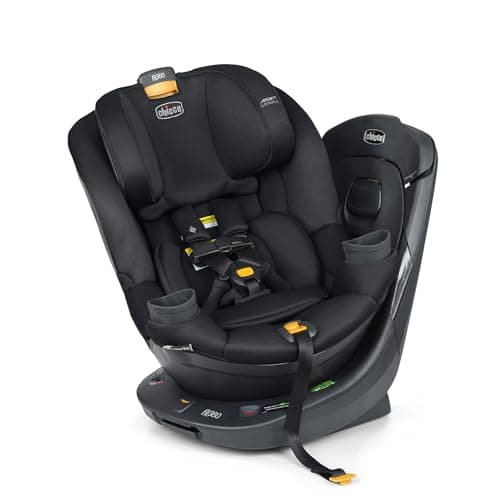
Chicco Fit360 Review: A Back-Saver With One Real Problem
The rotating convertible that spins in both directions, installs once, and does one thing CPSTs have publicly flagged. Judged on Chicco's published figures and a hands-on CPST teardown.
Disclosure:Swaddle & Stroll is reader-supported. When you buy through links on this page we may earn an affiliate commission, at no extra cost to you. It never changes our picks. How this works.
The Chicco Fit360 solves the single most hated part of a car seat: loading a child into it. The shell rotates 360 degrees with one hand, so you swing it to face the open door, buckle a child standing upright in front of you, then spin it back. Unlike most rotating seats, it rotates in forward-facing mode too, and because the base installs the same way in both directions you install it once and never touch it again. There is one genuine problem with it, flagged publicly by the CPSTs who took it apart, and it is in the cons section below rather than buried.
Per how we pick: we are not a crash-test lab and do not claim to be. What follows is built from Chicco's published specification sheet, the hands-on review by Car Seats For The Littles — a CPST-run outlet that physically measures harness slots, crotch positions and shell dimensions and fits real children and calibrated dolls — the live Amazon listing, and the federal rules that set the limits both quote. Where Chicco and CSFTL differ, we print both.
The verified specifications
Spec
Published / measured figure
Rear-facing harness
4–40 lb, up to 43 in
Forward-facing harness
26.5–65 lb, up to 49 in
Booster mode
None — this is not the last seat you buy
Harness slots (measured)
Lowest 7 in with the infant insert, 9 in without; highest 18 in (CSFTL)
Crotch positions (measured)
3 in with the insert; 5 in and 7 in without (CSFTL)
Lower-anchor limits
Child up to 30 lb rear-facing, 35 lb forward-facing — then switch to the vehicle belt (CSFTL)
Top tether
Required in both modes where the vehicle has one (CSFTL)
Belt install
LeverLock self-tensioning lock-off; close the door and the belt tightens
Adjustment
15 headrest positions (harness moves with it), 6 recline positions
8 years from the date of manufacture; shell and base carry separate labels and may differ (CSFTL)
Two inconsistencies worth knowing about. Chicco's own page states the forward-facing minimum as 26.5 pounds in the spec table and 25 pounds in one of its LeverLock videos — follow 26.5, because that is the figure the federal labeling rule is built around. And the manual describes the infant inserts as being for 4 to 11 pounds, while CSFTL reports Chicco customer service told them the inserts are required under 11 pounds. Use the inserts under 11 pounds and ask Chicco directly if your manual is unclear.
Rotation in both directions is the actual differentiator
Plenty of seats now rotate. The Fit360 is one of the few that rotates in forward-facing mode as well as rear-facing, which matters once your child is three and loading themselves with supervision. CSFTL's testers found the magnetic chest clip easy for a four-and-a-half-year-old to operate unaided — and hard enough that a younger child could not open it, which is the combination you want.
The install consequence is better still: because the base goes in identically for rear-facing and forward-facing, the mode change is a rotation, not a reinstall. On a conventional convertible seat, turning a toddler forward-facing means pulling the seat out, rerouting the belt and re-levelling — the moment most installs go wrong. Here you move the headrest and spin the shell. Our best rotating car seats roundup covers how the rest of the field handles this, and Chicco Fit360 vs Evenflo Revolve360 is the head-to-head most people land on.
CSFTL also noted the seat settles at roughly the same recline angle whichever base recline position you use, with the infant insert doing the real work of changing the harness angle inside the shell. That is worth knowing if you are buying for a newborn: the insert is not optional padding. If you are weighing this against starting with an infant carrier instead, our Graco SnugRide SnugFit DLX review covers what a carrier buys you that a rotating convertible cannot — chiefly the ability to lift a sleeping baby out of the car.
LeverLock, and the lower-anchor limits nobody quotes
LeverLock is a self-tensioning lock-off with three points of contact. You pass the vehicle belt once, close the door, and the mechanism takes the slack out. CSFTL described it as easy and reached the required under-one-inch movement at the belt path with it. They also installed it with the lower anchors successfully, though the webbing was twisty enough to need laying flat deliberately.
Here is the figure that is almost never on a retail listing and genuinely changes how you use the seat: the lower anchors are rated to a 30-pound child rear-facing and a 35-pound child forward-facing. Past those weights you are legally and mechanically required to switch to a vehicle-belt install. On a seat that harnesses to 65 pounds, that means most of this seat's working life is a belt install — so the quality of the LeverLock lock-off is not a nice-to-have, it is the main install path. Our LATCH vs seat belt guide explains why the limit exists and how to find yours.
Fit, from newborn to the 6-year cap
CSFTL fitted an 8-pound, 20-inch newborn doll and a 7-pound, 17-inch doll, both of which sat well with the inserts; without them the straps came above the shoulders, which is not permitted rear-facing. A 16-month-size doll at 31 inches had room to spare. A real three-year-old of 39 inches and 36 pounds rode comfortably for two hours rear-facing with room for her legs, and fitted well forward-facing afterwards. A four-and-a-half-year-old of 43 inches and 42 pounds was comfortable with headrest positions still unused.
The 18-inch top harness slot is genuinely tall — a common ceiling is 17 inches — which should translate into a long harnessed run. But the seat carries a 6-year age limit, and CSFTL's view is that the age cap cuts short the harness height advantage the shell could otherwise deliver. For a tall, light child you may hit the age limit with slots to spare. That pushes you to a harness boostersooner than the spec sheet implies — see when to switch to a booster seat for how to judge readiness rather than age alone.
The honest cons
A barefoot rear-facing child can open the LeverLock panel.This is the serious one and it comes from the CPSTs, not from us. During CSFTL's testing a curious three-year-old's bare feet partially opened the LeverLock panel while riding rear-facing. Chicco's position is that an open panel is misuse, and that a locked seat cannot release belt tension — but the panel must be resecured immediately. CSFTL called it a big deal, said it was not yet fixed, and advised against the seat for a long-legged, curious child who rides shoeless. If that describes your child, buy something else.
An early lock-off sticking issue.CSFTL's first test base had a lock-off that stuck when pushed too hard; they report units headed to stores already carried a fix. Worth checking yours operates smoothly out of the box.
It is heavy and big.33.8 pounds assembled, with a 32.25-inch rear-facing footprint. This is not a seat you move between cars, and in a small car it will cost the front passenger real legroom — see best car seats for small cars before you commit. Chicco sells extra bases, which is the right answer for two vehicles.
No booster mode.It harnesses to 65 pounds and stops. You will buy a booster afterwards, so price that in against an all-in-one — our all-in-one roundup does that arithmetic.
Lower anchors tap out early.30 pounds rear-facing, 35 forward-facing. Most of the seat's life is a belt install.
The 6-year age cap wastes harness height. An 18-inch top slot deserves a longer age allowance.
Chicco does not publish a side-impact claim for it. The product page states FMVSS 213b frontal compliance and describes DuoGuard structure, but does not make a side-impact statement. FMVSS 213a, the side-impact standard, has a compliance date of December 5, 2026, so expect this to become clearer across the whole market shortly.
Who should buy it, and who should not
Buy the Fit360 ifloading is your pain point — a bad back, a tight garage, a child who fights the harness — and you want one install that serves both directions. The ClearTex fabric and GREENGUARD Gold certification are real additions if added flame retardants concern you, and CSFTL called it a standout among rotating seats. Fit360 vs Graco Extend2Fit is the comparison worth reading if rear-facing longevity is competing with convenience in your head.
Buy something else ifyour child rides barefoot and investigates everything within reach, you need a seat that becomes a booster, you move seats between cars, or your back seat cannot spare 32 inches. A conventional convertible gives you more fit range per dollar — start at best convertible car seats, or how to choose a car seat if you have not settled on a type.
Spins 360° so you load your child facing the door, then rotate to rear- or forward-facing — a back-saver, with Chicco's easy-install pedigree.
Modes
Rear-facing & forward-facing, 360° rotation in both modes
Rear-facing
4–40 lb, up to 43 in
Forward-facing
26.5–65 lb, up to 49 in
Seat weight
33.8 lb
Standard
FMVSS 213 certified; Chicco states it meets or exceeds frontal standard FMVSS 213b
Fabric
ClearTex — no added flame retardants; GREENGUARD Gold certified
What we like
Rotates to load at the door, then locks facing the right way — and unlike most rotating seats it spins forward-facing too
Self-tensioning LeverLock install: one belt pass, then the seat applies the tension
ClearTex fabric with no added flame retardants, GREENGUARD Gold certified, and FAA certified for aircraft use
15-position headrest and 6 recline positions
Worth noting
Premium price
Heavy and large — 33.8 lb assembled
No booster mode, so it is not the last seat you buy
Car Seats for the Littles found a rear-facing child can push the lock-off panel open with bare feet and called it "a big deal" — they advise against it for a long-legged, curious child who rides shoeless
How it scored
Safety-standard compliance9.4
Install ease9.4
Everyday usability9.4
Value8.0
Frequently asked questions
What are the Chicco Fit360's weight and height limits?+
Rear-facing harness 4 to 40 lb and up to 43 in; forward-facing harness 26.5 to 65 lb and up to 49 in. There is no booster mode. Chicco's own page quotes 25 lb as the forward-facing minimum in one video and 26.5 lb in the spec table — follow 26.5 lb, which is the figure the federal forward-facing labeling rule is built around.
What are the Chicco Fit360's LATCH lower-anchor weight limits?+
Car Seats For The Littles reports a 30 lb child limit rear-facing and 35 lb forward-facing. Above those weights you must install with the vehicle seat belt instead. Because the seat harnesses to 65 lb, most of its working life is a belt install — which is why the LeverLock lock-off matters so much here.
Can a child open the Chicco Fit360's LeverLock panel with their feet?+
It has happened in CPST testing. Car Seats For The Littles found a curious three-year-old's bare feet partially opened the LeverLock panel while riding rear-facing, called it a big deal, and advised against the seat for a long-legged, barefoot, curious child. Chicco treats an open panel as misuse and says a locked seat cannot release belt tension, but the panel should be resecured straight away. Check it every time you load the child.
Does the Chicco Fit360 need the top tether rear-facing?+
Yes, where your vehicle provides one. CSFTL's hands-on review found the top tether is required in both rear-facing and forward-facing modes — which is unusual and easy to miss, since most convertible seats only require it forward-facing. Check your manual and your vehicle's tether anchor locations.
How low do the Chicco Fit360's harness straps go for a newborn?+
CSFTL measured the lowest harness slot at 7 in with the infant insert fitted and 9 in without it, and the lowest crotch position at 3 in with the insert. Without the inserts, newborn-size dolls had straps sitting above the shoulders, which is not allowed rear-facing — so the inserts are required equipment under 11 lb, not optional padding.
When does the Chicco Fit360 expire?+
Eight years from the date of manufacture, per CSFTL. Note that the shell and the base carry separate date labels and may have been made at different times, so check both.
Is the Chicco Fit360 worth it over a regular convertible car seat?+
Only if loading is genuinely your problem. The rotation is a back-saver and the single install for both directions removes the step where most convertible installs go wrong. But you pay a premium, you get no booster mode, and at 33.8 lb with a 32.25 in rear-facing footprint it is heavy and large. A conventional convertible gives you more fit range per dollar.