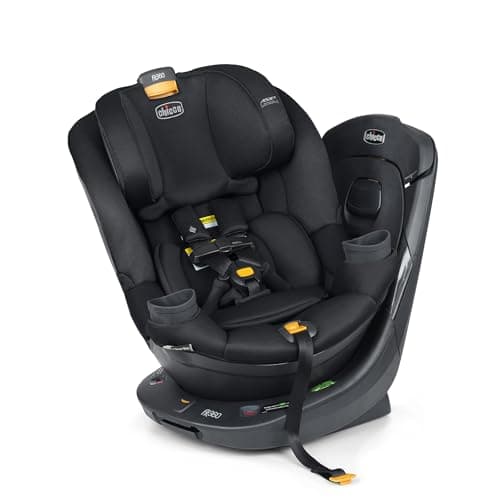
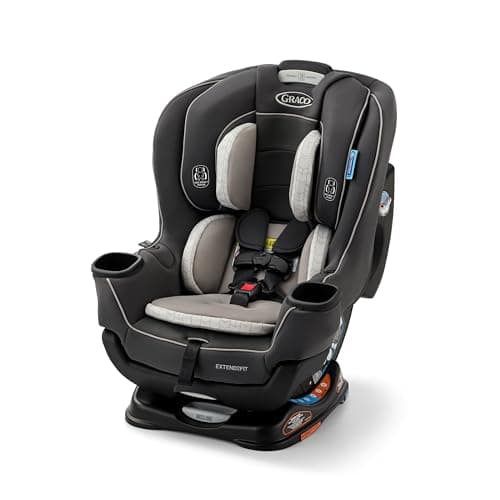
Quick verdict: pick the Chicco Fit360 ClearTexif you want a seat that spins 360° so you can load your child facing the open door and then rotate to rear- or forward-facing without contorting your back; pick the Graco Extend2Fitif you want to keep your child in the safest riding position longer, with an extension leg that buys real legroom and a rear-facing weight limit all the way to 50 lb. Both are genuinely good convertible car seats—there is no wrong answer here, only the seat whose headline strength matches how your family actually loads a car and how long you want to rear-face.
We have not crash-tested either seat in a lab ourselves—no honest editorial site can—so we rank from each seat's published specifications, the federal standard they both meet, and our methodology, not a hands-on lab test. That means the comparison below is about fit, features, install, and the way each seat behaves in daily use, because those are the things that genuinely differ between two seats that both clear the same crash bar. If either the rotating convenience or the extended rear-facing window jumps out at you as you read, that is your seat.
Safety: the floor they both meet
Every convertible car seat sold in the United States is certified to one federal standard, FMVSS 213, and both of these seats meet it. That is the most important thing to understand before you compare anything else: crash protection is a floor both clear, not a scale where one seat is "safer" than the other. The Chicco is not the safe pick while the Graco is the risky one, or the reverse—they are both safe. What actually changes real-world protection is whether the seat is installed correctly and tightly every single time, whether the harness is snug and at the right height, and whether your child still fits the seat's limits. So everything below is about rotation, install, fit range, footprint, and value, never about one seat out-crashing the other. When you read owner reviews, weight the ones about install and everyday fit heavily, and discount any that claim one brand is fundamentally safer in a crash—because the standard does not work that way.
Rotation vs extended rear-facing: the headline difference
This is the choice in one sentence. The Chicco Fit360's signature feature is that it rotates a full 360° on its base: you turn the seat to face the open car door, settle and buckle your child at a comfortable height, then spin it back to lock rear- or forward-facing. If you have ever leaned deep into a back seat wrestling with a squirming toddler, you know why that matters—it is a real back-saver, and it makes the daily in-and-out far less of a fight. The Graco Extend2Fit does not rotate. Its headline strength is longevity: a four-position extension leg panel folds down to add legroom, so a taller child can keep their feet supported and stay rear-facing to a 50 lb weight limit rather than being pushed forward-facing early. Neither approach is better in the abstract—they solve different problems. The Chicco makes each loading easier today; the Graco keeps your child in the safest position longer over the seat's life. Decide which of those you will feel more often, and the rest of the comparison mostly falls into place.
Installation: LeverLock vs the extension leg
Both seats install with either the lower-anchor LATCH connectors or the vehicle seat belt, and both come from brands with a strong install reputation. The Chicco uses a self-tensioning LeverLock system: you route the belt or LATCH strap and work the lever to cinch the base tight, which takes much of the guesswork out of getting a firm install. Because the Fit360 is a rotating seat, its base is the part that stays put—so once it is locked in, the spinning happens on top of a base you are not re-tensioning every trip. The Graco is a more conventional install, straightforward for most parents, but its extension leg does add a step to think about: you set the leg to the position that fits your child while keeping the seat at the correct recline angle, and you confirm the base is tight the same way you would with any convertible. Both seats are on the heavier side, which is worth knowing if you plan to move the seat between cars often—this is not a quick swap in either case. Whichever you choose, follow the manufacturer's instructions exactly for the belt path, recline angle, and LATCH weight limits, and check the install is tight at the belt path before every long trip.
Rear- and forward-facing ranges and longevity
Here the specs tell a clear story. The Chicco Fit360 is rated for rear-facing from 5 to 40 lb, then converts to a forward-facing harness for bigger kids. The Graco Extend2Fit rear-faces from 4 to 50 lb and forward-faces from 22 to 65 lb, and that higher rear-facing weight limit is the Graco's whole point. Pediatric guidance from the American Academy of Pediatrics is to keep a child rear-facing as long as they fit the seat's rear-facing limits, because rear-facing is the safest position in a crash—so a seat that supports rear-facing to a higher weight, with the legroom to make it comfortable, can genuinely extend the safest phase for many children. That is the Graco's edge, and it is a real one. In fairness, plenty of children reach a seat's rear-facing height limit before its weight limit, so the 50 lb number is a ceiling many kids will not touch on weight alone—treat it as extra runway rather than a guarantee, and always check both the height and weight limits for your specific child. If you are still deciding when to turn the seat around at all, our guide to rear-facing vs forward-facing walks through the timing safely. The Chicco answers with everyday usability rather than raw range: the whole point of the rotation is that turning your child to face you for buckling makes it easier to get a snug harness every time, which is its own kind of safety benefit.
Footprint in the car
Rear-facing seats eat front-to-back space, and both of these ask for room. The Graco Extend2Fit is known for taking up a lot of front-to-back space when rear-facing, especially with the extension leg deployed—that legroom for your child comes at the cost of pushing the seat in front of it forward, which can be tight in a small car or with a tall driver. The Chicco Fit360 is a heavy, large seat as well, and its rotating base is substantial, so it is not a compact option either—but the payoff is that you rarely have to reach deep into the footwell, because you rotate the seat to you instead of climbing in to the child. Neither seat is a good three-across solution in a narrow back seat without careful measuring. The honest advice for both is the same: measure your back seat, and test-fit in your actual vehicle before you commit, because real back seats vary far more than spec sheets suggest.
Value: which one for which family
On price, the Graco is the value pick and the Chicco is the premium one—live prices show on the cards above, so we will not quote figures that go stale. What you pay up for with the Chicco is the rotation and the ClearTex fabric, which is made without added flame-retardant chemicals; what you save with the Graco still buys you class-leading rear-facing range, the extension leg, and a seat that many families keep in service for years. So: choose the Chicco Fit360 ClearTex if the daily convenience of loading at the door and a cleaner fabric are worth a premium, or if a back-friendly routine will keep you buckling carefully every trip. Choose the Graco Extend2Fit if extended rear-facing and strong value matter most, and you can spare the front-to-back room it needs. For a family who loads a car many times a day and wants that to be easy, the Chicco earns its keep; for a family focused on keeping a child rear-facing as long as possible without overspending, the Graco is the straightforward pick.
Whichever seat you choose, remember that the protection comes from the install and the fit, not the badge: the best convertible is the one you can put in tight and use correctly on every single trip. If you want to see how these two stack up against the rest of the field before you decide, our roundup of the best convertible car seats ranks every top option, and either seat here will serve your family well once it is installed right and fits your child.