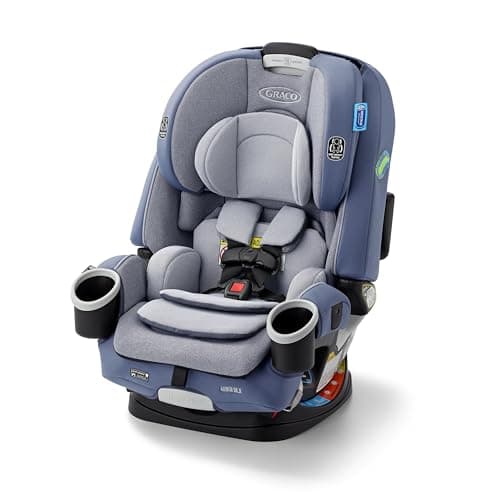
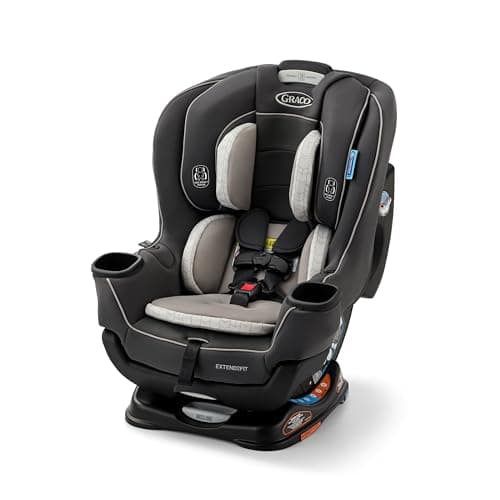
Both of these come from Graco, both are excellent, and both meet FMVSS 213 — but they answer two different questions. The 4Ever DLXis an all-in-one built to be the only seat you ever buy, spanning rear-facing infant all the way to a backless booster. The Extend2Fit is a convertible built around a single idea: keeping your child rear-facing, the safest way to ride, for as long as physically possible. Which one is right depends less on which is "better" and more on whether you want one seat for the whole journey or the longest rear-facing life you can get.
The short verdict
Buy the Graco 4Ever DLX if you want to buy once and be done — it covers four modes, from rear-facing harness to backless booster, and can serve for roughly a decade. Buy the Graco Extend2Fit if maximizing rear-facing time is your priority and you are content to add a dedicated booster later — it rear-faces to 50 pounds with an extension panel for legroom. Both are strong value; the 4Ever spreads its cost over more years, while the Extend2Fit spends its budget on the rear-facing stage that matters most for safety.
How long each seat lasts
This is the headline difference. The 4Ever DLX is a four-mode seat: rear-facing harness, forward-facing harness, highback booster, and backless booster. On paper it can carry a child from the newborn months to the end of the booster years — Graco rates it for up to about ten years of use — so in principle you never buy another car seat. The Extend2Fit is a two-mode convertible: rear-facing, then forward-facing harness. It has no booster mode, so when your child outgrows the forward-facing harness you will move them to a dedicated booster seat. That is not a flaw — plenty of families prefer a purpose-built booster to an all-in-one's booster mode — but it does mean the Extend2Fit is not a buy-once seat the way the 4Ever is.
Rear-facing capacity
Here the Extend2Fit turns the tables. It rear-faces to 50 pounds and adds a four-position extension panel that gives up to five inches of extra legroom, so a long-legged toddler can keep riding rear-facing well past the point where many seats force the turn. The 4Ever DLX rear-faces to 40 pounds — perfectly good, and enough for most children to stay rear-facing to around age three or four, but ten pounds short of the Extend2Fit. Since the American Academy of Pediatrics recommends keeping a child rear-facing to the highest weight or height their seat allows, that higher limit is a real safety advantage for the Extend2Fit, and the main reason to choose it over the all-in-one. Our guide to rear-facing versus forward-facing explains why the extra time matters.
Booster capability
If a booster stage in the same seat appeals to you, this is not close: the 4Ever DLX has it and the Extend2Fit does not. The 4Ever converts to a highback booster and then a backless booster, using the vehicle's own lap-and-shoulder belt once the harness is retired. The important caveat is the one that applies to every all-in-one's booster mode: a seat used daily for years will show wear by the time it becomes a booster, and some families simply prefer a fresh, dedicated booster for the final stage. Whichever route you take, a booster only works when the vehicle belt is positioned correctly and the child sits properly for the whole trip — the same rules that govern any standalone booster.
Install and everyday use
Both seats use Graco's SnugLock system, a lever that clamps the vehicle belt or LATCH strap down to a firm install, and both are among the more straightforward convertibles to get tight — though, as always, the manual and, if you can, a car-seat inspection station are worth the time. Both are large, heavy, stay-in-the-car seats rather than ones you swap between vehicles, and both take up serious front-to-back room rear-facing; the Extend2Fit's extension panel in particular needs space, so check the fit behind your driver's seat in a smaller car. The 4Ever's ten-position headrest and extra modes add some bulk for the years it has to span.
Value and which to buy
On price the two are closer than their different jobs suggest, and both are strong value. The 4Ever DLX justifies its cost by lasting longer — one purchase instead of a convertible plus a booster down the line. The Extend2Fit puts its money into the rear-facing stage, which is where the biggest safety gains sit, and leaves the booster decision for later. If you want the simplest path and the fewest purchases, the 4Ever DLX is the one-seat answer, and it is our pick for the best all-in-one (our full Graco 4Ever DLX review covers each mode limit and its honest cons). If you want your child rear-facing as long as possible and do not mind buying a booster in a few years, the Extend2Fit is the better safety bet. Both keep your child in the safest position the seat allows; the right choice is the one that fits your car and your plans. The quick links below show a live price for each.