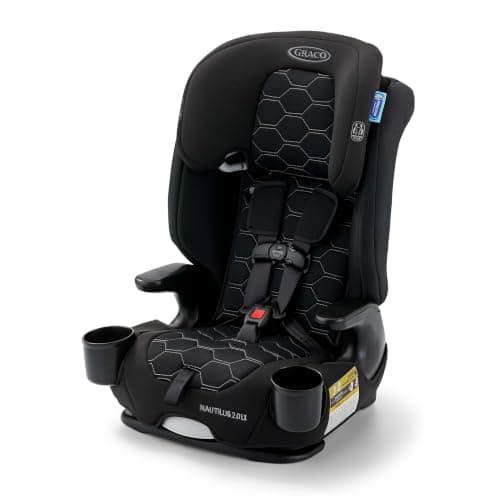
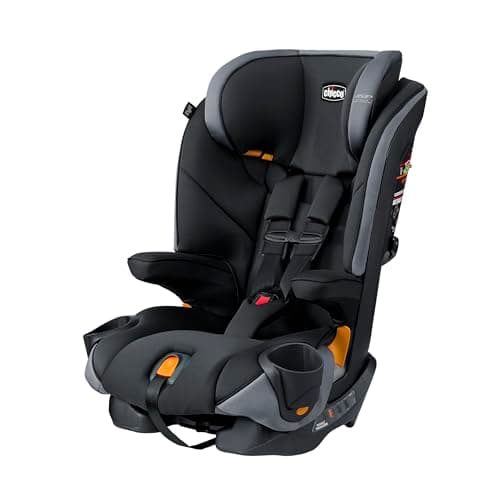
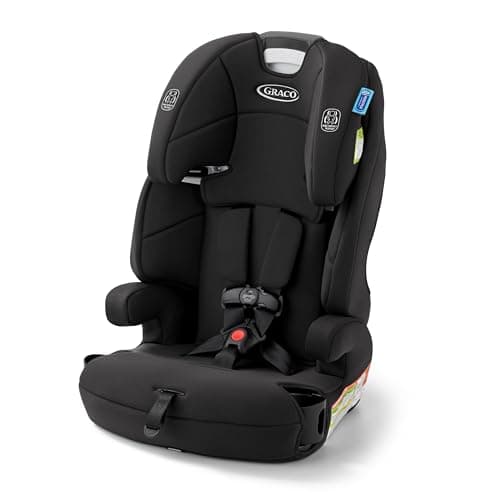
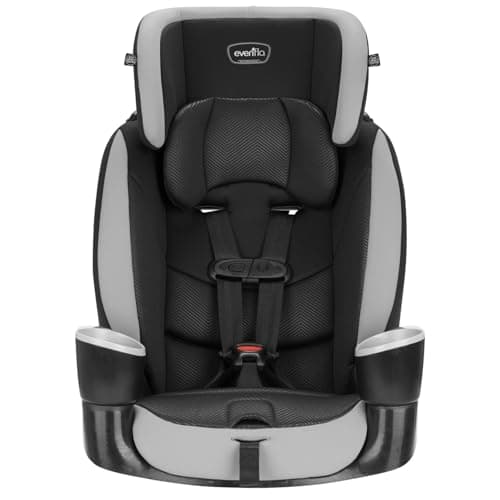
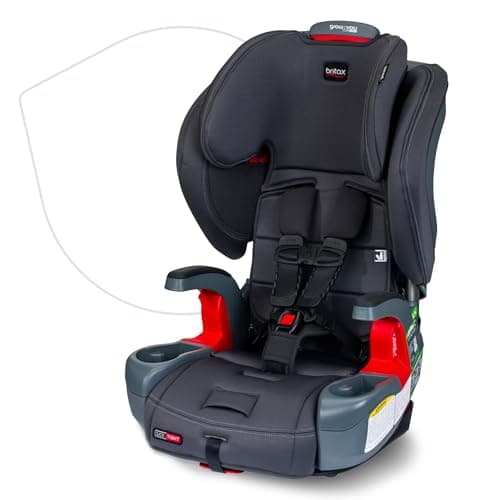
A harness booster — the industry calls it a combination seat, and NHTSA files it under the same name — is the seat for the middle years. It is forward-facing only. It starts life as a five-point harness seat for a child who has genuinely outgrown rear-facing, and years later the harness comes out and the same shell becomes a belt-positioning booster that routes the vehicle's own lap-and-shoulder belt. It does not rear-face, ever, and that is the first thing to know about it: this is not a seat for a baby or a young toddler, and buying one is not a way to turn a small child forward sooner. It is the seat you buy when the convertible seat has run out of harness, or expired, or is needed for a younger sibling, or when you want a second car's seat that will still be useful in four years.
Every seat on this page is certified to FMVSS 213, the federal crash standard that every child restraint sold in the United States must meet. That is a legal floor, not a feature, and it means the cheapest pick here has passed the same frontal crash test as the most expensive one. What the price buys is how long the harness lasts, how easy a correct install is, whether the seat has a backless mode for the last stretch, and how many years the manufacturer says you can use it. Prices in this category move constantly, so the quick-picks table carries a live figure for each seat instead of a number we typed in weeks ago.
First: is your child actually ready to face forward?
This is where the real safety risk in this category sits, so it comes before any product. The American Academy of Pediatrics is direct: a child should ride rear-facing until they reach the highest weight or height allowed by their seat in that position, and most convertible seats now rear-face to 40 or 50 pounds — well past a second birthday for most children. Rear-facing spreads crash forces across the whole back and cradles the head and neck; forward-facing loads them onto the harness. A harness booster is a step down in protection from a rear-facing convertible, so the right instinct is to delay it, not to hurry it. Our guide to rear-facing vs. forward-facing walks through the milestones in order.
The federal rule has caught up with that guidance. Since June 30, 2025, NHTSA's updated FMVSS 213 labeling requirements mean a newly manufactured forward-facing harness seat may not be labeled for a child under 26.5 pounds (12 kilograms). That is why the Graco and Chicco seats below now print a 26.5-pound harness minimum where older stock said 22, and why the Britax and Evenflo seats print 30. Treat those minimums as the floor of the legal envelope, not as a target: a 27-pound two-year-old who still fits their rear-facing convertible belongs in it. If you are choosing between turning a convertible forward and buying one of these, our best convertible car seats roundup shows which seats hold out rear-facing the longest.
What we scored, and why
Because every seat clears the same federal bar, our ranking is built around the variables that decide how the seat performs in your car, on your child, for the years you own it. Five things carried the weight, in this order.
- Harness ceiling — weight and height. The whole point of this seat is to keep a child in a five-point harness for as long as possible. Every pick here harnesses to 65 pounds except one (the Evenflo stops at 50), but the height limits vary from 49 to 54 inches, and for a tall child height is the limit that arrives first. A child is also done with the harness when their shoulders pass the top harness slot, so the number of headrest positions and where the top slot sits matter as much as the printed ceiling.
- Correct-install ease.Safety agencies keep finding that a large share of child seats are installed or used incorrectly, and a loose forward-facing seat cannot do its job. A system that tensions the vehicle belt for you — Britax's ClickTight panel, Chicco's LockSure lock-off — matters more in the real world than any padding upgrade. We also credit a no-rethread harness, because a harness that is one slot too low is a harness parents stop adjusting.
- Booster stage: modes and limits. After the harness comes out, the seat has to position an adult belt correctly on a small body for several more years. Highback limits here run from 100 pounds and 57 inches to 120 pounds and 63 inches, and only two of the five convert to a backless booster for the final stretch. That difference can be two years of use, or a second purchase.
- Everyday practicality. Seat weight (9.6 to 25 pounds across this group), width if you are fitting three across, recline for a sloped bench, whether the cover comes off for the washing machine, and whether the cup holders survive contact with a four-year-old.
- Useful life.Every car seat carries a date after which the manufacturer says to stop using it. Graco publishes ten years on the Nautilus and Britax nine on the Grow With You; the Maestro Sport's manual has been cited at six. Over a seat meant to serve a child from three to ten, that number is worth checking before the fabric color.
We have not crash-tested any of these, and we will not pretend otherwise. Our scores come from the manufacturers' published specifications, their manuals, the federal standard, and live retail prices — the full rubric is on our methodology page.
How to choose in one minute
- Want the install you cannot get wrong, and the last seat you will buy? The Britax Grow With You ClickTight tensions the vehicle belt for you and boosts to 120 pounds and 63 inches — the highest limits here — on a steel frame with a nine-year useful life. It is the heaviest and the most expensive, and it has no backless mode.
- Want every mode, for less? The Graco Nautilus 2.0 LX is the only pick with a harness, a highback booster, and a backless booster — to 65, 100, and 120 pounds respectively — with a ten-year useful life and InRight LATCH that clicks on audibly. It is wide, and its booster height stops at 57 inches.
- Have a tall child you want to keep harnessed? The Chicco MyFit harnesses to 54 inches, five inches taller than the Britax and both Gracos, with a LockSure lock-off for a repeatable belt install. It is heavy, highback-only, and priced near the Britax.
- Need a seat for the second car, the carpool, or grandparents? The Graco Tranzitions weighs 14 pounds, still has all three modes, and costs noticeably less than the Nautilus. You give up the recline, some padding, and the 120-pound backless ceiling.
- Want the cheapest seat that is still a real harness seat? The Evenflo Maestro Sport is under ten pounds and GREENGUARD Gold certified, but its harness ends at 50 pounds — a bigger five-year-old will be in booster mode a year or two sooner than on the others.
Harness booster, convertible, all-in-one, or plain booster?
Four seat types overlap at this age, and the honest answer is that a harness booster is rarely the first seat a family buys — it is usually the second or third. If your child is still under their convertible seat's rear-facing limits, keep the convertible; nothing here improves on it. If you are shopping from birth and want one purchase, an all-in-one seat does rear-facing, forward-facing harness, and booster from a single shell, though it does none of them as well as a dedicated seat. A harness booster earns its place in three situations: the convertible seat is out of harness room or past its expiration date; a younger sibling needs the convertible; or you need a second-car seat and would rather buy something that stays useful into the booster years than a plain belt-positioning boostera four-year-old is not ready for. If your child already meets their harness seat's limits and sits reliably still, skip this category entirely and go straight to a highback booster.
The tether is not optional, and the lower anchors have a limit
Two installation facts decide more about a forward-facing seat's performance than any spec on the box. The first is the top tether — the strap from the top of the seat back to an anchor behind the vehicle seat. NHTSA's guidance is to use the tether on every forward-facing harness install, whether the seat is attached with lower anchors or the vehicle belt, because it limits how far the child's head travels forward in a crash. Every seat on this page ships with one; Britax's is the V-shaped design it patents. Find your vehicle's tether anchors in its manual before you install, not after.
The second is the lower-anchor weight limit. Since 2014, federal rules require the seat label to state the child weight at which you must stop using the lower anchors and switch to the vehicle belt, and the number comes from a simple sum: the child plus the seat may not exceed 65 pounds on the anchors. For a 25-pound seat like the Britax or Chicco, that arithmetic gives a 40-pound child; lighter seats allow more, but the label on your seat is the number that governs, and some manufacturers set a lower limit than the sum. In practice, a harness booster spends most of its harness years on a seat-belt install — which is exactly why a lock-off or a tensioning panel is worth paying for in this category more than in any other. Keep the tether attached either way. Our guide on LATCH vs. seat-belt installation covers the mechanics.
From harness to booster: when, not how
Every one of these seats converts in a few minutes with the manual open — the harness straps, buckle, and pads come out and store, and the belt guides take over. The question worth slowing down on is when. The AAP's rule is that a child moves out of a harness only after outgrowing it — the top harness weight, the top harness height, or shoulders above the highest slot, whichever comes first. Age does not qualify anyone; neither does the 40-pound booster minimum printed on the shell, which is the floor of the booster envelope, not a milestone. A five-year-old at 45 pounds in a seat that harnesses to 65 stays in the harness. There is one more condition the manual will not state: a booster only works if the child sits properly for the entire trip, every trip. A child who slumps, leans, or tucks the shoulder belt behind an arm is not being protected by a booster, and that maturity tends to arrive later than the weight. Our guide on when to switch to a booster seat walks through each milestone, including the five-step test that eventually ends the booster years too.
Why the cheapest seats did not make the list
You will find combination seats on Amazon for less than the Evenflo, and we looked at them. The Safety 1st Grand 2-in-1 and the Cosco Kids Finale DX — both Dorel seats — are currently published with a forward-facing harness range that starts at 40 pounds and runs only to 65 (the Grand's harness height ceiling is 49 inches). A 40-pound child is often five years old, and many will pass 49 inches within a year of that, so the harness stage the seat is sold on can be a matter of months. They are certified to the same standard as everything here, and as inexpensive highback boosters they are perfectly reasonable, but as harness seats they do not deliver the years this category exists to provide. We would rather you spend a little more on the Evenflo, or a little more again on the Tranzitions, and get a harness that starts at 26.5 to 30 pounds and lasts.
Check your car before you check the reviews
Forward-facing seats are less car-dependent than boosters, but three things are still worth checking. First, the tether anchor locations: some vehicles put them on the rear shelf, some on the seat back, some on the floor of a cargo area, and an older vehicle may have them only in certain positions. Second, width. The Nautilus and the Chicco each measure about 20 inches across and the Britax is in the same class, so none is a three-across seat; if that is your situation our best car seats for small cars roundup ranks the narrow shells on published width. Third, the bench angle. A steeply sloped rear seat can leave a no-recline seat like the Tranzitions sitting more upright than a sleepy four-year-old would like; the Britax has two recline positions and the Chicco and Nautilus have four. Buy from somewhere with a return window and do a real install on day one, then check the movement at the belt path — under an inch side to side and front to back is the goal.
The mistakes worth avoiding
Four keep coming up in this category. The first is turning a child forward-facing early because the new seat arrived — the seat can wait in the box. The second is a loose install with no tether; a harness seat that moves more than an inch at the belt path, or has its tether coiled behind it, is not installed. The third is the chest clip: it belongs at armpit level, with the harness snug enough that you cannot pinch a horizontal fold of webbing at the shoulder, and bulky coats come off before buckling. The fourth is converting to booster mode on the child's birthday rather than the harness limits. Two more housekeeping points: these seats expire like every other — the date is molded into the shell or printed on a label, and our expiration guide explains why — and a seat that has been in a moderate or severe crash is done, however new it looks. Keep your child in the back seat through the booster years and beyond; it remains the safer place to ride.
The quick-picks table below shows a live price for each seat and links to its full write-up, honest drawbacks included. If you are unsure whether your child belongs in this category at all, start with the rear-facing guide, not the buy button.