A seat for the second car gets used less often, by people who did not read the manual last week. These are the picks that are hardest to install wrong.
Disclosure:Swaddle & Stroll is reader-supported. When you buy through links on this page we may earn an affiliate commission, at no extra cost to you. It never changes our picks. How this works.
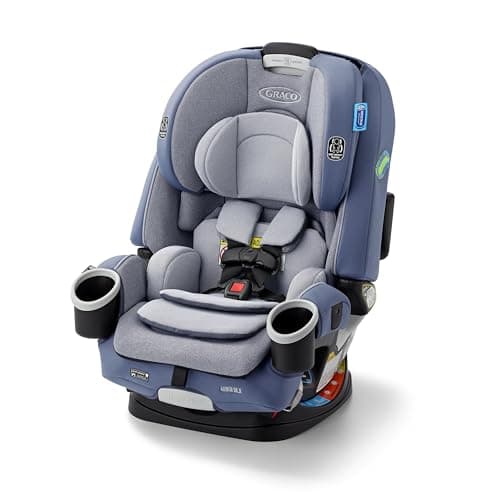
For most grandparents the right answer is the Graco 4Ever DLX 4-in-1: one seat that covers a grandchild from 4 pounds to 120 pounds, installs with push-on lower-anchor connectors, and is certified for ten years from manufacture — so it is still legal for the next grandchild. If the seat has to move between two cars, the much lighter Safety 1st Grow and Go is the better buy. If leaning into a back seat is what hurts, the rotating Chicco Fit360 is worth its premium. Those three answers cover almost every grandparent who asks us this.
This page exists because a grandparent's car seat is a different problem from a parent's. It gets installed once and then used on Sundays. Nobody re-reads the manual between uses. The person buckling the child may have arthritis in their hands and a back that objects to bending into a back seat. So we have ranked these seats on install hardware and everyday handling rather than on features, and we have been specific about weight — because a 33-pound seat that lives in one car is a very different purchase from a 13-pound one that travels.
What actually matters in a second-car seat
Install hardware over everything. Every seat on this page is certified to the same federal crash standard, FMVSS 213. What separates them is how hard they are to install correctly, and a misinstalled seat is the real risk. Push-on lower anchors (Graco calls it InRight LATCH), a single-pull tightener, and a bubble level do more for a child's safety than any amount of padding.
Remember the lower-anchor weight limit. Lower anchors are rated for a combined 65 pounds of child plus seat unless the manufacturer says otherwise, so a heavy seat runs out of lower-anchor headroom sooner and has to be reinstalled with the vehicle belt. With a 23-pound seat that happens at about 42 pounds of child. It is worth knowing before the day it applies.
Decide now whether the seat travels. A seat that stays installed can be as heavy as you like. A seat that moves between two cars every month should be under 20 pounds, and that single question decides between our first two picks more often than any other.
Match the stage, not the box.A grandchild who is six months old needs a different seat from one who is six years old, and the “4-in-1” label does not change that. If the grandchild is a newborn, an infant carrier that clicks into a stay-in-car base is still the easiest thing to live with. If the grandchild is already past 40 pounds and four years old, you want a booster, not a harness.
The five picks, side by side
Seat
Modes
Rear-facing
Forward-facing
Booster
Seat weight
Graco 4Ever DLX 4-in-1
Rear, forward, highback + backless booster
4–40 lb
26.5–65 lb, to 49 in
40–100 lb highback; 40–120 lb backless
23 lb
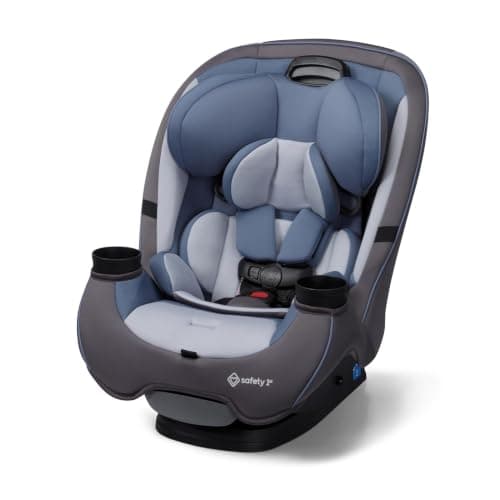
Safety 1st Grow and Go
Rear, forward, highback booster
5–40 lb
30–65 lb
40–100 lb highback
About 13 lb
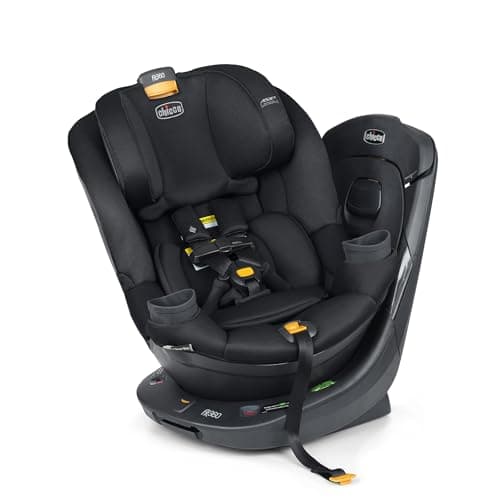
Chicco Fit360 ClearTex
Rear, forward — 360° rotation in both
4–40 lb, to 43 in
26.5–65 lb, to 49 in
None
33.8 lb
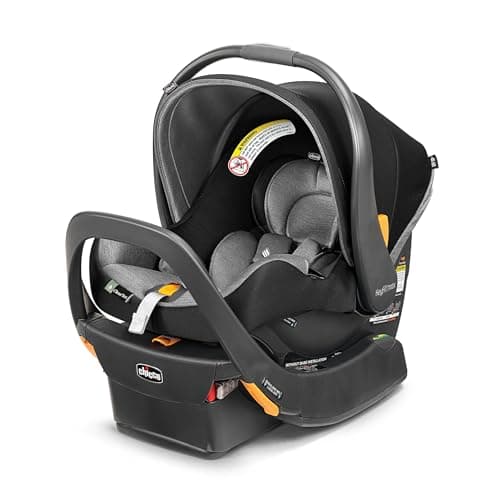
Chicco KeyFit Max ClearTex
Infant carrier + stay-in-car base
4–30 lb
Not applicable
None
Carrier plus a separate base
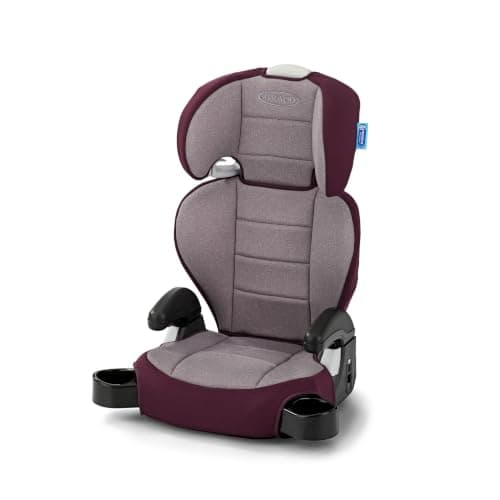
Graco TurboBooster 2.0
Highback booster; backrest removes
Not applicable
Belt-positioning only
40–100 lb, 43–57 in, 4 years and up
Light enough to lift one-handed
Every figure above is the manufacturer's published limit for that seat. All five are certified to FMVSS 213.
Why each one is here
1. Graco 4Ever DLX — buy once, cover every grandchild
Who it is for: grandparents who want one seat in the car and no second decision for a decade. Four modes carry a child from rear-facing newborn to a backless booster, the no-rethread harness and 10-position headrest adjust without re-threading straps, and InRight LATCH connectors push on with an audible click instead of needing to be fed and tightened. The honest cons: it is physically large, its rear-facing footprint eats front-seat room in a small car, and it rear-faces only to 40 pounds.
2. Safety 1st Grow and Go — the one to buy if the seat travels
Who it is for: anyone moving a seat between two cars, or keeping one in a car that is also used for other things. At about 13 pounds it is one of the lightest all-in-ones sold, the harness and headrest move together in one motion, and the seat pad is machine washable and dryer safe — which matters more than it sounds for a seat that lives with snacks. It covers three stages rather than four (no backless mode) and the install is a plain belt or LATCH pass without a one-dial tensioner.
3. Chicco Fit360 — for the back that objects to bending
Who it is for: a grandparent who finds loading a child into a back seat painful. The seat rotates to face the open door, you buckle the child upright, then spin it to rear- or forward-facing — and unlike most rotating seats it rotates in forward-facing mode too. The LeverLock install is self-tensioning: one belt pass, then the seat applies the tension. It is GREENGUARD Gold certified with no added flame retardants. It is also 33.8 pounds, has no booster stage, and costs a real premium. Car Seats for the Littles also found that a rear-facing child can push the lock-off panel open with bare feet, and advises against it for a long-legged child who rides shoeless.
4. Chicco KeyFit Max — if the grandchild is a newborn
Who it is for: grandparents of a baby under about 30 pounds, especially if the parents already run a KeyFit, because a second base means the carrier clicks between cars with no install at all. The KeyFit line is the reference standard for getting an install right first time — a bubble level, a single-pull LATCH tightener, and a belt lock-off — and this ClearTex version skips added flame-retardant chemicals. It is a heavier carrier than some rivals and it is a premium price for a seat the child will outgrow.
5. Graco TurboBooster 2.0 — if the grandchild is already in school
Who it is for: a child who is at least four years old and 40 pounds and has genuinely outgrown a harness. Open-loop belt guides let the child thread their own seat belt, which is the whole point in a car they ride in occasionally, and the backrest comes off later for backless use. It has no lower anchors, so the empty booster slides around the back seat, and the shoulder belt can slip out of the guide — worth a glance each time.
What we would not buy for a second car
Anything secondhand, for the reason above. A seat with a complicated, many-conditional-rules install — the easiest way to end up with a seat that is slightly wrong every single time. And a seat so premium that it only lives in one car when the grandchild's parents would have been glad of the money toward a seat that travels. If you are furnishing a second home more broadly, our grandparent gear guide covers the playard, the folding crib and the rest of the kit.
A light, no-fuss all-in-one that carries a child from rear-facing to a highback booster for a budget price — the sensible-money choice that still meets the same federal standard.
The KeyFit line is the reference standard for installing a seat right the first time, and this ClearTex version skips added flame-retardant chemicals in the fabric.
The default answer for most families: a highback booster with open-loop belt guides a child can thread themselves, at roughly half the price of the premium seats.
A light, no-fuss all-in-one that carries a child from rear-facing to a highback booster for a budget price — the sensible-money choice that still meets the same federal standard.
Rear-facing
5–40 lb
Forward-facing / booster
FF harness 30–65 lb; highback booster 40–100 lb
Standard
FMVSS 213 certified
Install
LATCH or vehicle belt; no-rethread harness
What we like
One of the lightest all-in-ones here at about 13 lb, so it is easier to move if you must
No-rethread harness and headrest adjust together in one motion
Machine-washable, dryer-safe seat pad
Worth noting
Covers three stages — rear-facing, forward-facing, and a highback booster, but no backless mode
Basic padding and a standard belt/LATCH install without a foolproof one-dial tensioner
Spins 360° so you load your child facing the door, then rotate to rear- or forward-facing — a back-saver, with Chicco's easy-install pedigree.
Modes
Rear-facing & forward-facing, 360° rotation in both modes
Rear-facing
4–40 lb, up to 43 in
Forward-facing
26.5–65 lb, up to 49 in
Seat weight
33.8 lb
Standard
FMVSS 213 certified; Chicco states it meets or exceeds frontal standard FMVSS 213b
Fabric
ClearTex — no added flame retardants; GREENGUARD Gold certified
What we like
Rotates to load at the door, then locks facing the right way — and unlike most rotating seats it spins forward-facing too
Self-tensioning LeverLock install: one belt pass, then the seat applies the tension
ClearTex fabric with no added flame retardants, GREENGUARD Gold certified, and FAA certified for aircraft use
15-position headrest and 6 recline positions
Worth noting
Premium price
Heavy and large — 33.8 lb assembled
No booster mode, so it is not the last seat you buy
Car Seats for the Littles found a rear-facing child can push the lock-off panel open with bare feet and called it "a big deal" — they advise against it for a long-legged, curious child who rides shoeless
The KeyFit line is the reference standard for installing a seat right the first time, and this ClearTex version skips added flame-retardant chemicals in the fabric.
Rear-facing
4–30 lb (this seat)
Standard
FMVSS 213 certified
Fabric
ClearTex — no added flame-retardant chemicals
Install
Bubble level + single-pull LATCH tightener
What we like
One of the most consistently easy seats to install correctly
The default answer for most families: a highback booster with open-loop belt guides a child can thread themselves, at roughly half the price of the premium seats.
Weight
40–100 lb
Height / age
43–57 in; at least 4 years
Modes
Highback; backrest removes for backless use
Standard
FMVSS 213 certified
Extra
Height-adjustable head support and armrests
What we like
Open-loop belt guides let a child buckle themselves without help
Height-adjustable head support and armrests
Converts to a backless booster later
One of the least expensive highback boosters worth buying
Worth noting
Narrow seating area — less hip room than the wider premium boosters
No lower anchors, so the empty booster slides around the back seat
The shoulder belt can slip out of the belt guide during normal use
Armrests need assembling out of the box
How it scored
Safety-standard compliance9.4
Belt-fit adjustability8.6
Longevity8.2
Value9.6
Frequently asked questions
Do grandparents need their own car seat?+
If a grandchild rides in your car regularly, yes — borrowing a seat each time means installing it each time, and most installation errors happen on an unfamiliar install. If it is once or twice a year, moving the parents' own seat is reasonable, provided someone checks the install and the recline angle every time.
Is it safe to use a car seat a relative has handed down?+
Only if you know its full history. NHTSA advises replacing any seat that has been in a crash, and every seat has an expiration date stamped on the shell. If you cannot vouch for where the seat has been for its whole life, buy new — this is the one place on a baby-gear budget where we do not suggest saving.
What is the easiest car seat to install for someone with arthritis?+
Look for push-on lower-anchor connectors and a self-tensioning belt path rather than a strap you pull hard. The Graco 4Ever DLX (InRight LATCH push-on connectors) and the Chicco Fit360 (LeverLock, where the seat applies the tension after one belt pass) are the two on this page designed around that, and the single-pull tightener on the Chicco KeyFit Max is the easiest of the infant seats.
Does a rotating car seat protect a child better?+
No. Rotation is a convenience feature, not a crash-safety feature — every seat here meets the same federal standard, FMVSS 213. Buy a rotating seat because loading a child hurts your back, not because you expect it to be safer.
Can a grandparent's car seat be installed with the seat belt instead of LATCH?+
Yes. A correct seat-belt install is exactly as safe as a correct LATCH install — NHTSA is explicit about that. Lower anchors are usually easier to get tight, but they carry a combined 65 lb child-plus-seat limit unless the manufacturer states otherwise, after which you must switch to the belt.