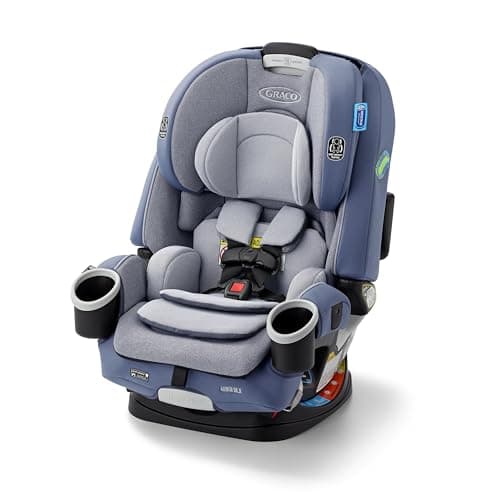
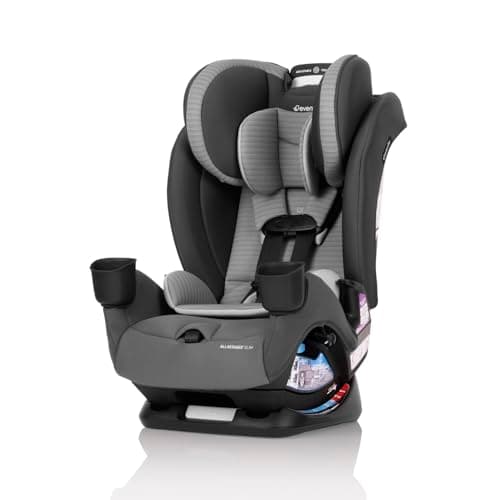
Graco and Evenflo are the two brands that own the mainstream middle of the American car-seat market. They overlap heavily on price, they are stocked side by side in the same aisle, and both are certified to the same federal standard — so the choice between them is not about which one is safe. It is about two different answers to the question "what should a mid-priced car seat spend its money on?" Graco answers a faster, more forgiving install and the longest fit ranges. Evenflo answers rotation, narrow shells, and electronics. This page walks the lineup stage by stage.
The one-line verdict
Buy Graco if you want the simplest possible route to a tight install, the deepest ladder of seats and boosters, and the best odds of never thinking about your car seat again. Buy Evenflo if you need a seat that rotates to the door, a shell narrow enough for three across, the lightest infant carrier you can get, or the SensorSafe chest clip that warns you a child is still buckled in. Both brands clear FMVSS 213, the federal crash standard every child restraint sold in the United States must meet.
What each brand builds its argument on
Graco leans on install hardware. SnugLock is a single arm you close until it clicks, works with the vehicle belt or LATCH, and Graco says it produces a secure install in under a minute. InRight LATCH gives a one-second connector with an audible click. Above the federal certification, Graco markets ProtectPlus Engineered, its own programme covering frontal, side, rear and rollover crash testing.
Evenflo leans on features and its own test programme. The company states that it tests its car seats at twicethe federal crash-test standard, and that its testing covers FMVSS 213 and FMVSS 302 flammability, FAA inversion requirements for aircraft use, high and low temperature testing, and rollover testing that simulates roof-to-ground contact. Evenflo's e3 Side Impact Protection is described by the company as three layers of protection that reduce side-impact crash forces by up to 50 percent, and SensorSafe pairs a wireless receiver with a smart chest clip that alerts a caregiver when a child is still in the vehicle on arrival, or when the chest clip is unbuckled during a trip. Those are manufacturer claims, tested to manufacturer protocols — worth knowing, but not a substitute for the federal certification both brands already hold.
Stage one: the infant carrier
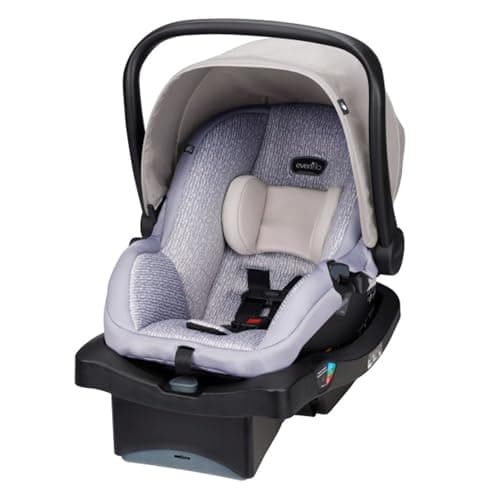
Evenflo's LiteMax is the lightest mainstream infant carrier you can buy — about six pounds — with a 4 to 30 pound rear-facing range and one of the lowest prices in the category. Weight is not a crash-performance spec, but it is the spec you feel: you will lift that carrier in and out of the car several times a day for a year, usually with a baby in it.
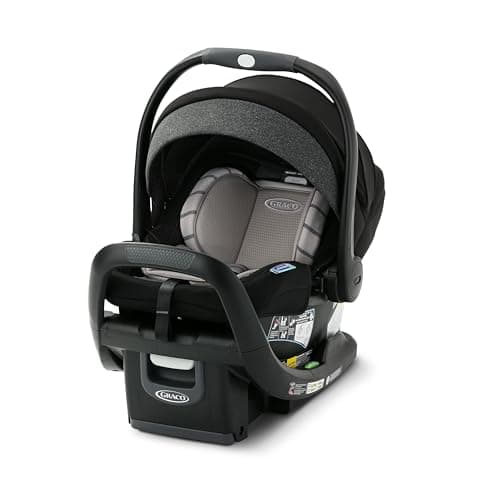
Graco's SnugRide SnugFit DLX goes the other way. It is heavier, but it rear-faces to a published 35 pounds and includes an anti-rebound bar as standard, which braces against the vehicle seat back and limits how far the seat rotates in a crash. Five extra pounds of rear-facing capacity is worth real months in the carrier before you move up to a convertible seat. If you want that matchup against the other flagship infant seat, see Chicco KeyFit vs. Evenflo LiteMax or the full infant car seat rankings.
Stage two: rear-facing longer, or turning to the door
Here is the most interesting fork between the two brands, and it is not a price fork — both answers cost roughly mid-market money.
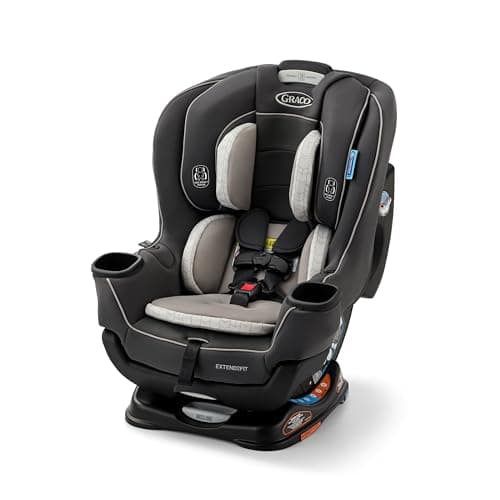
Graco's Extend2Fit adds a four-position extension panel that gives up to five inches of extra legroom, letting most children stay rear-facing to a published 50 pounds, then forward-facing from 22 to 65 pounds. Extended rear-facing is the safest riding position held for longer, which is the single most valuable thing a convertible seat can offer.
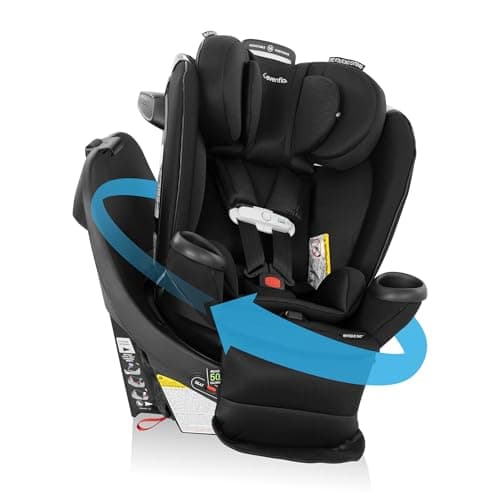
Evenflo's Revolve360 line rotates. The Gold Revolve360 Extend spins 360 degrees one- handed so you load your child facing the open door and then turn the seat to rear- or forward-facing, and it covers rear-facing 4 to 50 pounds, forward-facing 30 to 65 pounds, and a booster mode from 40 to 120 pounds — a full ten years by Evenflo's reckoning. It also carries SensorSafe. The Revolve360 Slim does the same trick in a 16.9-inch shell.
So both brands reach 50 pounds rear-facing. The real question is whether rotation is worth the premium and the extra weight to you. If you have a bad back, a low car, or a tight driveway where you cannot open the door fully, rotation is transformative. If you do not, Graco's extension panel gets you the same rear-facing months for less money and less bulk. Our Extend2Fit vs. All4Stages comparison takes the value end of this apart in detail.
Stage three: one seat for a decade
Graco's 4Ever DLX is the archetype: rear-facing 4 to 40 pounds, forward-facing harness 26.5 to 65 pounds, highback booster 40 to 100 pounds, backless booster 40 to 120 pounds, with SnugLock installation and a no-rethread harness that adjusts with the headrest in one motion.
Evenflo's All4Stages Slim answers with the same four modes in a 16.9-inch shell — rear-facing 4 to 40 pounds, forward-facing harness 30 to 65 pounds, highback booster to 100 pounds and backless to 120 — and meets the updated federal side-impact requirement for children under 40 pounds. What you give up is the install aid: there is no one-dial tensioner, so a careful belt or LATCH install is genuinely on you.
The tiebreaker is usually your back seat rather than the spec sheet. Evenflo's slim shells make three-across seating realistic in cars where a 4Ever DLX simply will not fit beside two other seats. Graco has its own narrow answer in the SlimFit3 LX at 16.7 inches — our small-car and three-across guide measures the whole field.
Boosters, and why you might never buy one
Graco's TurboBooster line is the default value answer in the booster aisle: the highback covers 40 to 100 pounds and 43 to 57 inches, converts to backless, and the backless version is cheap enough to buy two. Both of our budget booster picks are Graco, and the booster roundup explains why.
Evenflo's route is different: because its all-in-ones carry a booster mode to 120 pounds, plenty of Evenflo families never buy a standalone booster at all. That is a legitimate saving — but only if the seat still fits the child properly at that stage, and only if the seat has not expired. Check the shoulder-belt guide height on the seat you own before assuming it will carry a nine-year-old. Our guide to when to switch to a booster seat covers the transition in both directions.
What SensorSafe does and does not do
It is worth being precise, because this is Evenflo's most distinctive feature. SensorSafe is an alert: a smart chest clip and a wireless receiver that tell a caregiver a child is present in the vehicle on arrival, or that the chest clip has been unbuckled mid-trip. It does not restrain the child, it does not improve crash performance, and it is not a substitute for the habit of checking the back seat every single time. As a backstop against a genuinely catastrophic and well-documented failure mode, it is a reasonable thing to pay for. As a replacement for a routine, it is not.
Which brand should you buy?
For most families, Graco is the lower-effort answer: the install systems are the friendliest in the mainstream market, the fit ranges are the longest, and the booster prices are the lowest. Buy Evenflo when you have a specific problem it solves better — a back seat too narrow for three conventional seats, a car you cannot lean into, arms that will thank you for a six-pound carrier, or a real desire for the SensorSafe backstop. Whichever you choose, the seat still has to be installed tight and at the right angle, and used rear-facing for as long as it allows — see rear-facing versus forward-facing and our car seat safety checklist.