Infant vs Convertible Car Seat: Which Do You Buy First?
Both are certified to the same federal crash standard. The decision is about a carrier that comes out of the car with a sleeping baby in it, and whether that convenience is worth buying two seats instead of one.
Disclosure:Swaddle & Stroll is reader-supported. When you buy through links on this page we may earn an affiliate commission, at no extra cost to you. It never changes our picks. How this works.
Most families should buy an infant car seat first. Not because it is safer — it is not, both types are certified to the same federal standard, FMVSS 213 — but because a carrier that clicks out of a base lets you move a sleeping newborn without waking them, clicks onto a stroller frame, and fits a small baby properly with almost no effort. Going straight to a convertible is the cheaper path, and it is a perfectly legitimate one if you accept that every trip ends with lifting the baby out in a parking lot.
This question gets confused with a different one — when to move a child out of their infant seat, which our when to switch to a convertible car seat guide answers. This page is about which seat to buy in the first place, before the baby arrives.
The actual difference, in one sentence each
An infant car seatis a rear-facing-only carrier that detaches from a base left installed in the car. You carry the baby in it, click it back into the base, and on most models click it onto a matching stroller frame. It is outgrown — usually by height before weight — somewhere around 30 to 35 lb, which in practice means somewhere between nine months and two years.
A convertible car seat installs in the car and stays there. It starts rear-facing, then turns forward-facing with a harness when the child is ready, and on all-in-one models becomes a booster after that. It has no carrier, no base to click into, and no stroller compatibility.
Side by side
Factor
Infant car seat
Convertible car seat
Crash standard
FMVSS 213 certified
FMVSS 213 certified — identical requirement
Comes out of the car
Yes — carrier detaches from the base
No — it stays installed
Stroller compatible
Yes, with a travel system or published adapter
No
Typical rear-facing range
4–30 lb or 4–35 lb depending on model
4–40 lb, or 4–50 lb on extended rear-facing models
How long it lasts
Roughly 9 months to 2 years; height usually ends it first
Years — to 65 lb forward-facing, and to 100–120 lb on all-in-ones
Newborn fit
Designed for it; most start at 4 lb with a level indicator
Varies — some start at 4–5 lb, others are not suitable for a newborn recline
Seats you will buy
Two (this one, then a convertible)
One, potentially all the way to a booster
Moving between cars
Easy — buy a second base, click the carrier across
Awkward — a full reinstall each time
The case for buying an infant seat first
The sleeping baby problem. This is the whole argument, and people who have not done it underrate it. A newborn sleeps through most car journeys. With a carrier, the baby stays asleep from car to house. With a convertible, every arrival involves unbuckling and lifting a sleeping newborn out at the curb. Over the first year that is hundreds of repetitions.
Newborn fit is designed in, not hoped for. Infant seats start at 4 lb, have deeper shells and shorter lowest harness slots, and almost all carry a bubble level or line to set the recline. Some convertibles handle a newborn well; others explicitly do not, and a few narrow models we rate highly are seats you move to rather than start with.
It is the easiest seat to install correctly. The base goes in once, stays, and gives a clear level reading. A convertible gets reinstalled every time you move it, and every reinstall is a chance to get the angle wrong. Install ease is weighted heavily in our scoring for exactly this reason.
Two cars, two bases.A second base costs far less than a second seat, and clicking a carrier across is a five-second job. Grandparents especially benefit — see our best car seats for grandparents.
Travel systems only exist on this side. If you want the stroller and seat to click together, you need an infant seat. Our best travel systems roundup covers matched bundles, and will my car seat fit my stroller covers mixing brands.
The case for going straight to a convertible
You buy one seat instead of two. An infant seat is outgrown and then replaced; a convertible or all-in-one can cover from birth to the booster years. The saving is real and it is the strongest argument on this side.
No outgrowing anxiety.Infant seats end on height more often than weight, and tall babies can outgrow one before their first birthday — which means buying the second seat sooner than planned.
Extended rear-facing comes built in. The best convertibles rear-face to 50 lb, far past where any infant seat stops. If keeping your child rear-facing as long as possible is your priority, a convertible gets you there without an intermediate purchase.
Carriers get heavy fast.A carrier plus a six-month-old is a significant load on one arm, and plenty of parents stop carrying it long before the baby outgrows it — at which point the main advantage has already evaporated.
And it suits some lives better: if you mostly walk or use a carrier, if the baby is big at birth, or if the budget is genuinely tight, a convertible from day one is the sensible answer and no one should feel they have compromised on safety.
What about an all-in-one as a third option?
An all-in-one is a convertible that keeps going: rear-facing, then forward-facing harness, then a highback booster and often a backless one, from a single shell rated for around ten years. On paper it is the cheapest possible path — one seat, no replacements. In practice it is a compromise at both ends: a seat built to hold a 120 lb ten-year-old is large and heavy for a newborn's car, its rear-facing footprint eats front-seat room, and its booster stage is usually adequate rather than excellent.
We think the honest framing is this: an all-in-one is a very good second seat and a defensible onlyseat, but it is rarely the best seat at any single stage. If you want one purchase and you are content with good-at-everything, it is the right answer — our best all-in-one car seats roundup ranks them.
How to decide in two questions
Will you regularly move the baby from the car to somewhere else while asleep — a stroller, a house, a store? If yes, buy the infant seat. This single behavior is what the carrier is for.
If no, is the budget tight or is extended rear-facing your priority? Then buy a convertible that is rated from birth, check its newborn recline, and do not look back.
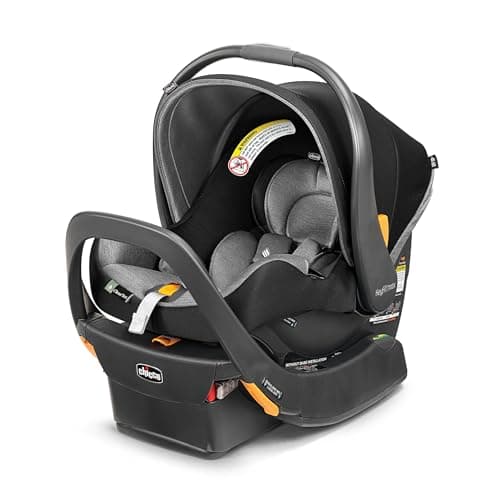
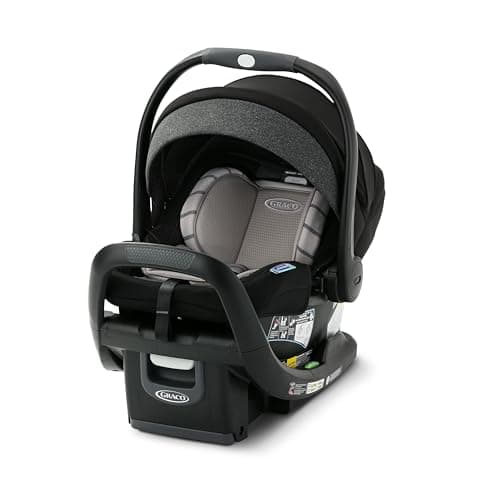
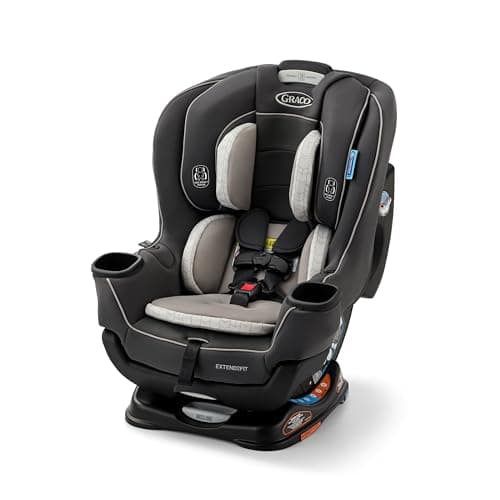
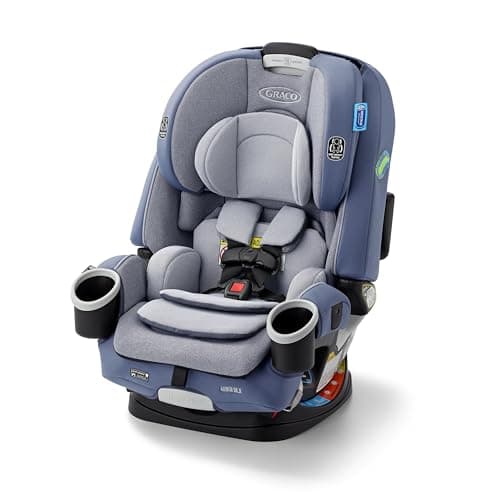
Two infant seats and two convertibles, so you can see the trade-off in real products rather than in the abstract: the Chicco KeyFit Max and Graco SnugRide SnugFit DLX on the infant side, and the Graco Extend2Fit (rear-facing to 50 lb) and Graco 4Ever DLX (one seat to a 120 lb backless booster) on the convertible side. All four are certified to FMVSS 213 and were verified in stock when this page was published. Full rankings live in best infant car seats and best convertible car seats; before any of it, how to install an infant car seat is the page that matters most.
The KeyFit line is the reference standard for installing a seat right the first time, and this ClearTex version skips added flame-retardant chemicals in the fabric.
Rear-facing
4–30 lb (this seat)
Standard
FMVSS 213 certified
Fabric
ClearTex — no added flame-retardant chemicals
Install
Bubble level + single-pull LATCH tightener
What we like
One of the most consistently easy seats to install correctly
A four-position extension panel adds up to five inches of legroom, letting most children stay rear-facing to 50 lb — the safest riding position, kept longer.
InRight LATCH makes a tight install straightforward
10-position no-rethread headrest grows with the child
Worth noting
Large and heavy — not for seat-swapping between cars
Bulky rear-facing footprint in small cars
Rear-faces only to 40 lb; no SnugLock arm on this version
How it scored
Safety-standard compliance9.4
Install ease9.0
Longevity9.8
Value9.2
Frequently asked questions
Is an infant car seat safer than a convertible?+
No. Both are certified to the same federal crash standard, FMVSS 213. What changes outcomes is a tight install at the correct angle, a snug harness with the chest clip at armpit level, and staying rear-facing as long as the seat allows — not which type you bought.
Can you skip the infant car seat and go straight to a convertible?+
Yes, provided the convertible is rated from birth and its newborn recline suits your baby. You save the cost of a second seat. What you give up is the carrier: with a convertible, every journey ends with unbuckling and lifting the baby out, and there is no stroller click-in.
How long does an infant car seat last?+
Usually between about nine months and two years. Published limits are typically 30 or 35 lb rear-facing, but most babies outgrow the seat by height first — when the top of the head is within an inch of the shell top, or they pass the seat's height limit, whichever the manual says.
Do you need a convertible car seat if you have an infant seat?+
Eventually, yes. An infant seat is rear-facing only and is outgrown well before a child is ready to stop riding rear-facing, so the convertible is the next purchase rather than an optional one. Plan for two seats if you start with a carrier.
Which car seat can a newborn use?+
Any seat whose manual states a minimum weight at or below your baby's and whose recline suits a newborn. Infant seats are designed around this and almost all start at 4 lb with a level indicator. Convertibles vary: some start at 4 to 5 lb, while others are seats you move to later and are not suitable for a newborn recline. Check the manual, not the box.
Is a travel system worth it, or should I buy the seat and stroller separately?+
A matched travel system is usually cheaper than equivalent parts and removes all adapter guesswork, which is why we recommend it for most first babies. Buying separately makes sense when one half of every bundle does not fit your life — a small trunk being the common case.