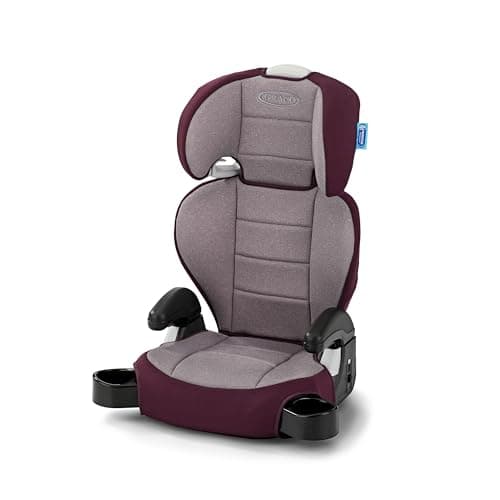
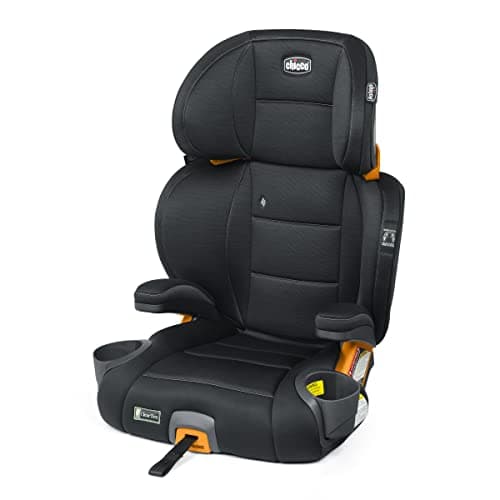
Graco and Chicco are the two brands most American parents actually end up choosing between, and they are far more different than the shelf suggests. Graco sells an enormous ladder of seats at almost every price point; Chicco sells a much smaller range built around one idea — that the seat you can install correctly, every time, is the seat that protects your child. This page compares the two brands across the whole journey rather than model against model: the infant carrier you start with, the harnessed seat that does the middle years, and the booster you finish on. If you want a single head-to-head instead, our Chicco KeyFit Max vs. Graco SnugRide SnugFit DLX page takes the two flagship infant seats apart in detail.
The one-line verdict
Buy Chiccoif install confidence and fabric chemistry are what you want to spend money on — the SuperCinch tightener, RideRight bubble levels and ClearTex fabrics are the brand's whole argument, and it is a real argument. Buy Graco if you want longer published fit ranges, four-mode seats that genuinely cover a decade, and a lineup that reaches down to prices Chicco does not compete at — particularly in boosters, where the gap is widest. Neither answer is a safety compromise, and plenty of families own both brands at different stages, which is completely fine.
Neither brand is "the safe one"
Every car seat sold in the United States, from either brand, has to be certified to FMVSS 213, the federal crash standard for child restraint systems. That is a legal requirement, not a feature either brand can market as an advantage. What genuinely varies between seats — and therefore between brands — is how likely you are to get the install tight and at the correct angle, because a loose or badly angled seat is where real-world protection is lost. That is the lens for everything below. Neither Graco nor Chicco publishes comparable crash-test scores, and we have not crash-tested anything ourselves; our methodology page spells out exactly what we do and do not know.
Install hardware: where the brands really diverge
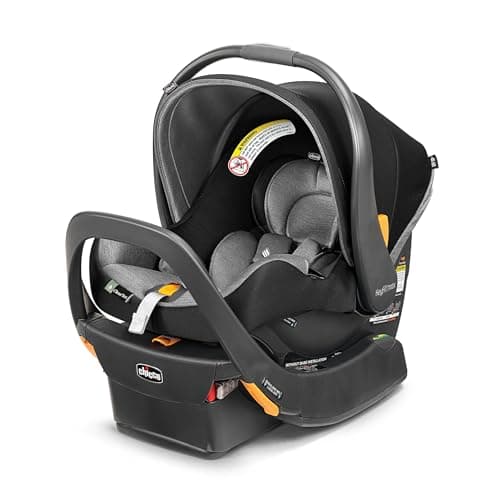
Chicco's pitch is a feedback loop. Its seats pair a SuperCinch force-multiplying LATCH tightener — a lever that lets you pull the strap far tighter than arm strength alone would manage — with RideRight bubble level indicators that work alongside a nine-position ReclineSure levelling system, plus a steel-reinforced LockSure belt lock-off for seat-belt installs. In practice that means you can see whether the angle is right rather than judging it, and you can reach a tight install without wrestling. It is the reason Chicco seats have a reputation among first-time parents that runs ahead of their spec sheets.
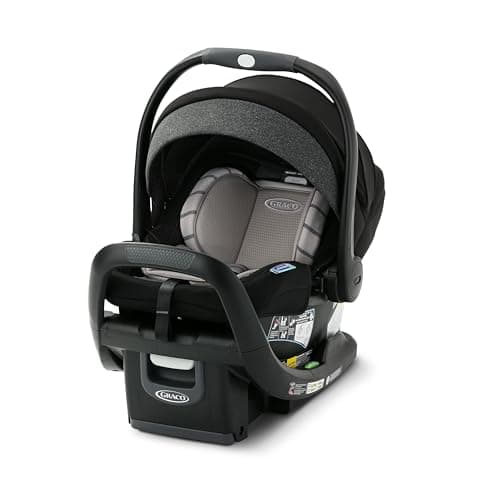
Graco takes a speed-and-flexibility route. SnugLock is a single arm you close until it clicks; Graco says it produces a secure installation in under a minute, and it works with either the vehicle belt or LATCH — which matters, because you will eventually be in a car where one of those is awkward. InRight LATCH adds a one-second connector with an audible click. Graco also markets its seats as ProtectPlus Engineered, its own testing programme covering frontal, side, rear and rollover crashes on top of the federal certification.
The honest read: both systems work, and both are far better than a bare belt path. Chicco gives you more confirmation that you got it right; Graco gives you fewer steps and does not care which install method your car makes easy. If you have already decided to get the install checked at an inspection station, the gap narrows a lot. If you know you will be doing it alone in a car park with a crying newborn, the bubble level earns its money.
Stage one: the infant carrier
Chicco's KeyFit line is the seat that built the brand's reputation, and the KeyFit Max ClearTex is the current flagship: a bubble level and single-pull tightener, ClearTex fabric, and a 4–30 pound rear-facing range on the version we list. Graco's answer is the SnugRide SnugFit DLX, which rear-faces to a published 35 pounds and includes an anti-rebound bar as standard — a padded bar that braces against the vehicle seat back and limits how far the seat rotates in a crash.
Those five extra pounds are the most concrete difference at this stage. They are worth real months in the carrier for an average baby before you move up to a convertible seat, and the Graco is usually the cheaper of the two as well. Chicco's counter is the install pedigree and the fabric. Both are excellent seats, and this is the one stage where we would not argue with either choice — see the full infant seat rankings for how they sit against the rest of the field.
Stage two: the seat that does the long middle
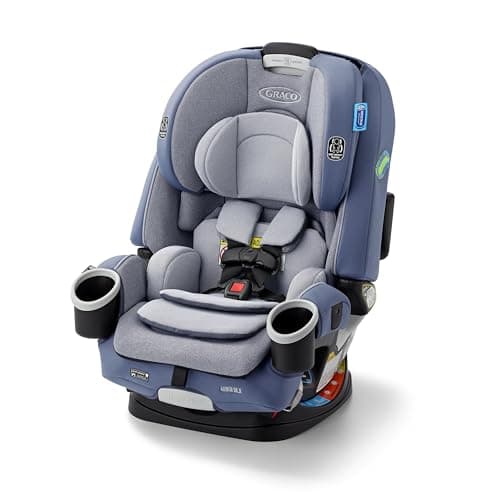
This is where the brands separate on paper. Graco's 4Ever DLX is a four-mode seat: rear-facing harness from 4 to 40 pounds, forward-facing harness from 26.5 to 65 pounds, highback belt-positioning booster from 40 to 100 pounds, and backless booster from 40 to 120 pounds — Graco's stated ten years of use from one purchase, with SnugLock installation and a no-rethread harness that moves with the headrest in a single motion.
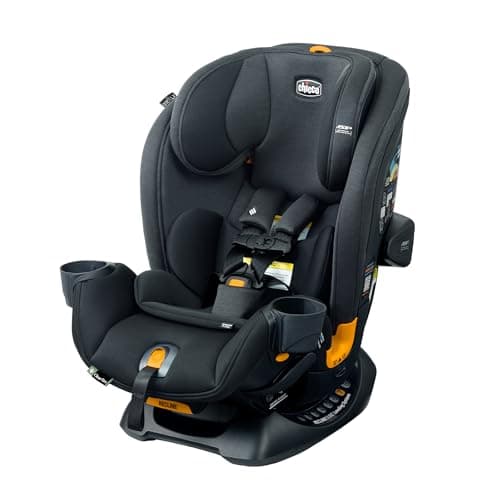
Chicco's OneFit LX ClearTex covers rear-facing from 5 to 40 pounds (up to 43 inches), forward-facing harness from 26.5 to 65 pounds, and a booster mode to 100 pounds. It is slimmer and plusher than the Graco, its ClearTex fabric is GREENGUARD Gold certified for low chemical emissions, and it installs with SuperCinch LATCH plus a self-tensioning LeverLock belt lock. What it does not do is match the Graco's backless booster stage, so a tall child will need one more seat afterwards.
There is a second fork worth knowing about here, because each brand sells a specialist as well as a generalist. Chicco's Fit360 rotates to face the door so you can load a child without folding yourself into the back seat; Graco's Extend2Fit adds an extension panel that keeps most children rear-facing to 50 pounds. Those are genuinely different priorities, and we compare them directly in Chicco Fit360 vs. Graco Extend2Fit.
Stage three: the booster, where the price gap is widest
Graco's TurboBooster 2.0 Highback covers 40 to 100 pounds and 43 to 57 inches, has height-adjustable head support and armrests, uses open-loop belt guides a child can thread themselves, and drops its backrest to become a backless booster later. It is routinely the least expensive booster worth buying.
Chicco's KidFit ClearTex Plus does the same two jobs with more adjustment: ten DuoGuard headrest positions, a two-position backrest recline for sloped vehicle seats, quick-release LATCH to hold the empty booster in place, 40 to 100 pounds in highback mode and 40 to 110 pounds backless, up to 57 inches. It fits more children in more cars — and it costs substantially more, which makes this the biggest brand price gap of the three stages. Our TurboBooster vs. KidFit head-to-head works through that trade, and the booster roundup ranks both against the field. If you are not sure your child is ready for a booster at all, start with when to switch to a booster seat — moving up too early is the more common mistake by a wide margin.
Fabric and chemicals
This is a real Chicco advantage and it is easy to miss. ClearTex is Chicco's name for fabrics that, by the company's account, meet the federal flammability requirement without added flame-retardant chemicals, and the ClearTex seats we list are GREENGUARD Gold certified for low chemical emissions. Chicco applies it across much of its current range rather than reserving it for one halo model. Graco does not market an equivalent brand-wide flame-retardant-free line, so if this matters to you, check the specific seat you are buying rather than assuming from the badge on the box.
Lineup breadth and price
Graco's catalogue is simply much larger, and it reaches down to price points Chicco does not sell into — a backless Graco booster costs a fraction of anything Chicco offers in that category. Chicco's range is smaller and clusters in the mid-to-premium band, with fewer decisions to make and a more consistent set of install hardware across it. Which of those you prefer is mostly a question of whether you find a long options list reassuring or exhausting. The cards below carry a live price for each seat, because both brands discount constantly and any figure written into an article is stale within a week.
Which brand should you buy?
If you are a first-time parent buying an infant seat and the install is the thing keeping you awake, buy Chicco and use the bubble level. If you want one seat to cover the harness years and the booster years without another purchase, buy the Graco 4Ever DLX — its backless booster stage to 120 pounds is the longest published range here. If you are buying a booster on a budget, Graco wins on price by a distance; if your child moves between cars and car pools, the Chicco KidFit's adjustment range and LATCH are worth the difference.
And you are allowed to mix. Nothing about a Graco booster cares that the infant seat was a Chicco. The only place staying in-brand genuinely matters is a travel system, where the carrier has to click onto the stroller frame — and even then, adapters cover many combinations. Whichever brand you land on, the seat has to be tight, at the right angle, and used rear-facing for as long as its limits allow; our guide to rear-facing versus forward-facing covers why that last point outranks the badge on the shell.