The common advice is no more than about two hours at a stretch. Here is where that figure comes from, who it matters most for, and what to do on a day out that runs longer.
Disclosure:Swaddle & Stroll is reader-supported. When you buy through links on this page we may earn an affiliate commission, at no extra cost to you. It never changes our picks. How this works.
The widely repeated guidance is no more than about two hours in a car seat at a stretch, and then out of the seat for a while — and the rule matters most in the newborn weeks, and most of all for babies born early or small. It is worth being precise about what that figure is: it is clinical advice, not a federal rule. There is no two-hour limit in FMVSS 213, the federal crash standard. Some car seat manuals carry the manufacturer's own guidance on it, which is the first place to look for your particular seat.
What is not in question is the reason behind it. A car seat holds a baby semi-reclined with the head supported by the seat rather than by muscle. A newborn has little head control and a short, soft airway, so in that position the chin can drop toward the chest and partially narrow the airway — which is why car seat manufacturers specify a recline angle and build levels and indicators into their seats to help you get it right. The longer a very young baby stays in that position without a break, the more this matters.
What to do on a drive longer than two hours
Plan the stops before you leave. Two hours of driving plus traffic is easily three hours in the seat. Put the stops in the plan rather than hoping for them.
Take the baby out of the seat at each stop, not just out of the car. Hold them upright, let them stretch out flat for a while, feed and change them.
Put an adult in the back on long drivesif you can, so someone can see the baby's face and hear their breathing. A mirror is helpful, but a person is better.
Check the recline angle before you set off.Use the seat's level indicator or bubble level. An infant seat that is too upright is exactly the condition this guidance is about.
Do not pad the seat to prop the head. Aftermarket inserts, rolled blankets behind the head and head supports that did not come with the seat change how the harness and shell perform in a crash. Use only what the manufacturer supplies.
Never take a sleeping baby out of the harness to settle them while the car is moving, however tempting.
The two-hour figure is a planning rule. These are the things that override it, and they mean pull over at the next safe place rather than finishing the journey:
The chin has dropped to the chest, or the head has slumped fully forward and is not held by the seat.
Breathing sounds noisy, laboured or snuffly in a way it was not before the baby went in the seat.
Any change in color around the lips or face, or unusual pallor.
The baby has become floppy or unusually hard to rouse.
Take the baby out of the seat, hold them upright, and get medical help if it does not resolve immediately. And a separate rule that has nothing to do with the clock: never leave a baby alone in a parked car, for any length of time, in any weather. A car heats far faster than people expect and heatstroke in vehicles kills children every year in the US.
Day out, not drive: the stroller is the real fix
The scenario that catches people out is not the motorway drive — it is the day in town where the baby never leaves the infant carrier. Carrier into the car, carrier onto the stroller frame, carrier into the cafe, carrier back into the car. That can add up to five or six hours in a semi-reclined seat without anyone noticing, because the baby seems settled.
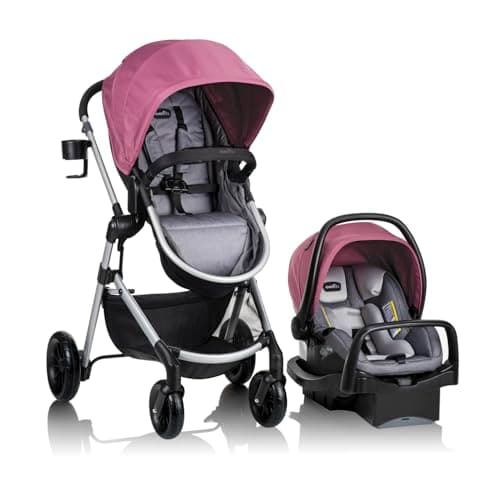
The practical answer is a stroller the baby can lie flat in: a bassinet or carriage mode, or a pram body. Then the carrier is used for the car journey, and the baby lies flat for the hours in between. That single change does more than any amount of clock-watching, and it is why we rate bassinet mode so highly in the travel-system category rather than treating it as a luxury.
The three picks below all give you a flat or near-flat mode without a separate purchase. The full rankings are in best travel systems and best strollers; if you are also choosing the seat itself, see best infant car seats and whether your car seat will fit your stroller. Note that a reclined stroller seat that is not a true bassinet is still not a safe sleep surface — flat, firm and in the baby's own sleep space is the standard.
Quick picks at a glance
#
Product
Best for
Score
Price
1
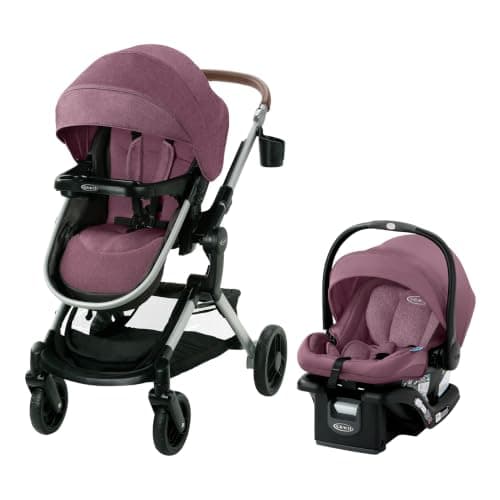
Graco Modes Nest Travel System
The Modes Nest frame plus a SnugRide DLX infant seat: a bassinet mode, a reversible seat, and a carrier stage — the system that spans the most months.
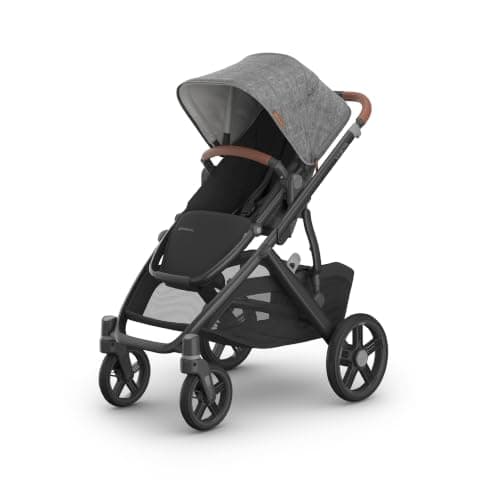
The premium bench-mark: it expands to hold three children and the build quality is a class above — but unlike the V2 it arrives with the toddler seat only, and the bassinet is now a separate purchase.
The premium bench-mark: it expands to hold three children and the build quality is a class above — but unlike the V2 it arrives with the toddler seat only, and the bassinet is now a separate purchase.
Type
Full-size, convertible single-to-double
In the box
Toddler seat + seat liner; V3 bassinet sold separately
Configurations
30+ (up to three kids)
Child weight
Up to 50 lb per seat; bassinet 20 lb; basket 30 lb
Weight
About 27 lb with the toddler seat fitted
What we like
Expands to a double or triple without a new frame
All-wheel suspension and a 30 lb basket
GREENGUARD Gold certified, with an all-season seat and a magnetic harness buckle on the V3
Worth noting
Expensive — and the bassinet the V2 bundled is now a separate purchase
Heavy frame
How it scored
Everyday usability9.4
Newborn readiness8.8
Expandability9.6
Value7.2
Frequently asked questions
How long can a newborn stay in a car seat?+
The commonly given advice is no more than about two hours at a time, then out of the seat for a stretch. It is clinical guidance rather than a federal rule — there is no two-hour limit in FMVSS 213 — and some manufacturers publish their own figure in the manual. It matters most for newborns and for babies born premature or at a low birth weight.
Why is there a two-hour car seat rule?+
Because a car seat holds a baby semi-reclined with the head supported by the shell rather than by muscle. A newborn has little head control and a short, soft airway, so the chin can drop toward the chest and narrow it. That is also why car seats specify a recline angle and build in level indicators — getting the angle right is the part you control.
Can a baby sleep in a car seat overnight?+
No. The AAP does not recommend sitting devices — car seats, swings, bouncers, carriers — for routine sleep. If your baby falls asleep in the car seat, move them to a firm, flat surface on their back when you arrive, and never leave a baby sleeping in a carrier placed on a bed, sofa or counter.
What should I do on a car journey longer than two hours?+
Plan stops in advance, take the baby fully out of the seat at each one rather than just out of the car, and seat an adult in the back if you can so someone can see the baby's face. Check the recline angle with the seat's level indicator before you set off, and never add aftermarket padding or head supports that did not come with the seat.
Does the two-hour rule apply to a car seat clicked onto a stroller?+
Yes — the position is the same, which is what the guidance is about. A day in town where the baby stays in the carrier through the car, the stroller and the cafe can easily exceed the figure without anyone noticing. A stroller with a bassinet or carriage mode, so the baby lies flat between car journeys, is the practical fix.