Ranked by the numbers that decide how long your child can stay rear-facing: the published weight limit, the standing-height limit, and the shell height that runs out first.
Disclosure:Swaddle & Stroll is reader-supported. When you buy through links on this page we may earn an affiliate commission, at no extra cost to you. It never changes our picks. How this works.
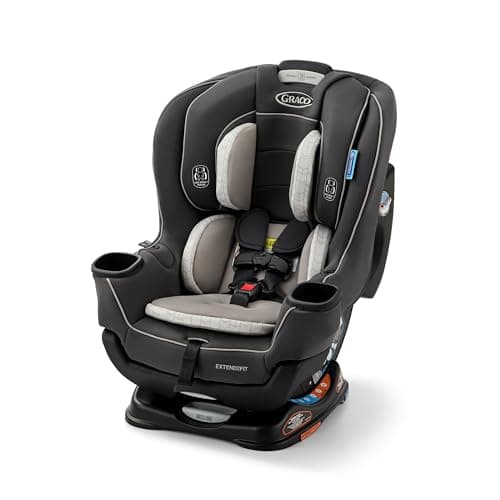
The verdict: the Graco Extend2Fit Convertible is the seat to buy for extended rear-facing. Graco publishes 4–50 lb rear-facing, and the four-position extension leg panel adds the legroom that is the real reason parents turn a toddler forward early. It is for a family that intends to keep a child rear-facing to the seat's limit rather than to a birthday. The budget pick is the Safety 1st Grow and Go All-in-One: 5–40 lb rear-facing, FMVSS 213 certified like every seat here, and the cheapest seat on this page that still carries a child past the age most families turn. If your back seat is narrow or you need three across, the Diono Radian 3R is the 50 lb option at 17 inches wide.
The limit that runs out first is usually height, not weight
Parents shop this category on the weight number and then get surprised. In practice most children outgrow a rear-facing seat by height, and the rule is specific: rear facing, there must be at least one inch of shell above the top of the child's head, and the harness must come from a slot at or below the shoulders. A tall two-year-old can hit that on a 40 lb seat while weighing 28 lb. That is why the published standing-height limits on this page matter as much as the weight ones — 43 inches on the Chicco OneFit LX, 49 inches on the Graco SlimFit3 LX — and why the Extend2Fit's extension panel earns its place: it buys knee room, which is the comfort complaint that makes families turn a child early, not a safety limit.
The second thing that runs out is the lower-anchor allowance. NHTSA's 2014 labeling rule caps the combined weight of child plus car seat on the lower anchors at 65 lb, so with a 23–26 lb convertible you move to a vehicle-belt installation somewhere around the 40 lb mark. That is normal, it is in your manual, and it is not a sign the seat has been outgrown. Our LATCH vs seat belt guide explains the switch.
The 50 lb seats
1. Graco Extend2Fit Convertible — the default answer
Who it is for: almost everyone asking this question. Rear-facing 4–50 lb, forward-facing 26.5–65 lb, and a four-position extension leg panel that is the only mechanism on this page specifically designed to extend the rear-facing years rather than merely allow them. We have a full Graco Extend2Fit review, and it appears against its stablemate in Graco 4Ever vs Extend2Fit.
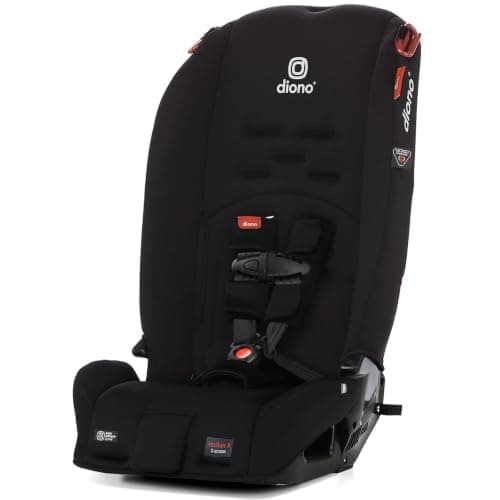
2. Diono Radian 3R — 50 lb in 17 inches of width
Who it is for: narrow back seats and three-across rows. Diono publishes 5–50 lb rear-facing, 22–65 lb forward-facing harness and a booster mode to 120 lb and 57 inches, in a 17-inch-wide steel-framed shell that folds to 7 inches deep for travel. The trade-off is mass: about 23 lb of seat, which you feel every time you move it. Our car seats for small cars roundup covers the fit question in detail.
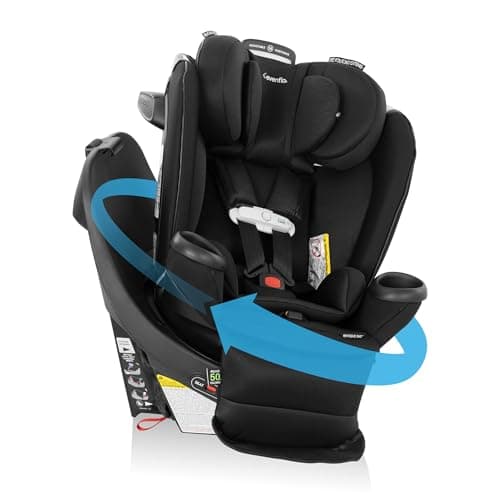
3. Evenflo Gold Revolve360 Extend — 50 lb, and it rotates
Who it is for: a parent loading a rear-facing toddler into a tight parking space day after day. Rear-facing to 50 lb with 360-degree rotation, which solves the practical reason many families abandon rear-facing: the contortion needed to get a heavy toddler into a rear-facing shell. It is the most expensive seat here. See Chicco Fit360 vs Evenflo Revolve360 for the rotating-seat comparison, and note that the Graco Turn2Me rotates in rear-facing mode only.
The 40 lb seats — and why they are still the right buy for many families
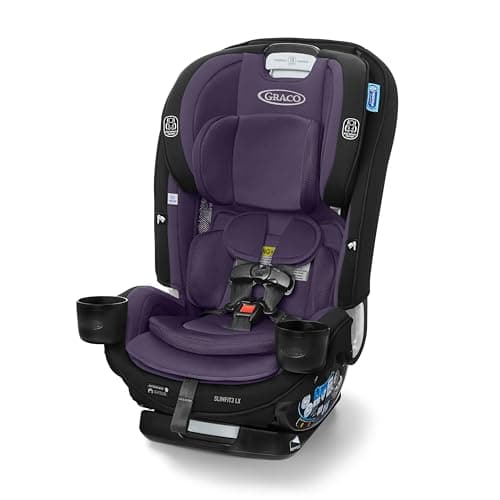
4. Graco SlimFit3 LX 3-in-1 — the best height ceiling under $300
Who it is for: a tall child in a narrow car. Rear-facing 5–40 lb and up to 49 inches — that 49-inch figure is the most generous rear-facing height limit on this page, and height is the limit most children hit first. Graco publishes a 16.7-inch width; independent reviewers measure 16.5 to 17 inches, and seat weight is quoted anywhere from about 18 to 19 lb depending on who weighed it. Plan around the wider figure.
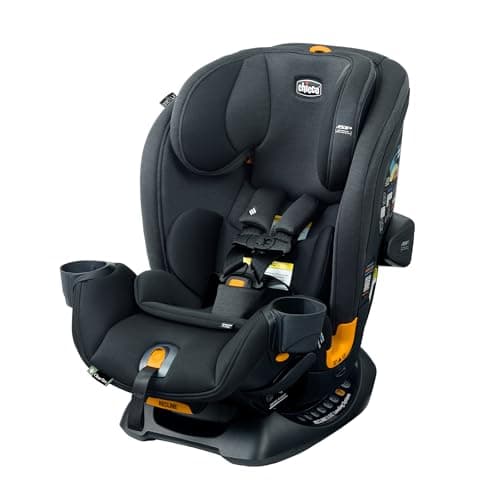
5. Chicco OneFit LX ClearTex All-in-One — best fit and install at this tier
Who it is for: a parent who wants the install to be hard to get wrong. Rear-facing 5–40 lb up to 43 inches, forward-facing harness 26.5–65 lb, booster to 100 lb, with SuperCinch LATCH tightening and a LeverLock self-tensioning belt lock. The ClearTex fabric is made without added flame-retardant chemicals, which Chicco publishes. Its 43-inch rear-facing height limit is the tightest here, so a very tall toddler may outgrow it before the weight limit. Compare it in Chicco OneFit vs Britax One4Life.
6. Safety 1st Grow and Go All-in-One — the budget pick
Who it is for: a second car, a grandparent's car, or a family that needs extended rear-facing to cost the least it honestly can. Rear-facing 5–40 lb, forward-facing harness 30–65 lb, highback booster to 100 lb, LATCH or vehicle belt, no-rethread harness. It is the cheapest seat on this page and it is certified to the same federal standard as the most expensive one. What you give up is the extension panel, the height headroom and the premium install hardware — not safety certification. Our car seats for grandparents page covers the second-car case.
One number to check before you buy any of them
Every seat here is certified to FMVSS 213, the federal child-restraint standard — that is a legal requirement for sale in the US and not a brand claim. What varies is the useful life: a convertible is stamped with an expiry measured from the date of manufacture, and the figure differs by model. Register the seat when it arrives so the manufacturer can reach you, and check it against NHTSA's recall list before first use and after any notice. If you are weighing a hand-me-down, read this first. And the broader decision — when to turn the seat at all — is in rear-facing vs forward-facing.
Quick picks at a glance
#
Product
Best for
Score
Price
1
Graco Extend2Fit Convertible
A four-position extension panel adds up to five inches of legroom, letting most children stay rear-facing to 50 lb — the safest riding position, kept longer.
The steel-framed 17-inch seat that made three-across a mainstream idea — still the least expensive way to do it, and still the fussiest seat here to live with.
A slim, plush all-in-one with Chicco's easy-install pedigree and ClearTex, flame-retardant-free fabric — the pick when fit and comfort matter most through the harness years.
A light, no-fuss all-in-one that carries a child from rear-facing to a highback booster for a budget price — the sensible-money choice that still meets the same federal standard.
Budget pick: the cheapest seat here that still does the job
A four-position extension panel adds up to five inches of legroom, letting most children stay rear-facing to 50 lb — the safest riding position, kept longer.
The steel-framed 17-inch seat that made three-across a mainstream idea — still the least expensive way to do it, and still the fussiest seat here to live with.
Width
17 in
Dimensions
28.5 in H x 17 in W x 16 in D; folds to 7 in deep
Rear-facing
5–50 lb
Forward-facing
22–65 lb harness
Booster
40–120 lb, up to 57 in
Seat weight
About 23 lb
Standard
FMVSS 213 certified
What we like
Flat steel-reinforced sides mean the 17-inch width is the width all the way down, which is what three-across actually needs
Rear-facing to 50 lb
Folds to about 7 inches deep for storage or a trip
Usually the cheapest seat on this page by a wide margin
Worth noting
Safe in the Seat's CPSTs do not recommend it — rear-facing it is very long front to back unless you buy the separate Diono Angle Adjuster
Many removable parts and conditional rules; it is an easy seat to install slightly wrong
About 23 lb, with a cover that is awkward to refit after washing
Most children outgrow it by torso height long before the 120 lb figure on the box
A slim, plush all-in-one with Chicco's easy-install pedigree and ClearTex, flame-retardant-free fabric — the pick when fit and comfort matter most through the harness years.
Rear-facing
5–40 lb (up to 43 in)
Forward-facing / booster
FF harness 26.5–65 lb; booster 40–100 lb
Standard
FMVSS 213 certified
Install
SuperCinch LATCH + LeverLock self-tensioning belt lock
What we like
ClearTex fabric skips added flame retardants and is GREENGUARD Gold certified for low emissions
SuperCinch LATCH and the LeverLock self-tensioning belt lock make a tight install approachable
Slim shell with plush padding — a genuinely comfortable fit through the harness years
Worth noting
Booster mode tops out at 100 lb / 57 in — shorter than rivals for a very tall older child
Premium price for an all-in-one
Heavy (about 25 lb) — a stay-in-the-car seat, not one to swap between vehicles
A light, no-fuss all-in-one that carries a child from rear-facing to a highback booster for a budget price — the sensible-money choice that still meets the same federal standard.
Rear-facing
5–40 lb
Forward-facing / booster
FF harness 30–65 lb; highback booster 40–100 lb
Standard
FMVSS 213 certified
Install
LATCH or vehicle belt; no-rethread harness
What we like
One of the lightest all-in-ones here at about 13 lb, so it is easier to move if you must
No-rethread harness and headrest adjust together in one motion
Machine-washable, dryer-safe seat pad
Worth noting
Covers three stages — rear-facing, forward-facing, and a highback booster, but no backless mode
Basic padding and a standard belt/LATCH install without a foolproof one-dial tensioner
Booster mode tops out at 100 lb
How it scored
Safety & install ease8.4
Fit & comfort8.2
Longevity8.4
Value9.4
Frequently asked questions
What counts as an extended rear-facing car seat?+
In US practice, a convertible seat whose rear-facing limit goes meaningfully past the 35 lb that older seats stopped at. The seats on this page split into a 50 lb tier (Graco Extend2Fit, Diono Radian 3R, Evenflo Gold Revolve360 Extend) and a 40 lb tier (Graco SlimFit3 LX, Chicco OneFit LX, Safety 1st Grow and Go). Both tiers carry a typical child well past the age most families turn.
How do I know when my child has outgrown rear-facing?+
Three checks, and whichever comes first ends it: the published rear-facing weight limit, the published standing-height limit, and one inch of shell above the top of the child's head with the harness coming from a slot at or below the shoulders. Height usually runs out before weight.
Is a 40 lb rear-facing limit enough?+
For most children, yes. A 40 lb seat typically carries a child rear-facing to around four years old, which is past the AAP's practical expectation for most families. The 50 lb seats buy margin for a heavier or taller child, and the Extend2Fit's extension panel buys knee room, which is often the actual complaint.
Do I have to stop using LATCH at some point while rear-facing?+
Yes. Under NHTSA's 2014 labeling rule, the combined weight of the child and the car seat must not exceed 65 lb on the lower anchors. With a 23 to 26 lb convertible that means switching to a vehicle-belt installation somewhere around 40 lb. Your seat's manual gives the exact figure.