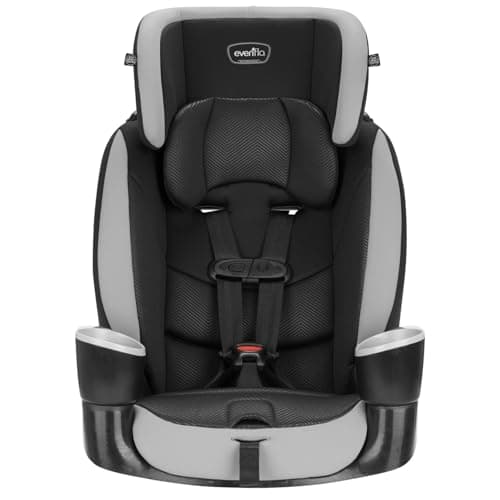
Five seats ranked on the two numbers that decide a travel seat: how many pounds you carry through the terminal, and whether federal rules let it on the plane at all.
Disclosure:Swaddle & Stroll is reader-supported. When you buy through links on this page we may earn an affiliate commission, at no extra cost to you. It never changes our picks. How this works.
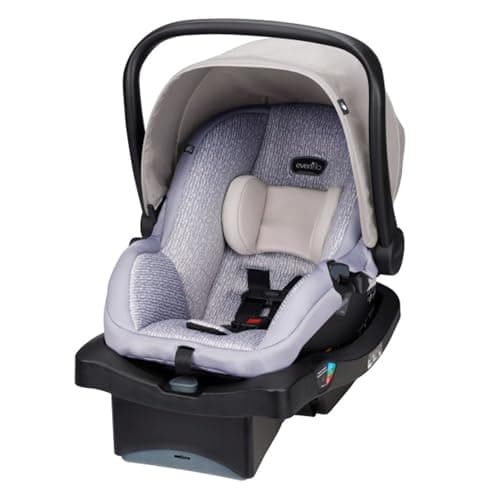
If you are flying with a toddler and want a harnessed seat you can actually carry, buy the Evenflo Maestro Sport. It is 9.6 pounds — light enough to sling over a shoulder through a terminal — it has a genuine five-point harness, and it is GREENGUARD Gold certified. The trade is its harness ceiling: 50 pounds, which arrives 15 pounds sooner than the heavier seats, so a big five-year-old moves to booster mode early. For a newborn the answer is different: take the Evenflo LiteMax 30, which at about 6 pounds is one of the lightest infant carriers sold and clicks straight out of its base. Everything else on this page is a variation on that one trade-off between weight, fit range, and whether the seat is legal in the air at all.
A word on what this page is, in keeping with how we pick. We have not flown these five seats around the country. What we have done is take the seat weight and the harness and booster limits each manufacturer publishes, put them in one table, and check each seat against the federal rules that govern child restraints in aircraft — the part most “best travel car seat” lists skip entirely. Where a maker does not publish a figure, we say so rather than inventing one.
The rules first, because they rule out a third of the market
Two federal documents decide what you can take on a plane, and they disagree with the way most parents shop. Under 14 CFR 121.311, booster-type child restraints, vest- and harness-type restraints, and lap-held restraints are notapproved for use in aircraft. That is not an airline policy you can argue with at the gate: an aircraft seat has a lap belt and no shoulder belt, so a belt-positioning booster has nothing to position. FMVSS 213, the federal standard every US car seat is built to, puts the same fact on the product itself — the instructions for a belt-positioning booster must carry the statement “This restraint is not certified for aircraft use.”
The flip side is the thing to look for. A seat built for both jobs has to meet the extra aircraft requirements in section S8 of FMVSS 213 — printed aircraft installation instructions plus an inversion test — and it says so on a label on the shell. Read that label before you pack, not at the gate. And note what the FAA itself says: it “does not require the use of CRS's on commercial airplanes” but “strongly recommends” a CRS or an alternative FAA-approved device based on the child's weight. Buying a seat for the child is the only way to guarantee you can use one, because a restraint needs its own ticketed seat.
What makes a car seat a travel car seat
Seat weight, in pounds, published. This is the whole game. A 23-pound all-in-one and a 9.6-pound harness booster do the same job in a car and completely different jobs in an airport, where you are carrying the seat, a bag, a child, and sometimes a stroller as well. Anything over about 15 pounds needs a plan: a cart, a travel strap, or a checked bag.
Aircraft eligibility, read off the label.Harnessed modes qualify; booster modes never do. A three-mode seat like the Graco Tranzitions is legal in the air in harness mode and illegal in the air in either of its booster modes — a distinction worth understanding before you buy one seat for a trip that spans both stages.
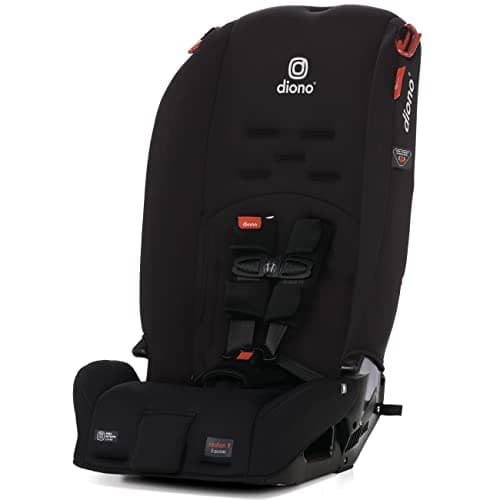
Folded depth, if the seat is going in a bag. Only one seat here publishes a fold: the Diono Radian 3R goes to about 7 inches deep. That makes it the realistic candidate for a checked bag or the trunk of a rental, and it is the reason it earns a slot despite being the heaviest and fussiest seat on the page.
Install hardware you can use in a strange car. A rental or a rideshare is the worst place to discover that a seat needs a particular belt path. Quick-release LATCH, as on the Chicco GoFit Plus, is the feature that lets a seat move between cars without a ten-minute wrestle. Our LATCH vs seat-belt installation guide covers which to use when a vehicle offers both.
The travel table
Every figure below is published by the manufacturer and recorded on that product's page in our catalog. The last column reflects 14 CFR 121.311: a harnessed mode is approved for aircraft use when the seat's own label says it is certified for aircraft; a booster mode is not approved in any case.
Seat
Published seat weight
Harness range
Usable in flight?
Evenflo Maestro Sport
9.6 lb
30–50 lb; 35–49 in
Yes, in harness mode
Evenflo LiteMax 30
About 6 lb (among the lightest carriers)
Rear-facing 4–30 lb
Yes, rear-facing
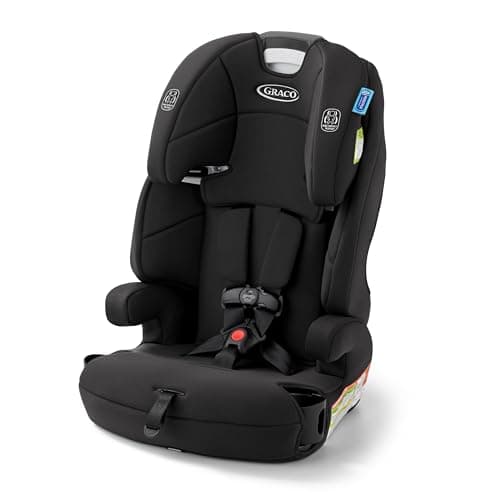
Graco Tranzitions 3-in-1
14 lb
26.5–65 lb; up to 49 in
Harness yes; both booster modes no
Diono Radian 3R
About 23 lb; folds to 7 in deep
RF 5–50 lb; FF harness 22–65 lb
Harness yes; booster mode no
Chicco GoFit Plus
6 lb
No harness — backless booster, 40–110 lb
No — boosters are not approved in aircraft
Who each seat is for
Evenflo Maestro Sport — the flyer. For a child between about 30 and 50 pounds who needs a harness on the plane and in the rental car. At 9.6 pounds it is the only harnessed seat here you can carry one-handed, and it is GREENGUARD Gold certified for low chemical emissions. Evenflo has revised the printed limits on this seat over time, so the label on your shell governs, not an old listing.
Evenflo LiteMax 30 — for the newborn trip. About 6 pounds, belt or LATCH install, and the carrier clicks out of the base so a sleeping baby stays asleep through a terminal. Its 30-pound rear-facing ceiling is lower than rivals, which matters less on a seat you are buying for the first year. Our best infant car seats roundup is the place to start if this will also be your everyday seat.
Graco Tranzitions 3-in-1 — one seat for a long trip.Fourteen pounds for harness, highback booster and backless booster, with an 8-position no-rethread harness. It is the seat for families who travel often enough to want a dedicated one that keeps working for years — remembering that only the harness mode flies. It has no recline, so it sits at whatever angle the vehicle seat gives it.
Diono Radian 3R — for the checked bag.It folds to about 7 inches deep and rear-faces to 50 pounds, neither of which any other seat here does. It is also about 23 pounds, has many removable parts and conditional rules, and rear-facing it is very long front to back unless you add Diono's separate angle adjuster. Buy it for the fold, knowing you are buying the fussiest install on the page.
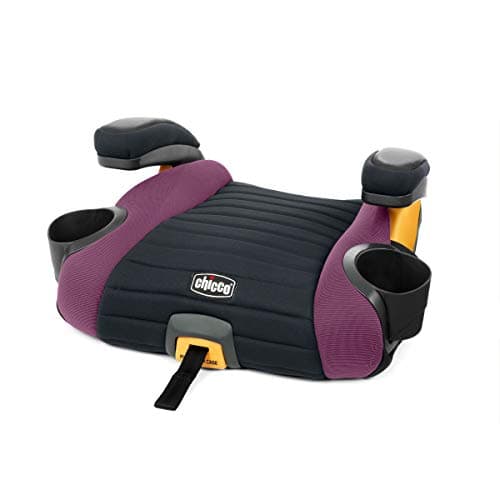
Chicco GoFit Plus — for the ground, not the air.Six pounds, quick-release LATCH that anchors the booster so it does not slide off an empty seat, and a contoured seat rather than flat plastic. It cannot be used in an aircraft, and it needs a vehicle head restraint behind the child, which rules out some center seats. For a school-age traveler who rides in taxis and grandparents' cars, nothing here is easier to live with.
One honest note on the booster years: if your child is already in a booster, the cheapest travel answer is usually a second backless booster that lives in the suitcase rather than a premium seat that commutes. And if you are still deciding whether to bring a seat at all, flying with a baby covers the gate-check and boarding logistics that sit around this decision.
Quick picks at a glance
#
Product
Best for
Score
Price
1
Evenflo Maestro Sport
The cheapest harness booster worth buying: under ten pounds, GREENGUARD Gold certified, and a genuine five-point harness — with a 50-pound harness ceiling that makes it a shorter-term seat than the rest.
A 14-pound three-mode seat that does the Nautilus's job at a lower price and roughly two-thirds the weight — the harness booster for carpools, grandparents, and the second car.
The steel-framed 17-inch seat that made three-across a mainstream idea — still the least expensive way to do it, and still the fussiest seat here to live with.
The cheapest harness booster worth buying: under ten pounds, GREENGUARD Gold certified, and a genuine five-point harness — with a 50-pound harness ceiling that makes it a shorter-term seat than the rest.
Harness mode
30–50 lb; 35–49 in (current Evenflo label)
Booster mode
40–100 lb; 44–57 in (highback only)
Harness adjust
Up-front central adjuster
Seat weight
9.6 lb
Standard
FMVSS 213 certified; GREENGUARD Gold
What we like
Lowest price on this page, by a wide margin
9.6 lb — light enough to carry through an airport or swap cars daily
GREENGUARD Gold certified for low chemical emissions; machine-washable pad
Two built-in cup holders and an up-front harness adjuster
Worth noting
Harness ends at 50 lb — 15 lb sooner than every other pick, so a big four- or five-year-old moves to booster mode early
No backless mode; Evenflo does not publish a recline spec for it
Evenflo has revised the printed limits over time (older listings show 22–50 lb harness / 40–110 lb booster); the label on your seat governs
Shorter published useful life than the Graco and Britax seats (six years per the manual cited in Car Seats for the Littles' review) — check the date on the shell
A 14-pound three-mode seat that does the Nautilus's job at a lower price and roughly two-thirds the weight — the harness booster for carpools, grandparents, and the second car.
Harness mode
26.5–65 lb; up to 49 in
Booster modes
Highback and backless, both 40–100 lb; 43–57 in
Harness / headrest
8-position, no-rethread (Simply Safe Adjust)
Seat weight
14 lb
Standard
FMVSS 213 certified
What we like
Lightest three-mode seat on this page — easy to move between vehicles
Harness, highback booster, and backless booster from one purchase
No-rethread harness and headrest with 8 positions
Machine-washable pad, body insert, and harness covers; two removable cup holders
Worth noting
No recline — it sits at whatever angle your vehicle seat gives it
Backless mode stops at 100 lb, not the Nautilus's 120
Thinner padding and a shallower shell than the heavier seats here
No belt lock-off or tensioner; a tight vehicle-belt install takes body weight and patience
The steel-framed 17-inch seat that made three-across a mainstream idea — still the least expensive way to do it, and still the fussiest seat here to live with.
Width
17 in
Dimensions
28.5 in H x 17 in W x 16 in D; folds to 7 in deep
Rear-facing
5–50 lb
Forward-facing
22–65 lb harness
Booster
40–120 lb, up to 57 in
Seat weight
About 23 lb
Standard
FMVSS 213 certified
What we like
Flat steel-reinforced sides mean the 17-inch width is the width all the way down, which is what three-across actually needs
Rear-facing to 50 lb
Folds to about 7 inches deep for storage or a trip
Usually the cheapest seat on this page by a wide margin
Worth noting
Safe in the Seat's CPSTs do not recommend it — rear-facing it is very long front to back unless you buy the separate Diono Angle Adjuster
Many removable parts and conditional rules; it is an easy seat to install slightly wrong
About 23 lb, with a cover that is awkward to refit after washing
Most children outgrow it by torso height long before the 120 lb figure on the box
A 6-pound backless booster with quick-release LATCH, so it stays put during carpool loading instead of sliding off the seat the moment nobody's in it.
Weight
40–110 lb
Height / age
44–57 in; at least 4 years
Mode
Backless only
Standard
FMVSS 213 certified
Seat weight
6 lb; two removable CupFolders
What we like
Quick-release LATCH anchors the booster and releases one-handed
6 lb and easy to carry between cars, taxis, and grandparents' houses
Contoured ErgoBoost seat is more comfortable than a flat plastic base
Cup holders are removable and dishwasher-safe
Worth noting
Backless only — no head or torso support, and no shoulder-belt guide height adjustment
Requires a vehicle head restraint behind the child, which rules out some center seats
Costs more than a plain backless booster
Not the seat to start the booster years with for most 4-year-olds
How it scored
Safety-standard compliance9.4
Belt-fit adjustability8.0
Portability9.6
Value8.8
Frequently asked questions
Can I use a booster seat on a plane?+
No. Under 14 CFR 121.311, booster-type child restraints, vest- and harness-type restraints and lap-held restraints are not approved for use in aircraft, and FMVSS 213 requires belt-positioning booster instructions to state that the restraint is not certified for aircraft use. An aircraft seat has a lap belt and no shoulder belt, so there is nothing for a booster to position. Bring a harnessed seat for the flight, or an FAA-approved aviation device.
Does the FAA require a car seat for my baby?+
No. The FAA states that it does not require the use of child restraint systems on commercial airplanes, but that it strongly recommends a CRS or an alternative FAA-approved device based on the child's weight. Buying a seat for the child is the only way to guarantee you can use one, because a restraint has to go in its own ticketed seat.
How do I know whether my car seat is approved for aircraft use?+
Read the label on the shell. A seat built for both jobs has to meet the aircraft requirements in section S8 of FMVSS 213 - printed aircraft installation instructions plus an inversion test - and it is labeled as certified for use in motor vehicles and aircraft. If the label says nothing about aircraft, assume it is not approved and check with the manufacturer before you travel.
Is a lighter car seat a less safe car seat?+
Every car seat sold in the US has to meet the same federal standard, FMVSS 213, so a 9.6 lb seat is not held to a lower bar than a 23 lb one. Weight matters for whether you actually use the seat rather than carry a child unrestrained, and fit range matters for how long it lasts. The seat you install tightly and use on every trip is the one that protects your child.