Before you compare models, know this: the same 3-in-1 badge is printed on two completely different seats. One starts at birth. The other never rear-faces at all.
Disclosure:Swaddle & Stroll is reader-supported. When you buy through links on this page we may earn an affiliate commission, at no extra cost to you. It never changes our picks. How this works.
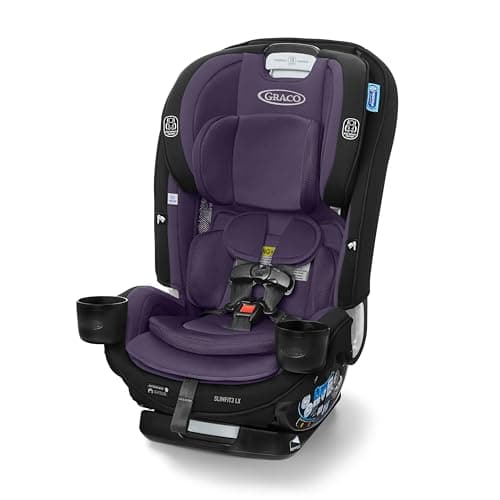
The verdict: if you are buying a 3-in-1 to carry a baby from birth to a booster, buy the Graco SlimFit3 LX. It covers all three modes, it is one of the narrowest mainstream three-mode seats sold in the US at a published 16.7 inches, and it has a forward-facing belt lock-off, which is the feature that makes a center-seat install possible rather than infuriating. If the rear-facing years are what you dread, the Graco Turn2Me spins to the door for exactly those years. The budget pick is the Safety 1st Grow and Go All-in-One — the cheapest seat on this page that rear-faces at all, and at about 13 lb the easiest to move between cars. But read the next section before you buy anything, because two of the five seats here cannot hold a newborn, and the label will not warn you.
“3-in-1” is printed on two different products
This is the single most useful thing to know about this search, and it is the reason the page is built this way. There is no federal definition of “3-in-1.” It is a marketing count of modes, and manufacturers count two different sets of three:
The convertible 3-in-1 — rear-facing harness, then forward-facing harness, then a highback booster. This is the seat you buy for a newborn or an infant graduating out of a carrier. The SlimFit3 LX, the Turn2Me and the Grow and Go are all this kind.
The harness-booster 3-in-1 — forward-facing harness, then highback booster, then backless booster. It has no rear-facing mode at all. The Nautilus 2.0 LX and the Tranzitions are this kind, and both are excellent — for a child who is already past rear-facing.
Both are honestly labeled as three modes. Neither is lying. But a parent searching “best 3-in-1 car seat” for a six-week-old who buys a Tranzitions has bought a seat their baby legally and physically cannot use for another two years. Check the rear-facing line on the box, every time. If there isn’t one, that is the second kind.
If you are buying for a newborn: three seats, three reasons
The SlimFit3 LX is the default. It rear-faces from 5–40 lb to 49 inches, forward-faces from 26.5–65 lb, and finishes as a highback booster to 100 lb and 57 inches. What separates it is footprint: it is unusually shallow front-to-back as well as narrow, which is the combination a small car actually needs, and child passenger safety reviewers single that out. The trade-off is honest — its recline is not rated for a newborn in the way an infant carrier is, so it is a seat you move to, not one that replaces a carrier on day one, and its booster mode runs out roughly a year past the harness.
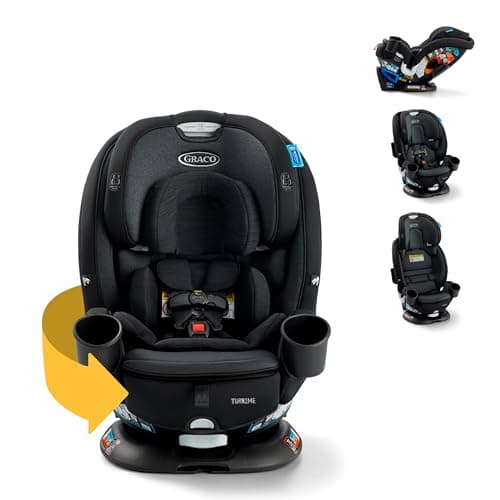
The Turn2Me answers a different complaint. Rotating seats are expensive because loading a rear-facing baby into the back of a car is genuinely the hard part, and this one rotates for precisely those years — Car Seats for the Littles states plainly that it does not rotate in forward-facing mode, which Graco did deliberately. Its forward-facing harness also starts at 22 lb, the lowest minimum here. Its weaknesses are install-related: a tight lower-anchor pathway and a cramped rear-facing belt path, and forward-facing children under 25 lb must use recline position 2 or 3 — a step in the manual that is very easy to miss.
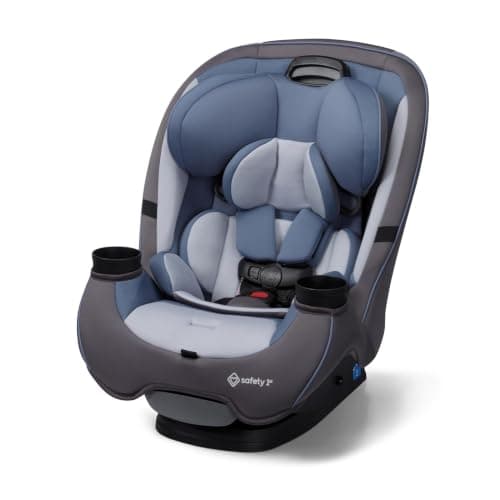
The Grow and Go is the budget answer and it is a real one. Three stages, GREENGUARD-irrelevant but FMVSS-certified like everything else, a no-rethread harness that moves with the headrest, a dryer-safe pad, and about 13 lb of seat — which matters enormously if the seat has to move between two cars or into a rental. You give up padding, a lock-off and a backless mode. You do not give up safety certification.
If your child is already forward-facing: buy the other kind
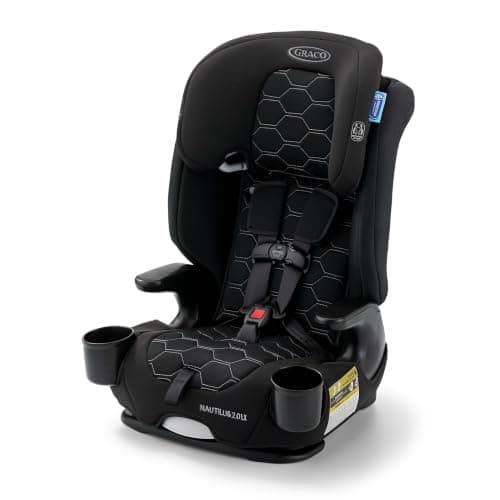
The Nautilus 2.0 LX is the long game. Harness to 65 lb, highback booster to 100, backless booster to 120, with a 10-position no-rethread harness and a published ten-year useful life — the longest on this page. It is the only pick here with all three booster-era modes, so in principle it is the last seat you buy. Its limits are physical: 20 inches wide, so it is a poor three-across candidate, and a 57-inch booster height ceiling that a tall ten-year-old will reach before they reach the weight limit.
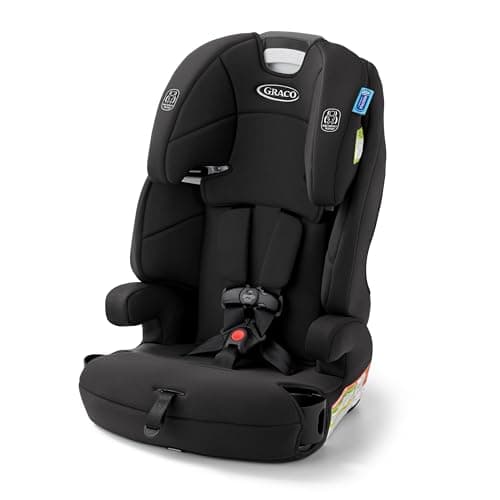
The Tranzitions does the same job for less money at 14 lb — roughly two-thirds the Nautilus’s weight. That makes it the obvious carpool, grandparent and second-car seat, and it is the cheapest three-mode seat on this page. The compromises are real: no recline at all, so it sits at whatever angle your vehicle seat gives it, a backless mode that stops at 100 lb rather than 120, and a thinner shell.
The install detail that catches everyone
Since a 2014 NHTSA rule, every seat is labeled with a lower-anchor weight limit: child plus seat not to exceed 65 lb on the LATCH lower anchors. Past that figure the seat installs with the vehicle seat belt instead — which is equally safe and routinely shocks people who assume LATCH is the upgrade. Because 3-in-1 seats are heavy and serve big children, you will cross that line on every seat on this page, and probably sooner than you expect. On a forward-facing harnessed child you also use the top tether, every time, whichever install you chose. Those two sentences live in the manual and almost nobody reads them.
A last practical note on how we ranked. Our weighting is published on how we pick: standards compliance and install ease first, then fit range and longevity, then value. We do not run crash tests, we do not accept product samples in exchange for placement, and where a figure comes from an independent lab or a child passenger safety technician we say whose it is. If you want the wider comparison, our best convertible car seats page covers the rear-facing-first seats in full, and best harness booster seats covers the forward-facing-only ones.
Quick picks at a glance
#
Product
Best for
Score
Price
1
Graco SlimFit3 LX 3-in-1
A 16.7-inch shell that also takes up unusually little room front to back — the combination a small car actually needs, rather than width alone.
Best overall 3-in-1: rear-faces a newborn and still fits a narrow back seat
A three-mode Graco that spins to the door for the rear-facing years — then stops spinning, because the rotation is deliberately locked out once you turn the seat forward.
Best for the rear-facing years, if you can stretch
A light, no-fuss all-in-one that carries a child from rear-facing to a highback booster for a budget price — the sensible-money choice that still meets the same federal standard.
Budget pick: the cheapest seat here that rear-faces at all
The seat that goes the distance for the money: harness to 65 lb, highback booster to 100, backless booster to 120 — three modes and a ten-year useful life from one purchase.
Best harness-booster 3-in-1, and the longest-serving seat on the page
A 14-pound three-mode seat that does the Nautilus's job at a lower price and roughly two-thirds the weight — the harness booster for carpools, grandparents, and the second car.
Best second-car seat: the lightest three-mode seat here
A three-mode Graco that spins to the door for the rear-facing years — then stops spinning, because the rotation is deliberately locked out once you turn the seat forward.
Modes
Rear-facing, forward-facing, highback booster
Rotation
Rear-facing mode only — it does not rotate forward-facing
Rear-facing
4-40 lb
Forward-facing
22-65 lb, up to 49 in
Booster
40-100 lb, 43-57 in
Width
19 in (Car Seats for the Littles, measured)
Seat weight
26 lb (Car Seats for the Littles, measured)
Install
SnugLock — vehicle belt or lower anchors, both modes
Standard
FMVSS 213 certified
What we like
The rotation is there for the years it actually helps — leaning a rear-facing baby into a back seat is the hard part
Forward-facing harness starts at 22 lb, the lowest minimum of any seat on this page
Three modes to 100 lb in the booster, so it can plausibly be the last seat you buy
BabyGearLab scored its crash-test performance 8.7 of 10 and ranked it 6th of 24 convertibles
Lowest harness position measures 7 in with the padding in place, which fits a genuinely small newborn
Worth noting
It only rotates rear-facing. Car Seats for the Littles states plainly that it "does not rotate in forward facing mode"
BabyGearLab scored the lower-anchor install 6.8 of 10 and called the LATCH pathway tight and hard to tension
Car Seats for the Littles found the rear-facing belt path cramped for larger hands, and flagged a 2024 lock-off problem that let installs loosen over time
Forward-facing children under 25 lb must use recline position 2 or 3 — a step that is easy to miss in the manual
19 in wide and roughly 28 in front-to-back when reclined rear-facing; CSFTL says it is not a good three-across option
A light, no-fuss all-in-one that carries a child from rear-facing to a highback booster for a budget price — the sensible-money choice that still meets the same federal standard.
Rear-facing
5–40 lb
Forward-facing / booster
FF harness 30–65 lb; highback booster 40–100 lb
Standard
FMVSS 213 certified
Install
LATCH or vehicle belt; no-rethread harness
What we like
One of the lightest all-in-ones here at about 13 lb, so it is easier to move if you must
No-rethread harness and headrest adjust together in one motion
Machine-washable, dryer-safe seat pad
Worth noting
Covers three stages — rear-facing, forward-facing, and a highback booster, but no backless mode
Basic padding and a standard belt/LATCH install without a foolproof one-dial tensioner
The seat that goes the distance for the money: harness to 65 lb, highback booster to 100, backless booster to 120 — three modes and a ten-year useful life from one purchase.
Harness mode
26.5–65 lb; up to 49 in
Booster modes
Highback 40–100 lb; backless 40–120 lb; 43–57 in
Harness / headrest
10-position, no-rethread (Simply Safe Adjust)
Seat weight
20.5 lb
Standard
FMVSS 213 certified; 10-year useful life
What we like
Only pick here with all three modes — harness, highback booster, and backless booster
InRight LATCH connectors click on audibly, and the harness and headrest adjust together with one hand
Steel-reinforced frame, 4-position recline, two cup holders
Graco publishes a 10-year useful life — the longest on this page
Worth noting
Booster height tops out at 57 in, six inches below the Britax — a tall kid may finish on a different booster
Wide at 20 in, so it is a poor choice for three-across rows
Vehicle-belt install lacks a lock-off or tensioner, so a tight belt install takes more effort than ClickTight or LockSure
Amazon lists the Hex color as a 'convertible' seat; it is forward-facing only, with no rear-facing mode
A 14-pound three-mode seat that does the Nautilus's job at a lower price and roughly two-thirds the weight — the harness booster for carpools, grandparents, and the second car.
Harness mode
26.5–65 lb; up to 49 in
Booster modes
Highback and backless, both 40–100 lb; 43–57 in
Harness / headrest
8-position, no-rethread (Simply Safe Adjust)
Seat weight
14 lb
Standard
FMVSS 213 certified
What we like
Lightest three-mode seat on this page — easy to move between vehicles
Harness, highback booster, and backless booster from one purchase
No-rethread harness and headrest with 8 positions
Machine-washable pad, body insert, and harness covers; two removable cup holders
Worth noting
No recline — it sits at whatever angle your vehicle seat gives it
Backless mode stops at 100 lb, not the Nautilus's 120
Thinner padding and a shallower shell than the heavier seats here
No belt lock-off or tensioner; a tight vehicle-belt install takes body weight and patience
How it scored
Safety-standard compliance9.4
Install ease8.0
Longevity8.4
Value9.2
Frequently asked questions
What does 3-in-1 actually mean on a car seat?+
It is a count of modes, not a federal category, and manufacturers count two different sets of three. A convertible 3-in-1 goes rear-facing harness, forward-facing harness, highback booster. A harness-booster 3-in-1 goes forward-facing harness, highback booster, backless booster, with no rear-facing mode at all. Check the box for a rear-facing weight range before you buy: if there isn't one, the seat cannot hold a newborn.
Can a 3-in-1 car seat be used from birth?+
Only the convertible kind, and only if its rear-facing range starts low enough. The Graco SlimFit3 LX and the Safety 1st Grow and Go both start rear-facing at 5 lb, and the Graco Turn2Me starts at 4 lb. The Graco Nautilus 2.0 LX and Graco Tranzitions do not rear-face at all, so neither can be a newborn's first seat. Many families still start with an infant carrier because it clicks out of a base, then move to a 3-in-1 at around a year.
Is a 3-in-1 car seat as safe as buying separate seats?+
Every car seat sold in the United States is certified to the same federal standard, FMVSS 213, whatever its mode count or price. What you trade with a 3-in-1 is fit rather than certification: one shell has to suit a 10 lb newborn and a 60 lb child, so it will not fit either extreme as precisely as a dedicated seat would. The practical risk is misuse, not certification - a seat used in the wrong mode or installed loosely.
Why does my 3-in-1 say the forward-facing harness starts at 26.5 lb?+
Because of a December 2023 NHTSA labeling amendment to FMVSS 213 that requires forward-facing harness use to be labeled for children of at least 12 kg, which is 26.5 lb, with compliance from June 30, 2025. Seats printed after that date carry the new floor, so the same model bought in 2026 may not legally start forward-facing as early as the 2021 version did. If your child is small for their age, read the label on the box rather than an older review.
Will a 3-in-1 car seat really be the last seat I buy?+
Sometimes, and the limit is usually height rather than weight. The Graco Nautilus 2.0 LX has the longest run here - harness to 65 lb, highback booster to 100 lb, backless booster to 120 lb, with a published ten-year useful life - but its booster height ceiling is 57 inches, and a tall child will pass that before the weight limit. Convertible 3-in-1 seats that end in a highback booster usually buy you about a year of booster use, so plan on one more booster after them.