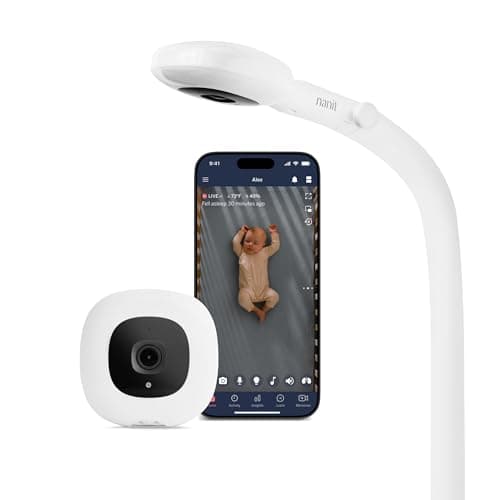
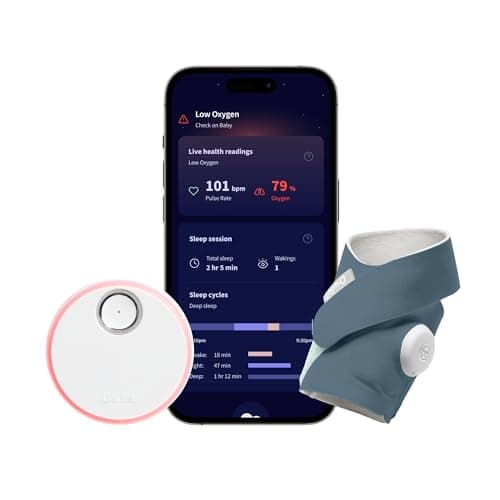
Shopping for a "smart" baby monitor, you'll quickly run into two very different products that both promise peace of mind: the Nanit Pro and the Owlet Dream Sock. They look like competitors, but they aren't really — one is a camera that watches your baby sleep, and the other is a wearable that reads your baby's body. Understanding that difference is the whole decision. Here's the honest, spec-based breakdown, including the one thing that matters most: what each device is, and isn't, designed to do.
The one-line verdict
Buy the Nanit Proif you want to see and hear your baby from anywhere, with an overhead view and sleep insights — it's a monitor in the traditional sense, just a smarter one. Buy the Owlet Dream Sockif what keeps you up at night is wanting a live read on your baby's pulse rate and oxygen, and you understand that its FDA clearance covers those readings — not SIDS. Many parents who want both a view and vitals simply use the two together— they don't overlap, so there's no wasted money.
What each one actually does
The Nanit Pro is a WiFi camera that mounts over the crib for a clear 1080p overhead view, with night vision, two-way talk, and an app that turns what it sees into sleep tracking and sound, motion, and cry alerts. It answers the question "what is my baby doing right now, and how did they sleep last night?" The Owlet Dream Sock never shows you a picture. It's a soft, washable sock that reads your baby's pulse rate and blood-oxygen trends and pushes notifications to your phone and a base-station chime. It answers a different question: "what are my baby's vitals doing while they sleep?"
Nanit Pro: the overhead camera
As a camera, the Nanit's strength is its overhead angle and its software. The top-down view frames the whole crib, which is what makes its sleep insights work — it can chart sleep and wake stretches over time rather than just streaming video. Two-way talk lets you soothe from the kitchen; alerts ping your phone when there's noise or movement. The two honest caveats: the most useful insight features sit behind a paid subscription, and because it's an internet-connected camera, you own the security. That means a strong, unique password, two-factor authentication, and current firmware — the same hygiene any WiFi camera needs. Done right, that's perfectly safe; skipped, it's the exact weakness behind the "hacked monitor" stories.
Owlet Dream Sock: the wearable tracker
The Dream Sock's appeal is obvious to any parent who has crept into the nursery to check that the baby is breathing. Seeing a live pulse rate and oxygen reading on your phone can quiet that particular 3 a.m. anxiety. It's comfortable, it's washable, and the app keeps sleep-trend history. The single most important thing to understand is the shape of its FDA clearance. In November 2023 the Dream Sock was granted a De Novo clearance as an over-the-counter infant pulse rate and oxygen saturation monitor for healthy babies aged 1 to 18 months and 6 to 30 pounds — so the readings, and the Health Notifications that fire when they leave a preset range, were reviewed for accuracy rather than simply marketed. That clearance stops there. It is not cleared to detect, predict, or prevent SIDS, it can still produce false alarms, and it is not a hospital-grade device or a diagnostic one. It is a cleared reassurance tool with a defined job.
The safe-sleep line that matters most
This is the part we won't soften. No monitor — not a camera, not a wearable — has been shown to reduce the risk of sleep-related death. The measures that do are behavioral and free: always place your baby on their back to sleep, on a firm and flat surface, in their own crib or bassinet, with nothing else in it — no pillows, blankets, bumpers, or toys. The American Academy of Pediatrics is explicit that home cardiorespiratory monitors like the Owlet should notbe used as a strategy to reduce SIDS risk, and that they don't take the place of safe-sleep practices. A Dream Sock can sit on top of good safe-sleep habits and add peace of mind; it can never be a reason to relax them.
Privacy and security
Both devices connect to the internet, so both carry a privacy footprint. The Nanit is a live camera feed, which is exactly the category that shows up in remote-access scare stories — so its security depends on your password and login hygiene. The Owlet transmits vitals data rather than a video stream, a smaller target, but it's still an account worth protecting. For either one, use a strong and unique password, enable two-factor authentication, keep the app and firmware updated, and check the manufacturer's recall history before buying. If a no-internet option appeals more, our best baby monitors roundupcovers no-WiFi screen monitors that can't be reached online at all.
Can you use both?
Yes, and plenty of parents do. Because the Nanit answers "what do I see?" and the Owlet answers "what are the vitals?", they complement rather than duplicate each other. If budget forces a choice, decide by what actually worries you: if you mostly want to check on and soothe your baby remotely and understand their sleep, the camera is the better single buy; if your anxiety is specifically about breathing and heart rate, the sock speaks to that — as long as you hold onto the fact that its clearance covers vitals readings, not SIDS. Still weighing whether you need any of this? Start with do you need a baby monitor, and make sure the basics — a safe crib and back-sleeping — are handled first.