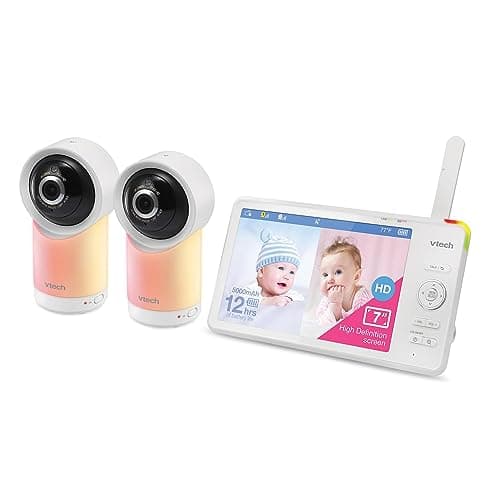
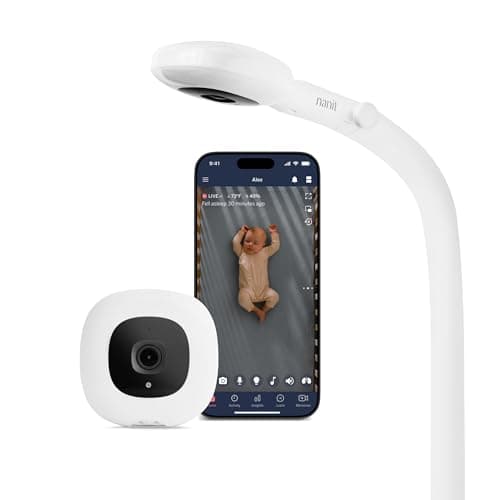
Update, August 2026: the VTech half of this matchup has a new model number. VTech has retired the RM5766-2HD— it now shows as unavailable on Amazon — and replaced it with the RM7766-2HD. It is the same system in every way that mattered here: two 1080p pan-and-tilt WiFi cameras, a dedicated parent screen, and the same remote app. The one real change is that the parent unit grows from a 5-inch screen to a 7-inch one, and it currently costs less than the model it replaces. We have left this page up because the question it answers is still a live one, but we won't send you to a dead listing, so the VTech card below and everything written from here down refers to the RM7766-2HD.
Quick verdict: choose the VTech RM7766-2HD if you want a monitor you can watch without reaching for your phone, because it ships with a dedicated 7-inch parent screen, a remote app, and two 1080p cameras, so you can cover two rooms out of the box and still check in from work. Choose the Nanit Proif you want a premium, phone-first camera with the best sleep insights on this page, mounted overhead for a clean top-down view of the crib. Both are smart WiFi cameras with clear 1080p video, but they solve the same problem from opposite directions — and which one fits depends far more on how you want to watch than on which is "better."
A quick word on method: we rank these from published manufacturer specs and our own scoring system, not a hands-on lab teardown, so we are careful to separate a genuinely meaningful difference from a matter of personal preference. You can see exactly how we weigh video, features, security, and value in our methodology. Both cameras handle the core job — a clear view of a sleeping baby, in daylight and in night vision — perfectly well, so the rest of this page is about matching the right philosophy to how you actually want to keep an eye on things at 2 a.m.
Dedicated screen vs. phone-only
This is the single decision that separates these two, so start here. The VTech RM7766-2HD is a hybrid: it pairs its cameras with a dedicated 7-inch parent screen and also offers a remote app, so at home you glance at a handheld unit that is always on and always paired, and when you are out you can pull the feed up on your phone. The Nanit Pro takes the opposite path — there is no dedicated screen in the box at all. You watch, get alerts, and adjust everything from the phone app, which is elegant if your phone is always within reach and less convenient on the nights you would rather not have a screen glowing next to the bed or be one dead battery away from losing the feed. Neither approach is wrong. A dedicated screen means one more device that simply works without an app login; a phone-only system means one less gadget to charge and store. If the idea of depending on your phone to check the baby bothers you at all, the VTech settles it; if you live on your phone anyway and want a cleaner setup, the Nanit will feel natural.
One camera or two: multi-room coverage
The VTech ships with two 1080p cameras in the box, which makes a real difference the day you set it up. If you have two children, or one child plus a room you want to keep half an eye on, you can cover both spaces immediately without buying anything extra, and the parent screen and app are built to switch between the feeds. The Nanit Pro is a single-camera system focused on doing one crib exceptionally well. You can add more Nanit cameras to a home, but each one is a separate premium purchase, so a two-room Nanit setup climbs in price quickly. So the math is straightforward: if you already know you need eyes on two spaces, the VTech is both the easier and usually the far cheaper route, because two cameras come together in a single box. If you only ever need to watch one crib and you want that one view to be as good as possible, paying for the VTech two-camera set would mean owning a second camera you never switch on — and that is money the Nanit puts toward its overhead view and analytics instead.
Video quality and the overhead view
Both cameras capture 1080p, so the raw resolution is evenly matched, but the framing philosophy differs. The Nanit Pro is designed to mount overhead, looking straight down at the crib, which gives a clean top-down view of the whole mattress with the baby centered — a layout that also feeds its sleep tracking. The VTech cameras are the more conventional shelf-or-wall type with 360-degree pan, tilt, and a strong zoom, so you reframe the crib from the parent unit rather than relying on one fixed angle. One honest caveat on the VTech worth flagging: while its cameras record in 1080p, the dedicated parent screen shows the feed at 720p, so the sharpest picture lives in the app, not on the handheld. The Nanit, being phone-only, shows its full 1080p on your device. In practice both are more than legible for the real task of confirming a baby is asleep and breathing calmly, in a lit room or in infrared night vision; the difference is that the Nanit optimizes for one pristine overhead angle while the VTech optimizes for flexibility and covering more than one spot.
Sleep tracking and the subscription question
This is where the Nanit Pro earns its premium reputation. Its sleep tracking is the standout feature on this page: it uses the overhead view to log sleep and wake patterns and turn them into genuinely useful insights, alongside sound, motion, and cry alerts pushed to your phone. The VTech is not built to do this — it gives you live video, two-way talk, and alerts, but it is a monitoring camera, not a sleep-analytics platform. The important honest caveat is cost. The Nanit's deeper sleep history and insights sit behind an optional paid subscription, so the purchase price of the camera is not the whole story: to get the full analytics experience over time you are signing up for an ongoing fee, and if you let the subscription lapse the richer insights go with it. We are deliberately not quoting a number here because subscription pricing changes; the live product cards show current pricing. The takeaway is simply this: if daily sleep data is the reason you are buying a monitor, the Nanit is clearly the stronger tool — just budget for the subscription. If you mainly want to see and hear your baby, the VTech gives you that with nothing recurring to pay.
Privacy and security: both are WiFi
Because both of these connect to the internet, they share the same responsibility, and it is worth being candid about it. A WiFi camera is convenient precisely because you can reach it from anywhere, but that same connection is what you have to protect — there is no such thing as an unhackable connected device, only one you have secured well. For either the VTech or the Nanit, the practical steps are the same: set a strong, unique password on the account, turn on two-factor authentication if it is offered, keep the camera's firmware and the app updated, and secure your home WiFi network itself. Do that and you have closed off the common, careless ways these cameras get compromised. If you would rather not manage any of this and can live without remote viewing, that is a legitimate reason to look at a closed-circuit monitor instead, and we lay out that whole trade-off in our WiFi vs non-WiFi guide. But if you have decided you want remote access, both of these can be run safely — the security posture comes down to your habits far more than to the badge on the box.
Value: which is the smarter buy
Value here is not about which is cheaper — the Nanit Pro is the premium, higher-priced system and the VTech is the strong two-camera value — it is about what you are actually paying for. The VTech RM7766-2HD gives you more hardware for your money: two cameras, a dedicated screen, and an app, with no subscription attached, which makes it the better buy for a family that wants flexible, multi-room coverage and dislikes recurring fees. The Nanit Pro asks for more upfront and more over time, but in return you get the best sleep analytics on this page and a polished phone-first experience built around one crib, which is worth it to parents for whom the sleep data is the whole point. Neither is overpriced for what it is; they are simply aimed at different buyers. Decide what you are optimizing for — broad coverage and no fees, or deep sleep insight on a single crib — and the value question answers itself.
Bottom line: the VTech RM7766-2HD is the pick when you want a dedicated screen, two cameras, and no subscription, and the Nanit Pro is the pick when you want premium sleep analytics and a clean phone-first setup and are willing to pay for it. Both are capable smart WiFi cameras that keep the same core promise — a clear look at your baby from home or away, as long as you secure the connection. If you want to see how these two sit against the rest of the field before you commit, our best WiFi baby monitors roundup ranks the full lineup, and it is always worth a look at the CPSC recalls listing in our sources for any monitor you are considering.