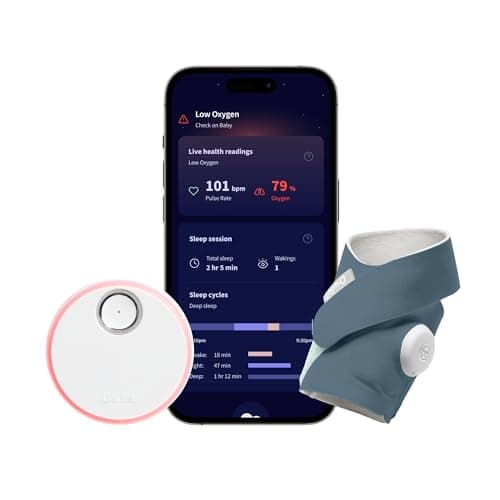
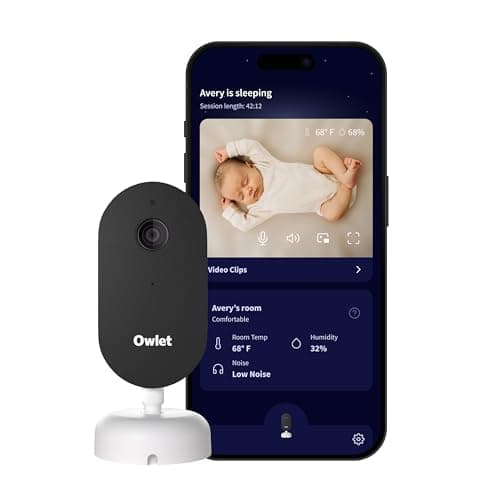
Quick verdict: these two Owlet products are not really rivals — they are two halves of the same system. The Dream Sockis the wearable foot sensor that tracks your baby's pulse rate and oxygen trends and pings your phone; the Dream Sightis the overhead 2K WiFi camera that lets you see and hear the room. Most parents weighing one against the other are really deciding which job matters more right now — readings at the baby, or eyes on the crib — and a large share end up running both together in a single app. If you can only start with one, the Sock is the reassurance sensor and the Sight is the camera; the honest guidance for many families is the pair.
A quick word on method: we rank from each product's published specs and our own scoring, not a hands-on lab test, so we flag where a difference is genuinely meaningful and where it simply comes down to what your household needs. You can read exactly how we weigh features, reliability, and value in our methodology. Because these are complementary devices rather than competitors, the rest of this page is less about crowning a winner and more about helping you decide whether you need the sensor, the camera, or both.
What the Dream Sock actually does
The Dream Sock is a soft, washable fabric sock with a small sensor tucked against your baby's foot. While your baby sleeps, it reads pulse rate and oxygen trends and sends them to the Owlet Dream app, where you get live readings and sleep insights over the course of the night. If a reading drifts outside its preset comfort zone, the system is designed to get your attention two ways at once: a notification on your phone and an audible chime from the base station on the nightstand. For an anxious first-time parent, that combination of a live number to glance at and an active alert is the whole appeal — it is reassurance technology aimed at healthy babies, not a diagnostic tool. The honest trade-offs are that it sits at the higher end of the monitor market on price, and on its own it gives you data but no picture, which is exactly why Owlet designed a camera to sit alongside it.
What the Dream Sight actually does
The Dream Sight is Owlet's HD WiFi camera, and it covers the job the Sock cannot: seeing and hearing your baby. It streams 2K video with night vision and up to 4x zoom, so you can check the crib from your phone in a fully dark room, and it adds the smart-camera features parents actually reach for — cry detection, two-way talk to soothe from another room, and a temperature and humidity readout for the nursery. The feed is encrypted, and, unusually for a WiFi camera, the core features work without a paid subscription. Its candid limitation is the mirror image of the Sock's: the camera itself does not read breathing or vitals, so it shows you what the room looks like without telling you anything about heart rate or oxygen. And like any internet-connected camera, it is a device you have to secure with a strong, unique password and current firmware.
One app, two jobs: how they integrate
The reason these two are so often talked about together is that they are built to work together. Both the Dream Sock and the Dream Sight run inside the same Owlet Dream app, so instead of juggling two separate systems you get the sensor data and the video living side by side in one place: the Sock's pulse and oxygen readings and the Sight's live 2K view on the same screen. That integration is really the argument for buying within the Owlet family rather than pairing a sock from one brand with a camera from another — the pieces are designed to speak the same language, share the same notifications, and present as one dashboard. If you want to see how that combined sensor-plus-camera approach compares with the many other styles of monitor out there, from plain audio units to standalone smart cameras, our best baby monitors roundup lays out every type and where each one fits.
Do you need one, or both?
This is the real question, and the answer depends on what would actually help you sleep. If your main source of worry is the invisible stuff — is my baby breathing steadily, is their oxygen where it should be — then the Dream Sock is the piece that speaks to that worry, and you could start there. If instead you mostly want to glance over and confirm your baby is settled, or soothe them with two-way talk without opening the door, the Dream Sight is the piece you want first, and it does that job well on its own. Plenty of families genuinely only need one. But the reason so many end up with both is that each covers the other's blind spot: the Sock gives you readings but no eyes, and the Sight gives you eyes but no readings. If you are still deciding whether any monitor earns its place in your home before you spend on a two-device setup, our guide on whether you need a baby monitor is a good, honest gut-check.
What each one is cleared for — and why safe sleep still comes first
This part matters more than any spec, so we will be very plain about it. The two sit in different regulatory places. The Dream Sock is FDA-cleared: in November 2023 it was granted a De Novo clearance as an over-the-counter infant pulse rate and oxygen saturation monitor for healthy babies aged 1 to 18 months and 6 to 30 pounds, which covers the accuracy of its readings and the Health Notifications that fire when they leave a preset range. The Dream Sight is not a medical device— it is a camera, and it makes no health claim. What the Sock's clearance stops short of is the thing parents most want it to do: it is not cleared to detect, predict, or prevent SIDS, and no monitor — not the Sock, not the Sight, not any device on the market — can prevent SIDS. It is easy to hope a gadget that watches heart rate or oxygen is a safety net against the worst-case fear every parent carries, and it is important to say clearly that it is not. What genuinely lowers risk is the American Academy of Pediatrics' safe-sleep basics, and those apply exactly the same whether you own one of these devices, both, or neither: always place your baby on their back to sleep, on a firm and flat surface, in a bare crib or bassinet with no pillows, blankets, bumpers, or soft toys, and room sharing without bed sharing. Treat either Owlet product as a source of reassurance and convenience layered on top of safe sleep, never as a replacement for it.
Subscription, setup, and value
On subscriptions, the two behave differently, and it is worth knowing before you buy. The Dream Sight's core features work without paying anything ongoing, with Owlet360 available as an optional add-on for extras like video storage and sleep reports — so the camera is usable out of the box with no locked-away basics. The Dream Sock leans more on the app experience for its sleep insights, so if in-depth reporting matters to you, factor the ongoing Owlet360 side into your thinking rather than assuming every feature is free forever. Setup for both is app-led: you pair the device to your home WiFi and your phone through the one Owlet Dream app, which is also what makes running the pair feel like one product instead of two. On value, we will stay honest and avoid quoting prices, since the live figures on the product cards move — but as a bracket, the Sock is a premium-priced wellness sensor, the Sight is positioned as a strong-value WiFi camera, and the two together are a real investment. Whether that investment is worth it comes down to which blind spot you most want closed.
Bottom line: the Dream Sock is for readings and the Dream Sight is for eyes, they meet in one Owlet Dream app, and there is no shame in buying just the one that answers your particular worry — or in running both, which is what a lot of families settle on. Just keep the framing straight: even with the Sock's FDA clearance, these sit on top of safe sleep, not in place of it. If you want to see how the Sight stacks up against other connected cameras before you commit, our best WiFi baby monitors roundup ranks the field, and it is always worth a quick look at the CPSC recalls listing in our sources for any baby product you are considering.