Ranked on the four things that decide whether you still like a high chair in six months: how fast it cleans, whether it supports your baby's feet, how much floor it eats, and how long the published limits let you keep it.
Disclosure:Swaddle & Stroll is reader-supported. When you buy through links on this page we may earn an affiliate commission, at no extra cost to you. It never changes our picks. How this works.
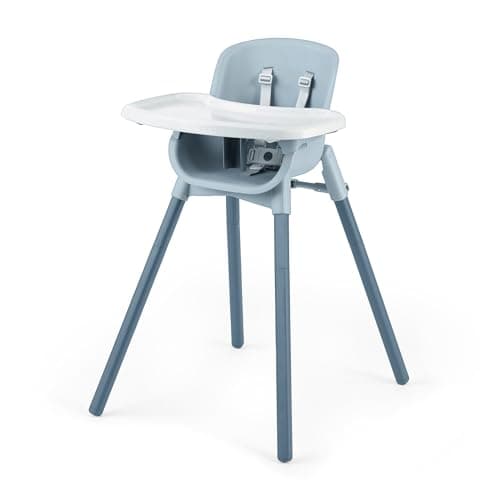
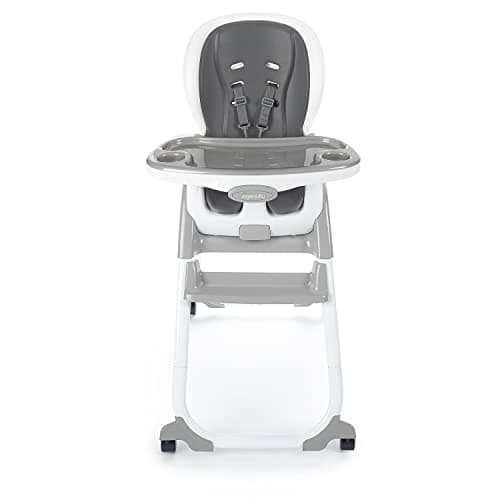
Buy the Ingenuity SmartClean Trio Elite. Its tray lifts off and goes in the dishwasher, its seat is a single wipeable shell with no fabric cover and no seams, and it converts to a booster and then a toddler chair without tools. That combination — not recline positions, not the number printed after “-in-1” — is what you will still care about on the four-hundredth meal. If your kitchen is small, the Chicco Zest does most of the same job for roughly half as much and folds flat. If you want the chair to be the last one you buy, the Stokke Tripp Trapp is the only one here that is really furniture.
One disclosure before the picks, in keeping with how we pick: we have not run these chairs through a test lab, and we do not claim to have. What follows is built from each manufacturer's published specifications, the instruction manuals where we could read them, named retailer spec sheets, and the federal rule that governs every high chair sold in the United States. Each figure is cited at the bottom of the page. Where two sources disagree — and on high chairs they disagree remarkably often — we print both and say which one to plan around.
What actually matters, in order
High-chair marketing is a contest over how many modes a chair claims. That number is close to meaningless: a “6-in-1” often counts “with the tray off” and “with the legs shortened” as two separate products. Here is the order we actually ranked on, and why.
Cleanability, by a distance. A baby learning to eat distributes food into every crevice within reach. The hierarchy is simple and it is not about the marketing copy: a one-piece plastic shell with no fabric beats a fabric pad you have to remove and wash; a tray that goes in the dishwasher beats a tray you have to scrub around a lip. Seat seams, harness slots and the gap between tray and seat are where food actually goes.
A footrest that reaches the feet. This is the single most overlooked spec in the category and the one occupational therapists keep raising. A child whose feet are planted has a stable base; a child whose legs dangle braces with their trunk instead, which makes them wrigglier and, at the start of solids, less able to concentrate on the harder job of chewing and swallowing. Most plastic chairs have a footrest that is molded at one height and does not move, which means it fits for a few months out of three years.
Footprint, both open and stored.A high chair lives in the room where you eat, which in most homes is the room with the least spare floor. Our best-overall pick is 35 inches wide and does not fold at all. That is a real cost, and for some kitchens it is disqualifying. Measure before you order — the same discipline we apply in nursery furniture for small spaces.
The published limit, read properly. Every chair here quotes more than one weight limit, because each mode has its own. The number on the listing is usually the highest of them, which is almost never the high-chair number. See the spec trap below.
Harness and stability. A five-point harness that is quick to undo one-handed, a crotch post that stops a baby sliding out under the tray, and a base wide enough that a toddler pushing off the table does not tip it. All of this is regulated, which is the next section.
The spec trap: which weight limit is yours?
Here is the clearest example on this page, and the reason we read manuals rather than listings. The Ingenuity SmartClean Trio Elite is sold with a 50 lb maximum on the manufacturer's own shop page and at every retailer we checked. The instruction manual tells a different story: high-chair mode is intended for children up to 3 years or a maximum weight of 33 lb, and the 50 lb figure belongs to toddler-chair mode, where the child sits on the seat shell at floor level with a three-point belt rather than being strapped into a raised chair.
Both numbers are accurate. Only one of them is about the product you think you are buying. The same pattern repeats across the category: the Graco Blossom's listings quote 45 lb and 60 lb in different places, while Graco's own figure is 40 lb for high-chair mode and 60 lb for the toddler booster. The Inglesina's own retailer page prints 37 lb in its spec table and 36 lb in its Q&A.
The rule to take away: the only limit that governs your chair is the one on the label on the chair and in the manual in the box, for the mode you are actually using. Read it on day one. It is the same discipline we push on car-seat expiration dates — the sticker outranks the listing, always.
How the five compare on the numbers that matter
Chair
High-chair limit
Adjustable footrest
Tray
Folds?
Ingenuity SmartClean Trio Elite
3 yr / 33 lb (manual)
No
Dishwasher-safe
No
Chicco Zest 4-in-1
60 lb across its four modes
No footrest in high-chair mode
Removable, BPA-free
Yes, flat and self-standing
Stokke Tripp Trapp
300 lb (the chair, not a mode)
Yes — height and depth
Sold separately
No
Inglesina Fast Table Chair
36–37 lb, 6–36 months
No (feet hang)
Sold separately
Yes, to 4 in deep
Graco Blossom 6-in-1
40 lb (Graco)
No
Dishwasher-safe insert
No
Read that table as a set of trades rather than a ranking. Only one chair has a footrest that actually adjusts, and it is also the most expensive and the only one with no tray in the box. Only two have a tray part that survives the dishwasher. Only two fold. Nothing here wins every column, which is why the picks below are framed by situation.
Wood versus plastic, honestly
The wooden-chair argument is about posture and permanence; the plastic-chair argument is about cleaning and price. Both are real.
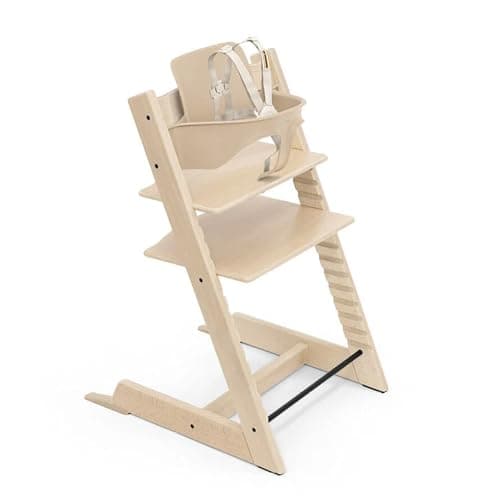
A Tripp Trapp-style chair adjusts the seat andthe footplate, so the child's feet stay supported from six months to school age, and the chair pulls up to the family table at family height instead of parking a tray in front of a baby. Stokke rates the chair itself to 300 pounds, and retailer spec sheets list it at 33 pounds with a 7-year extended warranty on registration. It is furniture. The cost of that is cleaning: wood is wipe-clean, not dishwasher-clean, and with no tray, dropped food lands on your floor — which, incidentally, is the strongest practical argument for a washable rug under the chair. See our nursery rug picks for what survives that.
A plastic shell chair gives you the opposite deal. No seams, no fabric, a tray that comes off and goes in a machine, and a price a third of the wooden chair's. The compromise is that the ergonomics are molded in at one size, so the fit is right for a window rather than for years, and the chair is likely to be given away at three rather than kept.
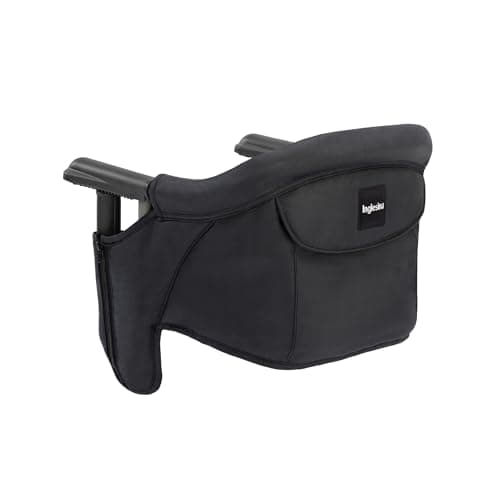
There is a third option worth naming because it is genuinely the right answer in some homes: no floor-standing chair at all. A hook-on seat like the Inglesina clamps to the table edge and occupies zero floor space, folds to four inches and weighs four pounds. In a small apartment, or as the chair that lives in a car trunk for restaurants and grandparents, it beats every chair here. It is also limited to 36 months, needs a four-legged table, and must never be used on a glass top — Inglesina's guidance is that the clamping pressure can break the glass.
When do you actually need one?
Around six months, and tied to the baby rather than the calendar. The readiness signs are sitting up with good head and neck control, bringing things to the mouth, and interest in what you are eating. Buying a high chair at the baby shower is fine; needing it before six months usually is not. Our starting solids guide walks the first month of meals, and how to choose a high chairis the longer explainer behind this page's criteria.
A note for anyone building a registry: this is one of the few big items where waiting pays. You will know far more about your kitchen layout and your baby's size at five months than at twenty weeks pregnant. Our registry checklistputs high chairs in the “later” column for exactly that reason.
Who should buy which
Most people, most kitchens:the Ingenuity SmartClean Trio Elite. The dishwasher-safe tray and the no-fabric shell win the daily argument. Accept that it is 35 inches wide and does not fold, and read the manual's 33 lb high-chair limit rather than the listing's 50.
Small kitchen, or a chair that needs to disappear between meals: the Chicco Zest. It folds flat, stands on its own, weighs under ten pounds on most spec sheets, and the tray stores on the back legs. You give up recline, height adjustment and any footrest in high-chair mode.
You want to buy once: the Stokke Tripp Trapp with the Baby Set. The adjustable footplate is the real feature, and the 300 lb rating means it outlives the baby stage entirely. Budget for the tray separately, and for the Newborn Set if you want it before six months.
Apartment, travel, or a second chair for grandparents: the Inglesina Fast Table Chair. Zero floor footprint, four pounds, washable seat. Four-legged, non-glass tables only, and 36 months is the ceiling.
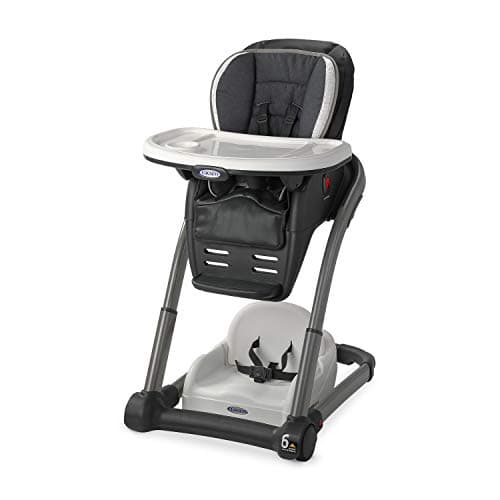
Two children close in age: the Graco Blossom. It is the only chair here that seats two at once, it reclines for a younger baby, and it has six height positions. It is also 32.56 lb, 29 inches deep, and has the most parts to assemble and wash.
What we left out, and why
We did not include the very cheapest fold-up chairs — the sub-$60 tier — because the ones we could price had no footrest, no height adjustment and a fabric sling seat, which loses on the first two criteria at once and saves very little against the Chicco Zest. We also left out the smart chairs with built-in scales and app pairing: the feature does not survive the cleanability test, and nothing about weighing a plate makes a baby eat.
Finally, we did not rank on owner star ratings. They are useful for spotting a shipping or finish problem — that is how the recurring complaints in our cons lists were surfaced — but a four-star average across colorways says little about whether a chair fits your table.
Quick picks at a glance
#
Product
Best for
Score
Price
1
Ingenuity SmartClean Trio Elite 3-in-1
The whole tray goes in the dishwasher and the seat is a single wipeable shell, which is the only high-chair feature you will still care about in six months.
A wooden chair with a seat AND a footplate that both move, rated to 300 pounds — it pulls up to the family table at 6 months and is still a usable chair for an adult decades later.
A 4.2-pound seat that clamps to the table edge and takes up no floor space at all — the right answer in an apartment, and the only one of these you would pack.
The only chair here that seats two children at once — a booster on top for the toddler while the baby uses the main seat, which is why it survives a second baby.
The whole tray goes in the dishwasher and the seat is a single wipeable shell, which is the only high-chair feature you will still care about in six months.
Modes
High chair, booster seat, toddler chair
High-chair mode limit
Manual: up to 3 years or 33 lb
Toddler-chair mode limit
Manual: up to 5 years or 50 lb
Harness
5-point in high-chair and booster modes; 3-point in toddler mode
Tray
Dishwasher-safe, removable
Assembled size
43.3 in H x 35 in W x 22.4 in D (Kids2)
Standard
Subject to 16 CFR 1231, which mandates ASTM F404-21
What we like
The tray lifts off and goes straight into the dishwasher — no rinsing dried oatmeal out of a groove
One-piece wipeable seat shell with no fabric cover, so there are no seams for food to hide in
Three genuine stages, and the toddler-chair mode runs to 5 years in the manual
Converts without tools, which is the difference between a chair that gets converted and one that does not
Among the cheapest chairs that still has a dishwasher-safe tray rather than a wipe-only one
Worth noting
The 50 lb figure retailers print is the TODDLER-CHAIR limit; the manual caps high-chair mode at 3 years or 33 lb
35 inches wide assembled — a genuinely large footprint for a small kitchen
No recline, so it is a sit-up-and-eat chair only, not a chair for a 5-month-old
No fold at all: where you put it is where it stays
Hard plastic seat means no padding, which some babies mind and most do not
A wooden chair with a seat AND a footplate that both move, rated to 300 pounds — it pulls up to the family table at 6 months and is still a usable chair for an adult decades later.
Maximum weight
300 lb (retailer spec sheets)
Product weight
33 lb as listed; Stokke gives 7 kg boxed
Dimensions
18.1 in x 22.4 in x 32.5 in (retailer); Stokke: 79 x 49 x 46 cm assembled
Adjustability
Seat plate and footplate both adjust for depth and height
Baby Set
Included in this listing; Stokke rates the Baby Set 6-36 months
Material
Beech or oak wood, water-based paint
Warranty
7-year extended warranty on registration (Stokke)
What we like
The footplate is the point: a child whose feet are supported sits more stably and eats more calmly than one whose legs dangle
Both seat and footplate adjust, so the fit is re-set as the child grows rather than approximated
Rated to 300 lb — this is furniture, not baby gear, and it survives into the school years and beyond
No plastic tray, which means it pulls up to the family table and the baby eats off the same surface you do
Wood with a water-based finish, and a 7-year extended warranty when you register it
Worth noting
By far the most expensive chair here — several times the price of the plastic convertibles
No tray in this bundle. Stokke sells the tray separately, so budget for it if you want a tray at all
Wood is wipe-clean, not dishwasher-clean; dropped food lands on your floor, not in a catch tray
It must be assembled, and the seat and footplate have to be re-adjusted as the child grows or the ergonomic argument evaporates
Stokke's own Baby Set is rated 6-36 months — a newborn needs the separately sold Newborn Set, which is another purchase
A 4.2-pound seat that clamps to the table edge and takes up no floor space at all — the right answer in an apartment, and the only one of these you would pack.
The only chair here that seats two children at once — a booster on top for the toddler while the baby uses the main seat, which is why it survives a second baby.
One-hand removable, with a dishwasher-safe pull-out insert
Dimensions
22.5 in W x 41 in H x 29 in D; 32.56 lb (Graco)
Standard
Subject to 16 CFR 1231, which mandates ASTM F404-21
What we like
Genuinely seats two children at once — the booster rides on the main seat's back while the baby sits below
It reclines, so it works for a younger baby than any other chair on this page
6 height positions means it meets your table height rather than hovering near it
The tray insert is dishwasher-safe and pulls out of the tray frame
Converts to a youth chair to 60 lb and 6 years, so it can see out both kids
Worth noting
32.56 lb and 29 inches deep — the biggest, heaviest thing here and a poor fit for a small kitchen
Most parts of any chair on this page, so assembly and conversions take real time
Listed weight limits conflict badly across retailers (45 lb, 60 lb for high-chair mode); Graco's own figure is 40 lb and that is the one to plan around
Fabric seat pad means seams and a cover to wash, not a wipe-and-done shell
Graco's own store showed it out of stock when we checked, so colorway availability moves around
How it scored
Cleanability7.6
Posture & support8.4
Longevity9.4
Footprint & storage5.8
Value7.8
Frequently asked questions
When should a baby start using a high chair?+
Around six months, and governed by the baby rather than the date. The signals are sitting up with steady head and neck control, bringing objects to the mouth, and showing interest in your food. A chair that reclines, like the Graco Blossom, can be used a little earlier for a propped feed, but none of these chairs is a substitute for a seat that supports a baby who cannot yet sit unaided.
Does a high chair need a footrest?+
It helps more than most parents expect. A child whose feet are supported has a stable base and tends to sit more calmly and concentrate better on the mechanics of chewing and swallowing; a child whose legs dangle braces with their trunk instead. Most plastic chairs have a footrest molded at a single height, so it fits properly for a few months out of three years. Only the Stokke Tripp Trapp on this page has a footplate that adjusts for height and depth. A sturdy box or a bolt-on footrest under a plastic chair is a legitimate fix.
Is a 50 lb high chair limit the same as the high-chair mode limit?+
Usually not, and this is the single most common misreading in the category. The Ingenuity SmartClean Trio Elite is sold as a 50 lb chair, but its manual sets high-chair mode at up to 3 years or 33 lb; the 50 lb figure applies to toddler-chair mode, where the child sits at floor level. Graco's Blossom is listed at 45 lb and 60 lb in different places while Graco's own high-chair figure is 40 lb. The only limit that governs your chair is the one on the chair's own label and in its manual, for the mode you are using.
What safety standard do high chairs have to meet in the US?+
16 CFR Part 1231, the CPSC's Safety Standard for High Chairs, which states that each high chair shall comply with all applicable provisions of ASTM F404-21. That covers stability, restraint systems, structural integrity and labeling — which is why modern chairs have a crotch post and a passive restraint in addition to the harness. Compliance is mandatory, so a cheap compliant chair is not held to a lower standard than an expensive one.
Can you use a hook-on high chair on any table?+
No. A hook-on seat needs a stable four-legged table and a top within the thickness range the maker specifies — 0.8 to 3.5 inches for the Inglesina Fast Table Chair. It should not be used on a glass tabletop, because the clamping pressure can break the glass, and it should not be used on a pedestal table, because of the tipping risk. It also should not be used on a table with a loose leaf or an unsecured top.
Are wooden high chairs easier or harder to clean than plastic?+
Harder, in day-to-day terms. Wood is wipe-clean rather than dishwasher-clean, and the wooden chairs on this page have no tray in the box, so dropped food goes on the floor instead of into a catch tray. What you get in exchange is an adjustable footplate, a chair rated far beyond the baby years, and a child eating at the family table rather than behind a plastic shelf.
Do you need a tray at all?+
Not necessarily, and skipping it is a reasonable choice once a baby is pulling up to the family table. A tray contains the mess and gives a new eater a defined surface at the right height, which matters most in the first few months of solids. After that, eating off the same table as everyone else is better for learning. The Stokke and the Inglesina both sell trays separately for this reason.