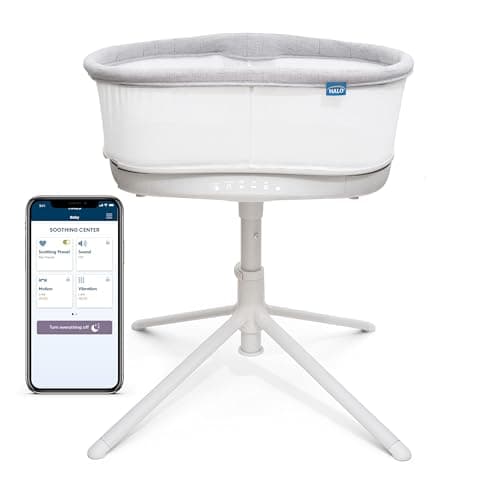
A bassinet is a small, newborn-only bed that sits low and close to yours. It's not a replacement for a crib — most babies outgrow one within about the first six months, once they can push up on their hands and knees — but for those early weeks it makes night feeds and check-ins far easier, because the baby is right there beside the bed. The pick that suits you comes down to a few things: whether you want it at bedside, whether you want gentle motion or sound, and how much you want to spend.
One thing does not change across any of these picks, and we won't soften it: a newborn's sleep surface must be firm and flat, fitted with a snug sheet made for that bassinet, and nothing else in the sleep space — no pillows, no bumpers, no loose blankets, no positioners or padded inserts. The baby sleeps alone, on the back, on that bare firm surface, every sleep. This is the core of the American Academy of Pediatrics safe-sleep guidance, and the U.S. Consumer Product Safety Commission bans inclined sleepers precisely because a soft or angled surface raises the risk. Every bassinet below is a flat-surface bassinet; a "soothing" or "smart" feature is fine as long as the baby still sleeps flat and unpropped.
How to choose in one minute
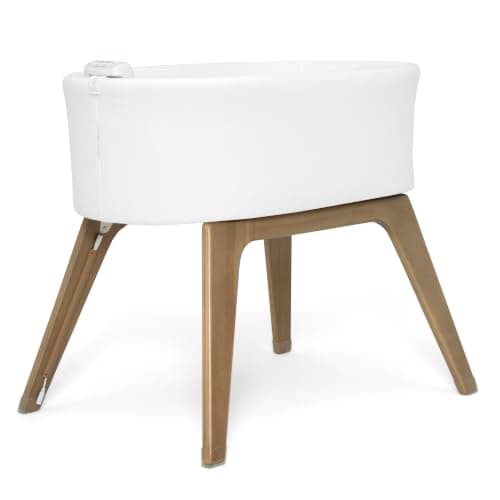
- Recovering from a C-section, or want the baby at arm's reach?The HALO BassiNest Swivel Sleeper 3.0 rotates 360° over the bed and has a bedside wall that lowers, so you can tend to the baby without standing up.
- Want the bassinet to help with soothing? The Delta Children Aero Smart listens for cries and answers on its own with a quiet side-to-side glide, a sound, or a low amber light.
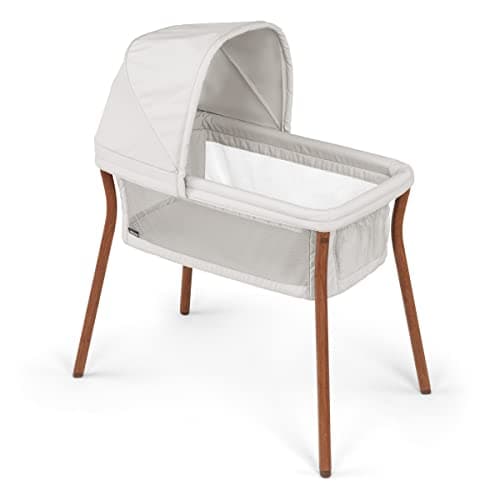
- Traveling or splitting time between homes? The Chicco LullaGo Anywhere sets up without tools and folds into a carry bag, with a washable cover.
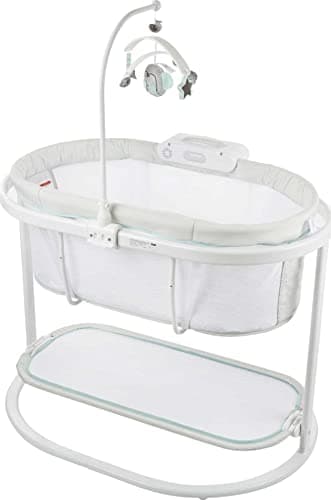
- Want soothing extras without the smart price? The Fisher-Price Soothing Motions Bassinet adds a gentle vibration, soft lights, and sounds on a flat surface.
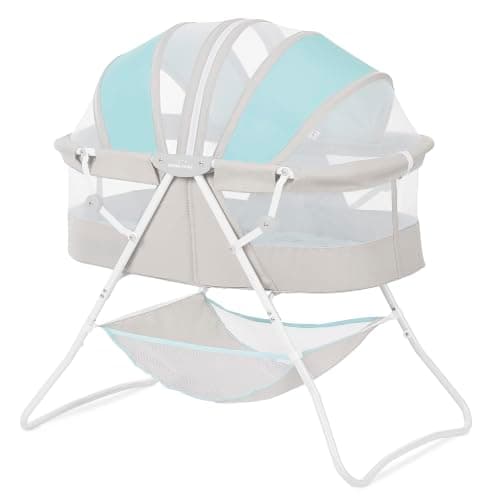
- On a tight budget? The Dream On Me Karley is a simple, foldable, mesh-sided bassinet that covers the newborn months for very little.
We haven't run these through a lab, and we won't pretend we have. Our ranking comes from the published specs and manuals, the safe-sleep design, the weight and use limits, and current prices — weighted with the rubric on our methodology page. What every model here shares is the firm, flat surface that matters most; the differences are about swivel, motion, portability, and cost.
A note on when to stop using one: move your baby to a crib as soon as they hit the bassinet's stated weight limit or can push up on their hands and knees, roll over, or sit up — whichever comes first. After that a bassinet is no longer a safe sleep space. If you're weighing whether to buy a bassinet at all, our bassinet vs. crib comparison lays out the tradeoff, and the best cribs roundup covers what comes next. To dress the baby for those nights without loose blankets, see our best swaddles and best sleep sacks roundups. The quick-picks table below shows a live price for each and links to the full write-up.