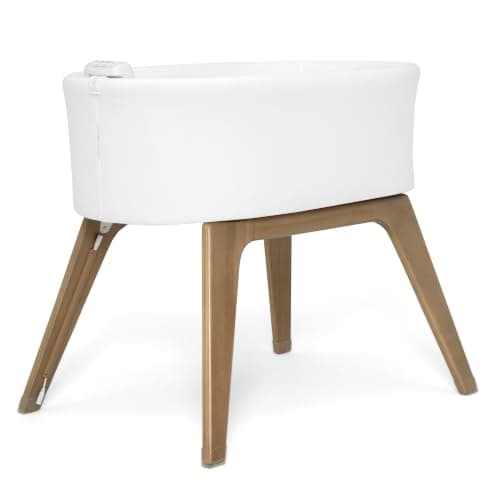
SNOO Alternatives: What Else Rocks a Baby Back to Sleep
Honest about what the SNOO does that nothing here does, then five bassinets that match it on the parts you are actually buying — motion, sound and bedside access.
Disclosure:Swaddle & Stroll is reader-supported. When you buy through links on this page we may earn an affiliate commission, at no extra cost to you. It never changes our picks. How this works.
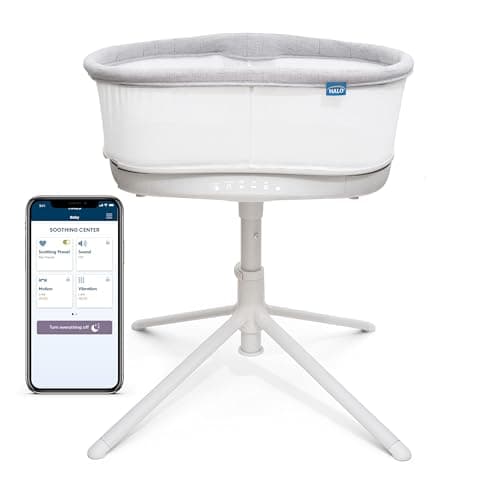
The verdict: the closest alternative to the SNOO in our registry is the Delta Children Aero Smart Auto Glide Bassinet: cry detection that triggers glide, sound or an amber light, six glide speeds, seven sounds, three lullabies, three light settings and Bluetooth, on a flat non-inclined sleep surface that is JPMA certified to the federal bassinet standard. It is for the parent who wants the respond-to-crying behaviour that is the SNOO's whole pitch. The budget pick is the Dream On Me Karley Bassinet: no motion, no electronics, but a flat firm surface with double mesh sides and a foldable lightweight frame — the cheapest safe place for a newborn to sleep next to your bed. If what you actually need is to reach the baby after a C-section, the HALO BassiNest Connected Swivel Sleeper 3.0 with its 360-degree swivel and lowering bedside wall solves that better than motion does.
What the SNOO is known for
Three things, all from Happiest Baby's published pages. Responsive motion: it rocks and plays white noise, and it escalates when the baby fusses. The built-in swaddle: a sleep sack that clips into the bassinet, which is the mechanism behind its FDA De Novo authorization to facilitate supine sleep. A short, defined window: Happiest Baby gives it as birth to six months, or until the baby can push up on hands and knees, whichever comes first. Note that the company's own page publishes two different weight figures without reconciling them — the Recommended Use section says 5 to 25 lb, while the warnings list a maximum weight of 33 lb (11.3 kg). Plan around the lower one.
One detail worth borrowing when you shop: Happiest Baby says the SNOO's leg lifters raise the head end 2.5 degrees, and describes that as “well under the 10-degree limit allowed by federal safety regulations.” The federal bassinet standard, 16 CFR 1218, incorporates ASTM F2194 and caps the sleep-surface angle for exactly this reason. Any bassinet you buy should be flat, or very close to it. An inclined sleeper is a different and discredited product category — if a listing offers a meaningful recline for sleep, that is a reason to walk away, not a feature.
What you are actually choosing between
Once you set the FDA authorization aside, the market splits three ways and the right alternative depends on which part of the SNOO you were buying.
If you wanted the motion and the cry response, you want a powered bassinet, and the Delta Aero is the one in our registry that actually detects crying and responds to it. Everything else here with motion runs on a timer or a switch.
If you wanted the baby within arm's reach, motion is not the feature — bedside geometry is. The HALO BassiNest rotates 360 degrees over the bed and its side wall lowers, which is why it leads our bassinets for C-section recovery page. A parent who cannot easily sit up and twist gets more from that than from six glide speeds. There is a full HALO BassiNest review if you want the detail.
If you wanted a safe place for the baby to sleep near you, that is the cheapest thing on this list, and it is worth being honest that a great many babies sleep perfectly well in a $60 bassinet. Motion helps some babies and does nothing for others, and you cannot know which you have until the baby arrives. Our why won't my baby sleep in the bassinet guide covers the non-purchase fixes first.
The picks, and who each one is for
1. Delta Children Aero Smart Auto Glide Bassinet — the closest match
Who it is for: a parent who wants the bassinet to respond so they do not have to. Cry detection triggers glide, sound or an amber light; six glide speeds, seven sounds, three lullabies and three light settings, with Bluetooth control. The sleep surface is flat and non-inclined, JPMA certified to the federal bassinet standard. Delta publishes the window as newborn to five months or 30 lb, and says stop when the baby pushes up on hands and knees. It is the smart-bassinet pick on our best bassinets roundup. What it does not do is restrain the baby supine, and it carries no FDA authorization.
Who it is for: a recovering parent, a C-section, or anyone who will be lifting a baby out at 3 a.m. repeatedly. A flat firm surface, 360-degree rotation over the bed, a lowering bedside wall, and a limit of up to 20 lb or until the baby can push up. Compared with the Delta directly in HALO BassiNest vs Graco Sense2Snooze.
3. Fisher-Price Soothing Motions Bassinet — soothing at a mid price
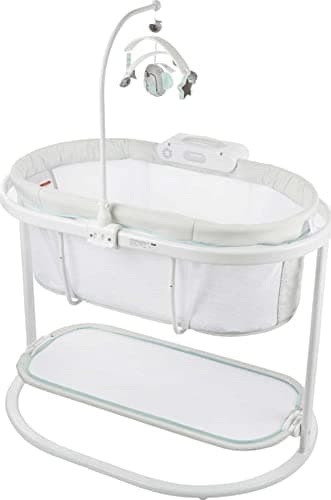
Who it is for: someone who wants vibration, lights, music and a mobile without paying for cry detection. A flat firm surface at bedside height, with the window set by capability rather than weight: until the baby can push up on hands and knees. It is the value pick with soothing features on our best bassinets roundup, and it is the cheapest thing here with any motion at all.
4. Chicco LullaGo Anywhere — if you decide motion is not the point
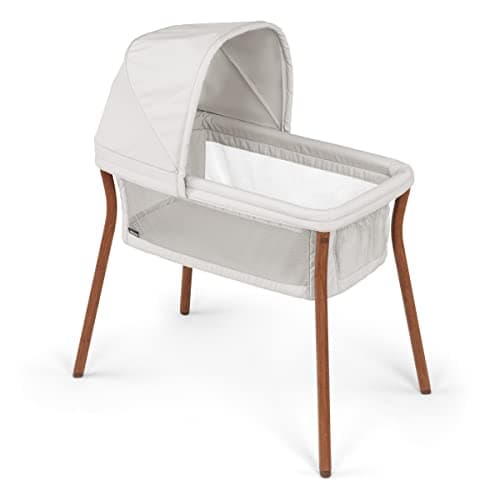
Who it is for: a family who would rather have a bassinet that packs into a bag than one that plugs into a wall. Flat and firm in line with AAP guidance, tool-free setup, a machine-washable cover, and it folds into a carry bag. It is the top pick on our best travel bassinets page. A lot of parents shopping SNOO alternatives discover this is what they actually needed.
5. Dream On Me Karley Bassinet — the budget pick
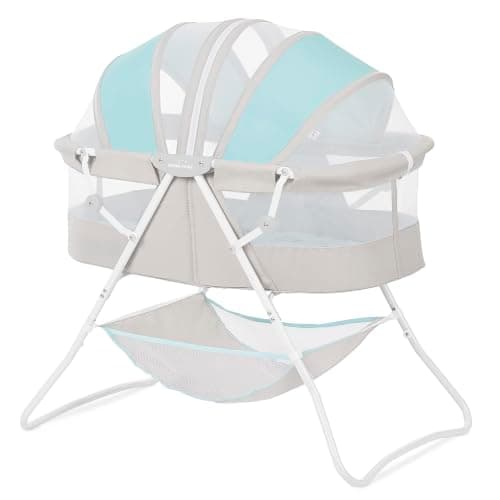
Who it is for: the floor of this market, honestly described. A flat firm sleep surface, double mesh sides for airflow and visibility, a foldable lightweight frame and an under-basket. No motion, no sound, no app. It is the cheapest product on this page and it meets the same federal bassinet standard as the most expensive one, because that standard is a legal requirement rather than a feature. If your budget is the constraint, start here and spend the difference on sleep sacks.
Before you buy any of them
Two reality checks. First, the bassinet stage is short: every product here ends when the baby can push up on hands and knees or roll, which for many babies is somewhere between three and six months. Whatever you spend, you are buying a few months, and then you are buying a crib — transitioning from bassinet to crib covers the handover, and best cribs covers the next purchase. Second, a rental is worth pricing against a purchase for any premium bassinet, because a few months of use is exactly the case rentals exist for.
And if the real problem is that the baby will not settle anywhere, the cheapest interventions are the ones to try first: room temperature and layers (our TOG and room temperature guide), sound (white noise for baby sleep), and swaddling done correctly, with its hard stop at the first sign of rolling (how to swaddle a baby and when to stop swaddling). None of those costs what a motion bassinet costs, and for a lot of babies they are the thing that works.
Quick picks at a glance
#
Product
Best for
Score
Price
1
Delta Children Aero Smart Auto Glide Bassinet
Hears the baby stir and answers on its own with a quiet side-to-side glide, a sound, or a low amber light — the cry-detection bassinet, on FSC-certified wood and organic fabric.
The 360° swivel and lowering bedside wall let you tend to the baby without getting up — a genuine relief after a C-section, and a flat, firm sleep surface throughout.
Hears the baby stir and answers on its own with a quiet side-to-side glide, a sound, or a low amber light — the cry-detection bassinet, on FSC-certified wood and organic fabric.
Sleep surface
Flat, non-inclined (JPMA certified to the federal bassinet standard)
Smart
Cry detection triggers glide, sound, or amber light
The 360° swivel and lowering bedside wall let you tend to the baby without getting up — a genuine relief after a C-section, and a flat, firm sleep surface throughout.
A simple, foldable, mesh-sided bassinet that covers the newborn months for the price of a few packs of diapers.
Sleep surface
Flat and firm (AAP-aligned)
Sides
Double mesh for airflow and visibility
Frame
Foldable, lightweight
Storage
Under-basket
What we like
Lowest price of any bassinet we list
Breathable mesh sides
Folds for storage/travel
Worth noting
Basic — no motion or sound
Less sturdy than premium models
How it scored
Safe-sleep design9.0
Portability8.8
Build quality7.6
Value9.6
Frequently asked questions
What is the closest thing to a SNOO?+
In our registry, the Delta Children Aero Smart Auto Glide Bassinet — it detects crying and responds with glide, sound or light, across six glide speeds and seven sounds, on a flat non-inclined JPMA-certified surface. It does not replicate the SNOO's built-in sleep sack or its FDA De Novo authorization for facilitating supine sleep, and nothing on this page does.
Is the SNOO worth it, or is a cheaper bassinet fine?+
Both can be true, and which one applies depends on the baby. Motion settles some babies and does nothing for others, and you cannot know in advance. What is certain is that the bassinet stage is short — Happiest Baby gives the SNOO as birth to six months or until the baby pushes up — so for many families the honest comparison is a rental against a cheaper purchase.
Do any SNOO alternatives have the built-in swaddle?+
None of the picks here does. The SNOO's sleep sack clips into the bassinet and is the mechanism behind its FDA authorization to facilitate supine sleep. If you want a swaddle with a cheaper bassinet, you buy a normal swaddle and follow the normal rule: stop at the first sign of rolling.
Will a motion bassinet reduce the risk of SIDS?+
No. Happiest Baby states that the SNOO itself 'has not been demonstrated to reduce the risk of SIDS/SUID,' and no bassinet of any kind prevents sleep-related infant death. The protective factors are in the sleep space: baby alone, on their back, on a firm flat surface with nothing else in it.