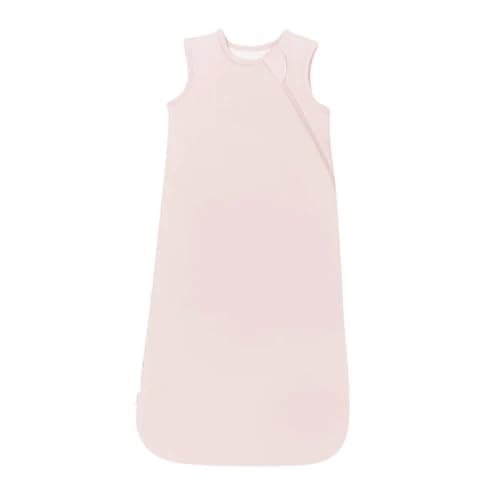
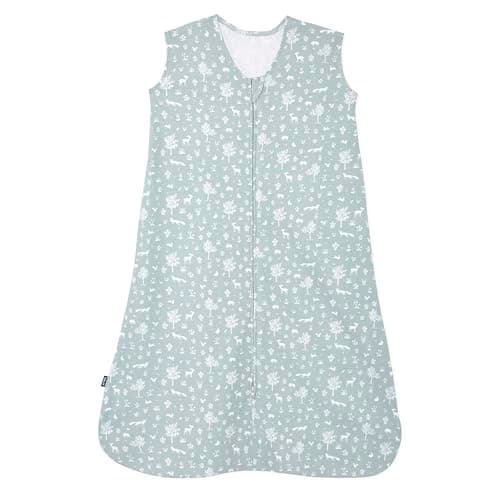
Quick verdict: choose the Kyte Baby Sleep Bagif you run warm, live somewhere with swingy indoor temperatures, or have a baby with sensitive skin—its bamboo-rayon fabric is genuinely breathable and temperature-regulating, and it feels lovely against the skin. Choose the HALO SleepSack Wearable Blanketif you want the trustworthy, no-fuss standard at a friendlier price, with a wide size range and your choice of a lighter 0.5 TOG or a warmer 1.5 TOG to match your room. Both are sleeveless wearable blankets that do the same essential job—keeping your baby cozy without a single loose blanket in the crib—so there is no wrong answer here, only the one that fits your climate, your budget, and your baby's skin.
We have not run these two through a temperature-controlled sleep lab ourselves, and no honest editorial site can—so we rank from each bag's published specifications, established safe-sleep guidance, and our methodology. If you are still surveying the whole field, start with our best sleep sacks roundup; this page is the head-to-head for the two names most parents weigh when they want a simple, safe replacement for loose bedding. By the end you will know which fabric, warmth rating, and price point suits the way your nursery actually sleeps.
Safe sleep comes first
Both of these are sleeveless wearable blankets, and that is exactly what makes them the safe way to keep a baby warm at night. Current guidance is a bare crib: a firm, flat mattress with a fitted sheet and nothing else—no loose blankets, no pillows, no bumpers, no stuffed animals. A wearable blanket solves the warmth problem that loose bedding used to, because it moves with your baby and cannot ride up over the face. Always place your baby on their back to sleep, in a bag sized correctly so the neck opening cannot slip over the chin. Because both bags are sleeveless, your baby's arms stay free—which matters once a baby can roll, since arms-out lets them push up and reposition rather than being pinned. These are not swaddles; they are the next step after the swaddle stage, or the right choice for a baby who never swaddled. Finally, dress your baby in light layers underneath and match the bag's warmth to the room so they stay comfortable rather than overheated. No product can promise to prevent SIDS, and we will not pretend otherwise—but following safe-sleep basics with a well-fitted, sleeveless bag is the sound, evidence-based approach.
Fabric and breathability
This is the clearest real difference between the two. The Kyte Baby bag is made from 97% rayon derived from bamboo with 3% spandex, and that fabric is the whole reason people pay up for it. It is soft in a way that is hard to describe until you feel it, and—more important for sleep—it is breathable and temperature-regulating, meaning it helps shed heat when the room warms up rather than trapping it. For a baby who runs hot, sweats at night, or has sensitive or eczema-prone skin, that gentleness and airflow can be the difference between a settled night and a restless one. The HALO SleepSack takes the simpler, proven route: 100% cotton. Cotton is breathable, washes easily, and is the fabric most parents already trust for baby clothes; it is a completely reasonable choice, and for many babies it is all you need. What cotton does not do is actively regulate temperature the way the bamboo-rayon does, and it has a slightly less next-to-skin softness. To be fair about the trade-off, the Kyte's bamboo-rayon also asks for gentler laundering to keep its feel and shape over time, while the HALO's cotton shrugs off ordinary washing. So: bamboo-rayon for softness, breathability, and sensitive skin; cotton for durability, easy care, and value.
TOG and matching warmth to the room
A sleep sack's TOG is its warmth rating, and matching it to your nursery temperature is the single most useful thing you can get right. The Kyte bag on this page is a 1.0 TOG, which the brand pegs at roughly 69 to 73°F—a true all-rounder that suits a typical, moderately cooled nursery for much of the year. The HALO comes in two versions instead: a lighter 0.5 TOG for warmer rooms and a warmer 1.5 TOG for cooler ones, so you pick the weight that fits your home rather than adjusting layers underneath. Neither approach is better in the abstract—the Kyte gives you one well-judged middle weight, and its breathable fabric widens the comfortable range a little, while the HALO lets you buy exactly the warmth your room calls for. In practice: if your nursery sits in the low 70s most nights, the Kyte's 1.0 is an easy match; if you run hot in summer or cold in winter, the HALO's 0.5-or-1.5 choice lets you dial it in. Whichever you pick, dress your baby in a light layer underneath in warm weather and a slightly heavier one when it is cold, and watch for overheating—damp hair, flushed cheeks, a hot chest—rather than judging by cool hands, which run cool on babies normally. If TOG is new to you, our guide to understanding TOG and room temperature walks through exactly how to pair warmth ratings with your thermostat and layers.
Zippers and nighttime changes
Nighttime diaper changes are where a good zipper earns its keep, and both bags open from the bottom so you can change a diaper without unwrapping your baby's shoulders and waking them fully. The Kyte uses a double zipper: two pulls let you open the bag from the bottom up, which is handy for quick changes and for easing a sleepy baby in and out. The HALO uses an inverted zipper that opens from the bottom as well—a small but genuinely thoughtful touch that keeps the pull away from your baby's chin and lets you unzip just enough for a change. Both approaches work well, and neither is fiddly. If you change a lot of overnight diapers, either bag will spare you the full re-dress that a top-only zipper forces. This is a category where the two are effectively tied—pick on fabric, warmth, and price, not on the zipper.
Sizing and longevity
Both bags cover a wide span of babyhood, but they map sizes differently, so read the chart before you buy. The HALO is sized by weight—small from about 10 to 18 lb, medium 16 to 24 lb, large 22 to 28 lb, and extra-large 26 to 36 lb—which takes most of the guesswork out of picking a size and covers infancy well into toddlerhood. The Kyte runs from XS to XL, spanning newborn through toddler, with a fitted feel that some parents prefer over a roomier bag. One honest note on fit: the HALO tends toward a roomier cut, which gives growing room but can feel less snug on a small baby, while the Kyte's slight stretch—that 3% spandex—gives it a closer, more tailored fit. For longevity, both should carry you across a size or two if you buy sensibly, but keep the care difference in mind: the cotton HALO tolerates frequent, ordinary washing better, which matters for a garment that will meet plenty of spit-up and leaks, whereas the bamboo-rayon Kyte rewards a gentler laundry routine to keep its softness and shape.
Value: which one for which parent
On price, the roles are clear: the HALO is the value pick and the Kyte is the premium one. We will not quote figures that go stale—live prices show on the cards above—but the pattern is consistent, and it maps cleanly onto what each bag is. With the HALO you are paying for a simple, reliable, widely trusted cotton bag that does the core job well; with the Kyte you are paying up for that temperature-regulating bamboo-rayon fabric, the sensitive-skin comfort, and the tailored fit. Neither is overpriced for what it is. If budget is your first constraint, or you want two or three bags so a clean one is always on hand, the HALO's value makes that easy. If your baby runs hot or has reactive skin, or you simply want the nicest-feeling bag and will care for it accordingly, the Kyte is worth the premium. Plenty of families, sensibly, end up owning both—a cotton HALO or two for the wash rotation and a Kyte for the softest nights.
Whichever you choose, the safe-sleep fundamentals matter more than the label on the bag: a bare crib, your baby on their back, a correctly sized sleeveless bag, and a warmth rating matched to the room. Get those right and either of these wearable blankets will serve your family well—the Kyte for breathable, sensitive-skin comfort, the HALO for trustworthy, easy-care value. If you want to double-check the essentials before that first night, our safe sleep guidelines walk through everything in one place.