The short answer:a crib is the only bed you truly need, and a bassinet is an optional convenience for the first few months. If you buy just one, buy the crib. Many families add a bassinet for those early weeks because it's small, portable, and sits right beside the bed for night feeds — but a newborn can sleep safely in a crib from day one. Both work only when the sleep surface is firm and flat, dressed with a fitted sheet and nothing else: no pillows, bumpers, loose blankets, or padded inserts, with the baby on their back for every sleep. That rule doesn't change between the two.
The core difference
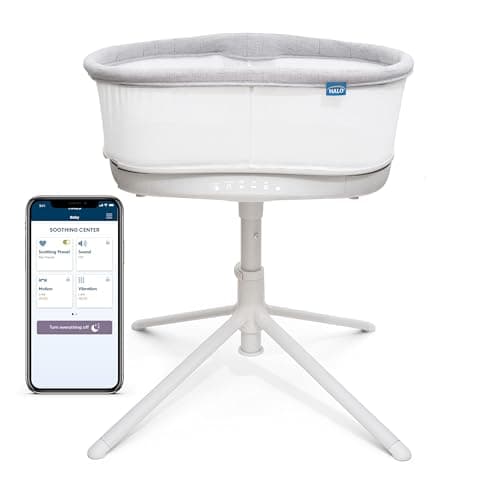
A bassinet is a small, lightweight, newborn-only bed. It's low to the ground, easy to move from room to room, and often designed to sit at bedside — the HALO BassiNest Swivel Sleeper 3.0, for example, rotates 360° over the bed and has a wall that lowers so you can reach the baby without getting up, which is a real relief in the first weeks and after a C-section. The tradeoff is lifespan: babies outgrow a bassinet within roughly the first six months, as soon as they hit its weight limit or can push up on their hands and knees.
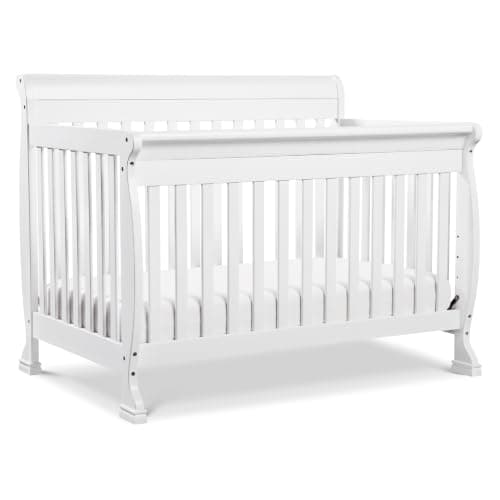
A crib is a full-size bed built to last for years. A convertible crib like the DaVinci Kalani starts as a crib, then converts to a toddler bed, a daybed, and often a full-size bed, so a single frame carries your child from newborn to school age. It's larger and heavier, and it stays in one room — but it's the bed you'll actually keep.
Side by side
| Factor | Bassinet | Crib |
|---|
| Age range | Newborn to about 4–6 months | Newborn through toddler years (and beyond, if convertible) |
| Size | Small, low, fits beside the bed | Large, needs dedicated floor space |
| Portability | Light; moves room to room easily | Stays put once assembled |
| Lifespan | A few months, until baby pushes up or hits the weight limit | Years; a convertible grows into a toddler and full-size bed |
| Relative cost | Lower upfront, but short-lived | Higher upfront, far lower cost per year of use |
When to move from bassinet to crib
If you use a bassinet, retire it the moment your baby reaches any of its limits: the stated weight limit, or the first sign they can push up on their hands and knees, roll over, or sit up — whichever comes first. Past that point a bassinet is no longer a safe sleep space, because a more mobile baby can shift into an unsafe position or, eventually, tip a lightweight frame. Most babies make the move to a crib somewhere around four to six months. The crib takes over from there with the exact same safe-sleep rules: firm, flat mattress sized to the frame, snug fitted sheet, empty crib, baby on the back.
So which should you buy?
If your budget only stretches to one, buy the crib — it's the bed your child needs and will keep, and a newborn sleeps safely in it from birth. You can still keep the baby in your room by putting the crib there, which safe-sleep guidance encourages for at least the first six months. Add a bassinet if you want the convenience of a small, movable, bedside bed for the newborn stretch — it makes night feeds and recovery easier, and it's especially worth it if your bedroom is far from the nursery or you're healing from a C-section. What you should not do is spend on soft or inclined "sleep" products that promise better rest; the CPSC restricts inclined infant sleepers for a reason, and neither a bassinet nor a crib should ever hold pillows, bumpers, or loose bedding.
There is a third option worth knowing about if your bedroom is the constraint. A mini crib is a real crib built around a sleep area about 13 inches shorter, which is often the difference between a crib fitting beside your bed for those first six months and not fitting at all. It is not a bedside sleeper — it is a crib — but it can do the room-sharing job a full-size crib physically can't.
Ready to choose specific models? See our best bassinets, best cribs, and best mini cribs roundups for our ranked picks and live prices, and the nursery setup checklist to get the whole sleep space right.