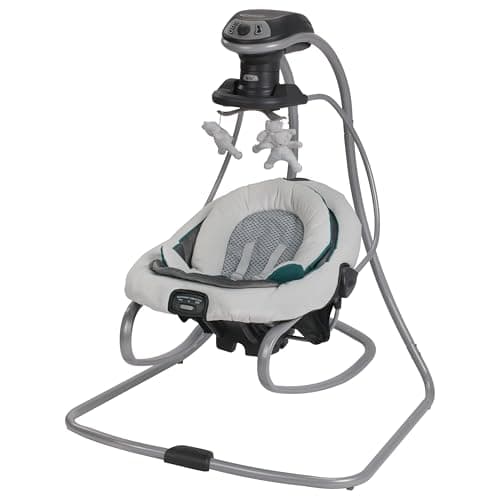
A baby swing is a soothing machine, not a bed. Used the way it's meant to be — for calm, supervised, awaketime — it can be the difference between a screaming late afternoon and a chance to eat dinner with both hands. We picked five swings across motions, sizes, and prices, and we lead with the single most important rule, because swings are one of the few pieces of baby gear where using it wrong is genuinely dangerous.
As always, we haven't lab-tested these; our ranking is built from published specs and our methodology, with live, dated prices on every card. A swing pairs naturally with the rest of a soothing kit — a good bassinet for actual sleep and a carrier for the times your baby only settles on you.
Read this first: a swing is not for sleep
The most important thing on this page is a safety rule, not a pick. A swing seat sits at an incline, and an inclined surface is not a safe place for a baby to sleep — a young infant's head can drop forward and restrict the airway, a risk called positional asphyxia. Federal safety authorities and the AAP are consistent: babies should sleep on a firm, flatsurface, on their back, in a crib, bassinet, or playard. Use a swing only while your baby is awake and you are watching, always buckle the harness, and if your baby falls asleep, move them to a flat sleep space as soon as you can. This is why the inclined "sleepers" that once shared shelf space with swings were recalled. Every swing here is a soothing seat for awake time, full stop.
How we judged them
With safety as the floor, four things separate a good swing from a frustrating one. Motionis the big one: some babies love a head-to-toe glide, others a side-to-side sway, and a few only settle for the bounce-and-sway a premium multi-motion seat does — you often don't know until you try. Newborn readiness means a deep recline and good head support (some seats add a newborn insert). Ease of use covers plug-in versus battery, how the seat reclines, and whether you can adjust it without waking the baby. And value matters because a swing is a months-long tool, not a years-long one: most babies grow out of the swinging stage before their first birthday.
Motion, and why it's a gamble
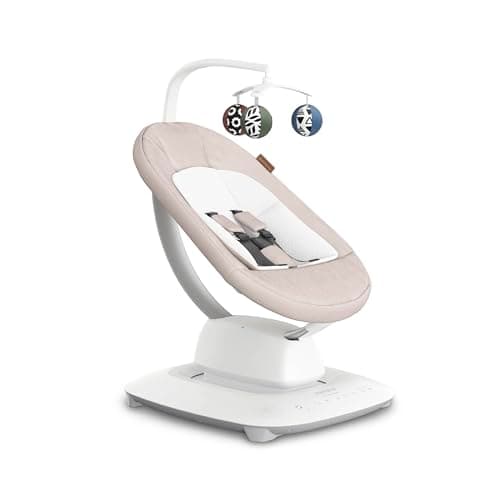
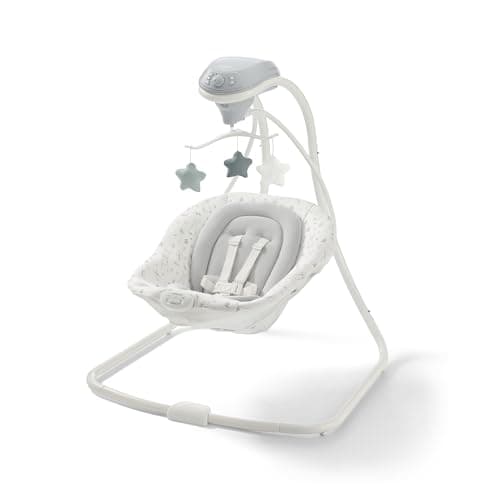
The UPPAbaby Mamaroo— the seat many parents still know as the 4moms mamaRoo, now sold under UPPAbaby — is the pick when you want the widest range of motions, because it bounces and sways in patterns meant to mimic the way adults move, rather than only arcing. The Graco DuetSootheswings in two directions and, unusually, lets you lift the seat off to use as a portable rocker — two soothers in one frame. The Graco Simple Swaykeeps it simple with a gentle side-to-side motion in a small footprint. There's no universally "best" motion; if your budget allows, a multi-motion seat hedges the bet, but plenty of babies are perfectly happy with a single, steady sway.
Space, power, and portability
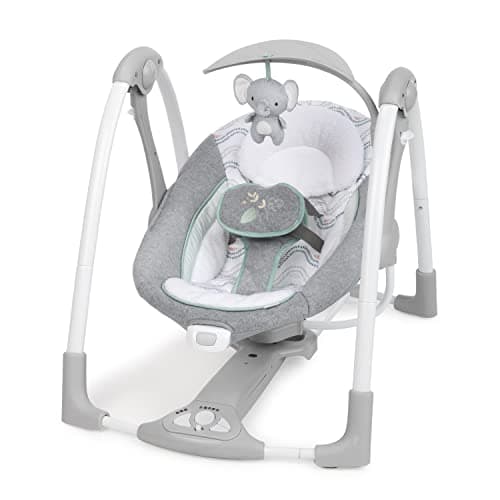
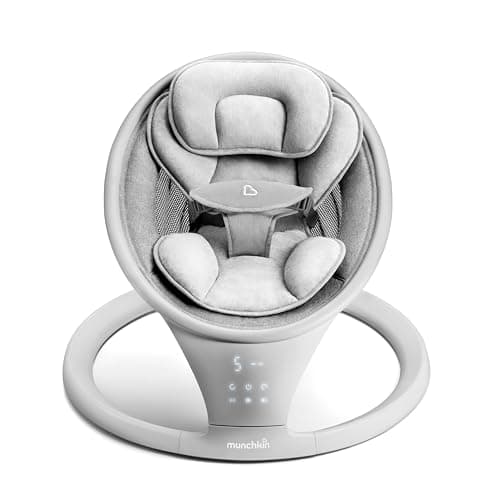
Full-size swings take real floor space, so measure before you buy if you're in an apartment. The Ingenuity ConvertMeearns its keep twice by converting from a swing into a stationary seat once the swinging stage passes, and it's compact to begin with. On power, plug-in swings save a genuinely surprising number of batteries — the DuetSoothe, Mamaroo, and Munchkin all plug in. The Munchkin Electric Baby Swing is the one that gives you the most levers to pull for its size: three vibration modes layer on top of five sway speeds, and it pairs over Bluetooth to play your own music through it. You set the speed, timer, and vibration on the swing's own touch panel — the Bluetooth is for streaming, not for driving the swing from the couch.
Weight limits and when the swing retires
Swings have both a minimum readiness (a newborn needs a deep recline and head support) and a maximum weight limit, usually somewhere around 25 to 30 pounds, but always follow the number on your specific model. Many babies lose interest in swinging before they hit the limit, once they'd rather be sitting up and grabbing at the world — which is exactly when a convert-to-seat design like the ConvertMe keeps paying off. When your baby is done with the swing, the next stage is usually floor time and a playard for contained, safe play. Live prices and full specs for all five swings are in the cards below.