Bassinet vs Pack 'n Play: Which Does a Newborn Need?
They overlap for about four months and then diverge completely. Here is what each one is actually for, what the weight limits mean in practice, and how to avoid buying both.
Disclosure:Swaddle & Stroll is reader-supported. When you buy through links on this page we may earn an affiliate commission, at no extra cost to you. It never changes our picks. How this works.
If you are buying one thing for a newborn, buy a playard with a bassinet insert — a Graco Pack 'n Play or similar. It does the newborn job and then keeps working for two more years as a playard and a travel bed, which a bassinet cannot. Buy a dedicated bassinet instead when the newborn stage is the hard part for you specifically: a C-section recovery, a bedside sleeper you can reach without standing, or a small bedroom where a full playard will not fit beside the bed. The thing nobody tells you is that both options end at roughly the same moment, and it comes sooner than you expect.
Before the detail, per how we pick: the limits below are the ones each maker publishes, and the safe-sleep points are the AAP's and the CPSC's, not ours. We do not soften a sleep-safety point to make a sale, and if the answer for your situation is “you do not need either of these,” that answer is in here too.
What each one actually is
A bassinetis a small, raised, flat sleep surface for a newborn. Its whole proposition is height and proximity: it puts the baby at about mattress level so you can see and reach them without getting out of bed, which is the thing that matters at 3 a.m. in week two. It stops working when the baby can push up on hands and knees or reaches the weight limit — commonly 20 pounds, which many babies hit between four and six months, and some earlier.
A pack and play— properly a playard — is a floor-level enclosure with a removable bassinet insert for the newborn stage. The insert typically tops out at 15 pounds, lower than a standalone bassinet, and then you remove it and the playard carries on as a safe place to put a baby who is rolling, then sitting, then standing. The published limit is usually about 35 inches tall or until the child can climb out.
So they overlap for one stage and one stage only. The bassinet is better at that stage. The playard is better at everything after it.
What to look for — the five things that decide it
Work through these before you look at any product, because they will narrow the field faster than any feature list.
The weight limit, and your baby's likely size. A bassinet insert in a playard at 15 pounds versus a standalone bassinet at 20 is a difference of roughly six to eight weeks for an average baby. If you are expecting a big baby, or you are having twins and one will be bigger, the lower limit arrives fast. This is the number to check first and the one most buyers check last.
Whether you need bedside access. This is the strongest single argument for a dedicated bassinet. If you are recovering from a C-section, standing up to reach a baby is genuinely difficult for several weeks, and a swivel bassinet with a lowering side wall solves a real problem rather than a marketing one. If you are not, the advantage is smaller than the price gap.
Where it has to fit. A playard is roughly 40 by 28 inches on the floor; a bassinet is smaller and taller. In a bedroom where the bed is against a wall, the playard often cannot go where you need it and the bassinet can.
Whether it has to travel. A playard that folds with wheels and a carry bag is a travel bed for years. A bassinet usually is not, with the exception of specifically portable models. If trips are part of the plan, see our best baby gear for travellist — the travel answer is often a third product rather than either of these.
The surface, not the features. Flat and firm is the requirement. Soothing modes, vibration and music are conveniences; none of them is a reason to accept a surface that is softer or inclined. Which brings us to the part that is not negotiable.
How to avoid buying both
Most families end up owning a bassinet and a playard, and in hindsight most of them did not need to. Three ways to avoid it:
Buy the playard and skip the bassinet. The cheapest path by a wide margin. You accept a floor-level sleep space for the newborn weeks, which means getting out of bed. Fine if your recovery is straightforward.
Buy a playard whose bassinet detaches as a portable bedside unit.This is the genuine middle path and it is the one most people have not heard of — the bassinet lifts out, sits beside the bed, and later sets back into the frame.
Buy the bassinet and go straight to a crib.If you already have a crib and a nursery and do not need a downstairs enclosure, a bassinet followed by the crib skips the playard entirely. The transition usually lands between four and six months — our guide on transitioning from bassinet to crib covers the timing and the signs.
Which to buy
With that settled, here is how the four options below map onto the five questions above.
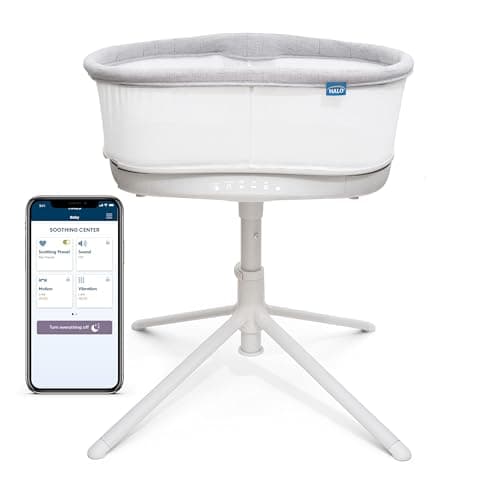
The HALO BassiNest Swivel Sleeper 3.0 if bedside access is your constraint. It rotates 360 degrees over the bed and its side wall lowers, so you can tend to the baby without standing. It is the answer for a C-section recovery, and its costs are a premium price and a larger floor footprint. It holds to 20 lb or until the baby can push up.
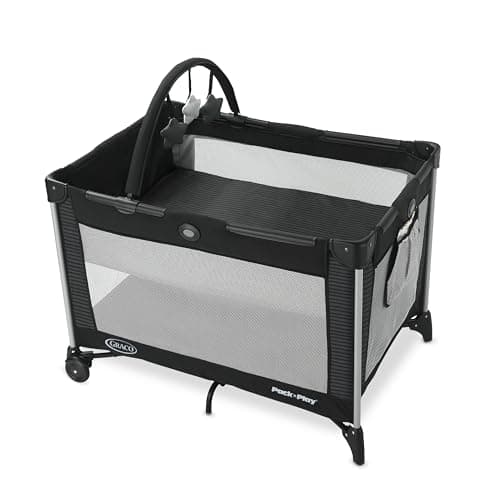
The Graco Pack 'n Play On the Go if you are buying one thing. Full-size folding bassinet for the newborn stage, playard to about 35 inches after that, folds with wheels and a carry bag, about 22 lb. The honest limitation is that its bassinet tops out at 15 lb, which is a short newborn window.
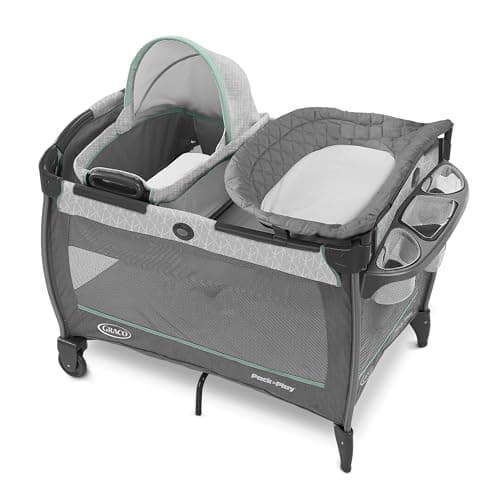
The Graco Pack 'n Play Close2Baby if you want the middle path. Its portable bassinet holds to 20 lb, lifts out to sit beside your bed, and later sets into the playard frame; there is a removable wipe-clean changer too. It is bulkier and heavier at about 35 lb, so it is a home product rather than a travel one.
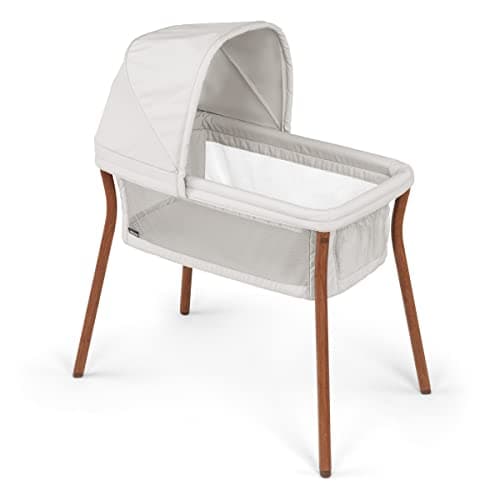
The Chicco LullaGo Anywhereif the bassinet has to move. Tool-free setup, a washable cover, and it folds into a carry bag — the grab-and-go option for a grandparent's house or a trip. No motion or sound features, and the lightweight frame is less sturdy than a fixed bassinet.
The 360° swivel and lowering bedside wall let you tend to the baby without getting up — a genuine relief after a C-section, and a flat, firm sleep surface throughout.
A proven, affordable playard with a full-size folding bassinet for the newborn stage that folds compactly with wheels and a carry bag — the do-it-all pick for home and travel.
Type
Playard with folding bassinet
Weight limits
Bassinet up to 15 lb; playard up to 35 in / until baby can climb out
Fold
Compact fold with wheels and carry bag
Weight
About 22 lb
What we like
Includes a full-size folding bassinet for the newborn stage
Compact fold with wheels and a carry bag
Affordable and proven for home or travel
Worth noting
No changing station on this model
Bassinet tops out at 15 lb — a short newborn window
A playard with a portable bassinet you can keep at your side and lift into the frame, plus a removable wipe-clean changer — it grows from a newborn bassinet to a toddler playard.
Type
Playard with portable bassinet + changer
Weight limits
Bassinet to 15 lb; portable bassinet to 20 lb; changer to 25 lb
Features
Bedside-style portable bassinet, removable changer with storage
Weight
About 35 lb
What we like
Portable bassinet keeps baby at your side, then sets into the playard
Removable changer with wipe-clean fabric and storage
Grows from newborn bassinet to toddler playard
Worth noting
Bulky and heavy for travel
Multiple weight limits to track across bassinet, portable bassinet, and changer
Tool-free assembly, a washable cover, and a carry bag make this the grab-and-go bassinet for grandparents' houses and trips.
Sleep surface
Flat and firm (AAP-aligned)
Setup
Tool-free, folds into carry bag
Cover
Machine-washable
Weight limit
Until baby can push up
What we like
Packs into a carry bag for travel
No tools to set up
Washable, waterproof-lined mattress cover
Worth noting
No motion or sound features
Lightweight frame is less sturdy than fixed bassinets
How it scored
Safe-sleep design9.2
Portability9.6
Build quality8.0
Value8.8
Frequently asked questions
Do I need a bassinet if I have a pack and play?+
Usually not. A playard with a bassinet insert covers the newborn stage and then keeps working for two more years, which a bassinet cannot. A dedicated bassinet earns its price in specific situations: a C-section recovery where standing is hard, a bedroom where a full playard will not fit beside the bed, or a baby who will outgrow a 15 lb insert quickly.
How long can a baby sleep in a pack and play bassinet?+
Until they reach the published insert limit — commonly 15 lb — or until they can push up on hands and knees, whichever comes first. For an average baby that is roughly three to four months, and the pushing-up milestone often arrives before the weight limit does. After that you remove the insert and the playard continues at floor level.
Is a pack and play safe for a newborn to sleep in every night?+
Yes, when used as the maker intends: the bassinet insert installed correctly, the surface flat and firm, the baby on their back, and nothing else in the space. Do not add a mattress or topper to make it softer — the thin pad is the design. Playards are covered by a mandatory federal safety standard, and plenty of babies sleep in one from day one.
Which is better for a C-section recovery?+
A bedside bassinet, clearly. For several weeks after a C-section, standing up to lift a baby from a floor-level playard is genuinely difficult. A swivel bassinet that rotates over the bed with a side wall that lowers lets you reach the baby without getting up. That is the one case where the price premium buys a real, daily benefit rather than a feature.
Can a pack and play replace a crib?+
For a while, yes — many families use a playard as the main sleep space well past the newborn stage, and it is a legitimate choice, particularly in a small home or a shared room. The limit is the published one: about 35 inches tall or until the child can climb out. A crib gives more room and lasts longer, but a playard used correctly is a safe sleep space, not a compromise on safety.