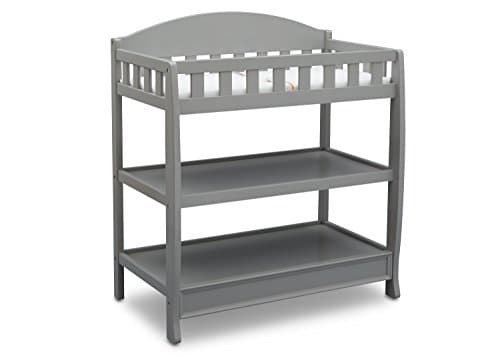
A dedicated changing table is one of those purchases that's easy to skip and easy to be glad you didn't — a stable surface at the right height, with everything you need in arm's reach, saves your back and speeds up the ten-changes-a-day newborn stretch. We picked five standalone changing tables across budgets and footprints. If you'd rather the changing surface sit on top of dresser you'll use for years, read our best nursery dressersguide instead — many of those add a removable changing topper.
We haven't assembled and stress-tested each of these, and we won't pretend to. Our ranking is built from the published specs and our methodology, with live, dated prices on each card. Because a changing table is furniture a baby is on top of, safety and sturdiness carry the most weight in how we ranked them.
Safety comes first: strap, supervision, and anchoring
Three rules make a changing table safe, and none of them are optional. First, use the safety strap every single time— even a newborn who can't roll yet can arch and shift, and the strap buys you the split second you need. Second, never step away, even for a moment, with your baby on the table; keep one hand on them and everything you need within reach before you start, so you never have to turn your back. Third, anchor tall furniture to the wall. Furniture tip-overs are a documented hazard, and the CPSC's Anchor It!program and the federal STURDY stability rule exist because of it — use the included anti-tip hardware or an anchor kit, especially once your baby is pulling to stand nearby. Every table here has four-sided guardrails, but guardrails are a backup to your hand and the strap, not a replacement for them.
How we judged them
Beyond safety, three things separate these tables. Sturdinessis about how solid the frame feels and whether it wobbles once loaded — the picks here range from lighter budget frames to more solid wood builds. Storage is what turns a table from a surface into a station: open shelves keep diapers and wipes visible and grabbable, a drawer hides the clutter, and a built-in hamper gives blowout laundry somewhere to go. And valuematters because a changing table has a short working life — most families stop using one around the time a toddler won't lie still, often changing on the floor or a bed after that.
Storage is the real differentiator
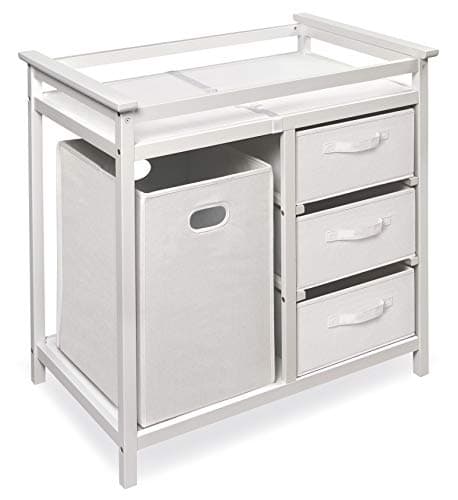
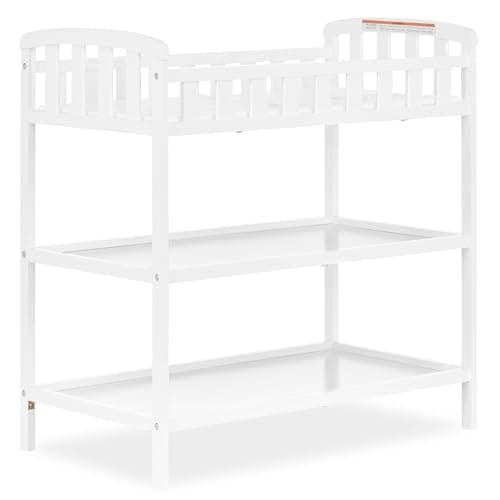
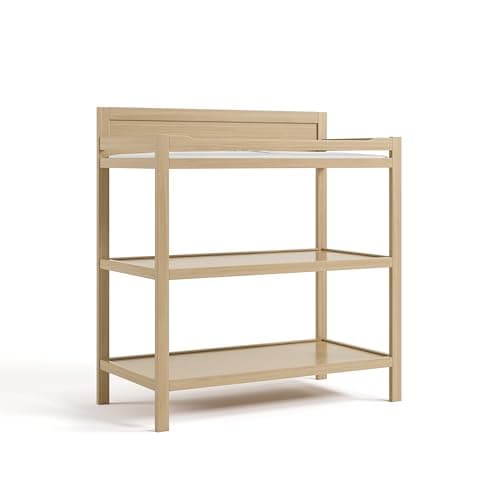
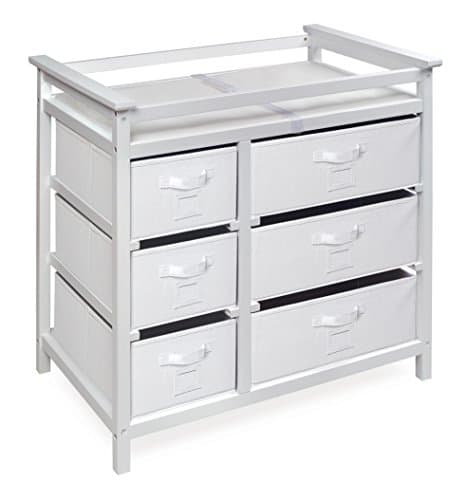
On paper these tables look alike; in use, the storage is what you notice. The Badger Basket with hamperis the standout for anyone who wants cleanup built in — a removable canvas hamper plus a slide-out basket means the outfit that didn't survive the change has an immediate home. The Storkcraft Alpineadds a closed drawer to the usual open shelves, which keeps creams and small items tidy and out of a toddler's reach. The Delta Children table keeps it simple and cheap with two open shelves and an included pad and strap, and the Dream On Me Emily shrinks the whole thing down in solid pine for a tight nursery or a shared room. The Badger Basket Modern hides the most of any table here, with six pull-out baskets behind a clean white frame.
Fit, footprint, and the changing pad
Measure your nursery wall before you buy — a changing table is wider than people expect, and you want the pad at a comfortable standing height for whoever changes the most diapers. Check whether a contoured changing pad is included: the Delta, Badger Basket, and Storkcraft picks ship with one and a safety strap, while some budget tables expect you to add a pad separately. A contoured pad with raised sides and a strap is worth insisting on. Whatever table you choose, keep the diapering supplies you reach for on the near shelf and anything you don't want small hands finding — powders, ointments, nail scissors — up high or behind a closed drawer.
Do you even need one?
Honestly, not everyone does. If space or budget is tight, a changing pad on top of a low, anchored dresser does the same job and lasts longer as furniture — that's the case our nursery dressersroundup makes. A dedicated table wins on convenience: the right height, built-in guardrails, and storage designed around diapering. If you change your baby many times a day in one room, it earns its space; if you're short on room, the dresser-plus-pad route is the smart economy. See the full setup context in our nursery setup checklist. Live prices and specs for all five tables are in the cards below.