A changing table does one job for two years. A dresser does that job and then keeps doing a different one for fifteen. That is most of the answer — but not all of it.
Disclosure:Swaddle & Stroll is reader-supported. When you buy through links on this page we may earn an affiliate commission, at no extra cost to you. It never changes our picks. How this works.
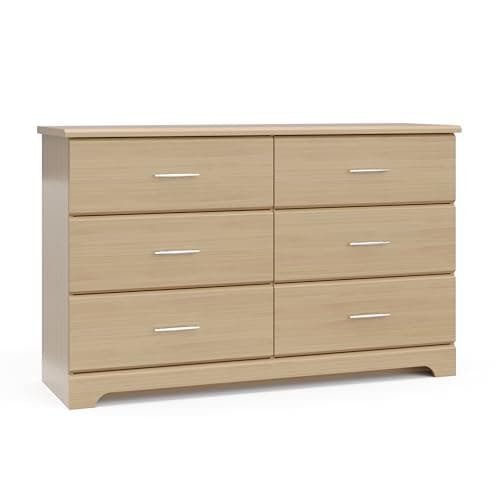
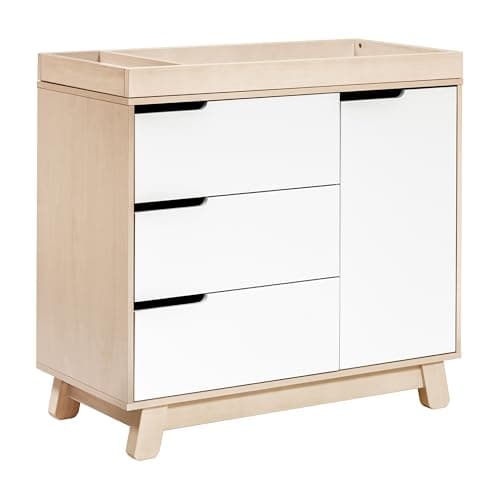
For most nurseries, buy a dresser and put a changing pad on it. You will change diapers on that surface for roughly two years and store clothes in the drawers for fifteen, and a dresser with a wide top does both jobs without asking for extra floor space. Our default recommendation is a dresser whose maker publishes a changing-pad-ready top — the Babyletto Hudson 3-Drawer Changer Dresser comes with a removable tray that makes it a changing station now and a plain dresser later, and the Storkcraft Brookside gives you six drawers and a wide top for less. Buy a dedicated changing table in one case: when you need a second changing station on another floor of the house, or when four-sided guardrails matter more to you than a surface that lasts.
That is the short version, and it is also where most articles stop. The part that actually decides it is that the two products are built to different federal standards, and the one you are more likely to buy is the one with fewer rules about it.
The standards are not the same, and that cuts both ways
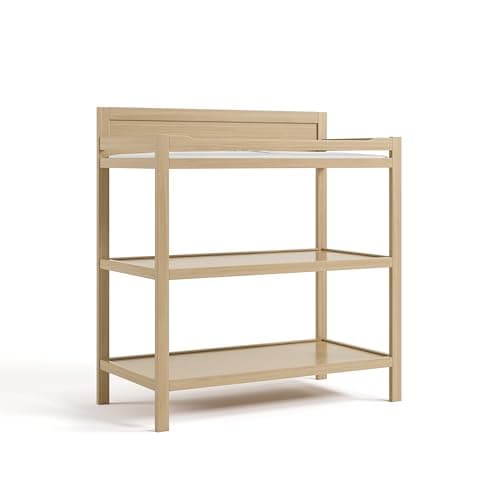
A dedicated changing table is a baby changing product, covered in the US by 16 CFR Part 1235, which incorporates the ASTM F2388 consumer safety specification. That standard is why every table on this page has barriers on all four sides and ships with a restraint strap: the product is designed and tested around a baby being on top of it.
A dresser is a clothing storage unit. It is covered by the CPSC's stability rule under the STURDY Act, which incorporates ASTM F2057 — a tip-over standard written because loaded drawers and climbing toddlers kill children. It says nothing at all about a baby on top, because nobody designing a dresser assumed one would be there.
So the honest framing is this: the dresser is the better long-term furniture and the changing table is the better-regulated changing surface. You close that gap with two things — a contoured pad with a strap, anchored to the dresser top, and the wall anchor the dresser ships with, actually screwed into a stud. Both matter. The CPSC's Anchor It campaign exists because the second one is the step people skip.
What to look for, whichever way you go
Height, measured against you. The right changing height is where your forearms are roughly level when you stand straight, which for most adults is somewhere between 36 and 42 inches. Dressers are usually in that band; so are changing tables. What matters is that you do not spend two years bent over a surface four inches too low, because your back will pay for it. Measure before you order, and measure for the taller adult in the house too.
Top depth and width, against the pad. A standard contoured changing pad is around 16 by 32 inches. A dresser top needs to swallow that with margin on all sides, and a 20-inch-deep dresser is comfortable where a 16-inch-deep one is not. Our nursery dresser guide goes through drawer and footprint math in more detail.
Closed storage versus open shelves. Most changing tables give you open shelves, which keep diapers within reach and look cluttered within a week. Drawers hide everything and make you open one to find anything. The sweet spot is a dresser with a basket on top for the things you need in the next ten seconds.
Whether the surface has a second life. A changing table is a changing table. A dresser becomes a bedroom dresser, which is the real cost argument: the table is cheaper to buy and more expensive per year of use. If you plan to resell, dressers hold value and changing tables largely do not.
The comparison table
Dedicated changing table
Dresser with a changing pad
Federal standard
16 CFR Part 1235 (ASTM F2388) — barriers, restraint
STURDY / ASTM F2057 stability rule — tip-over only
Guardrails
Four sides, built in
None — the contoured pad is the only barrier
Useful life
About two years, then it leaves the house
Decades, as furniture
Storage
Open shelves, sometimes one drawer
Three to six drawers of closed storage
Floor space
An extra piece of furniture in the room
None extra — you needed a dresser anyway
Up-front cost
Lower
Higher, but replaces two purchases
So when is a changing table the right call?
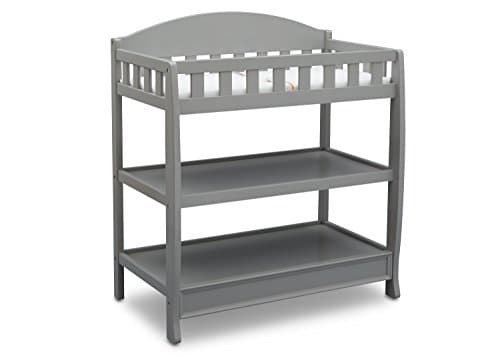
Three situations, all real. First, the second station: a table on the ground floor so you are not carrying a baby upstairs eight times a day is genuinely worth the cheap purchase, and the Delta Children Infant Changing Table is the pick for that at the price. Second, a room where the dresser is already in use and has no free top. Third — and this is a judgement call, not a safety verdict — if four-sided guardrails let you relax enough to actually use the strap and keep a hand on the baby, that is a better outcome than a nicer surface used carelessly.
If you want a middle path, the Storkcraft Alpine adds one closed drawer to the usual open shelves, which keeps creams and wipes out of sight; the Badger Basket version in our changing tables roundup trades that drawer for a built-in laundry hamper. Our how to choose a changing table guide covers the rest of the specification, and best nursery dressers ranks the dresser side of this decision on storage, stability and whether the top takes a pad.
Quick picks at a glance
#
Product
Best for
Score
Price
1
Babyletto Hudson 3-Drawer Changer Dresser
The mid-century Hudson look that matches the Hudson crib, with a removable changing tray on top — a changing station now and a plain dresser later.
The dresser answer: removable changing tray on top
A straightforward, budget-friendly changing table that ships with a contoured pad and safety strap and adds two open shelves of storage.
Includes
Contoured changing pad and safety strap
Storage
Two fixed open shelves
Rails
Guardrails on all four sides
Standard
Meets applicable CPSC/ASTM requirements
What we like
Changing pad and safety strap included in the price
Four-sided guardrails and two storage shelves
Inexpensive and simple to assemble
Worth noting
Open shelves rather than closed drawers
Lighter-duty build than a dresser-changer
How it scored
Sturdiness & safety8.4
Storage8.0
Assembly8.2
Value9.2
Frequently asked questions
Do I need a changing table at all?+
No. A dresser with a contoured changing pad on top does the same job, takes no extra floor space and stays useful for years after diapers end. Buy a dedicated changing table when you want a second station elsewhere in the house, when no dresser top is free, or when four-sided guardrails make you more likely to use the strap and stay with the baby.
Is a dresser safe to change a baby on?+
With two steps, yes, and millions of families do it. Use a contoured pad with a restraint strap, secured to the top so it cannot slide, and anchor the dresser to a wall stud with the kit it ships with - the CPSC's stability rule for clothing storage units exists because loaded drawers tip over. What a dresser does not have is the four-sided barrier a changing table is required to have under 16 CFR Part 1235, so the never-leave-the-baby rule matters even more.
What height should a changing surface be?+
Roughly where your forearms sit level when you stand up straight, which for most adults is between about 36 and 42 inches. Most dressers and most changing tables fall in that band, but a four-inch error costs you two years of bending. Measure against the taller adult in the household as well as the shorter one before you order.
What size changing pad fits a dresser?+
A standard contoured pad is around 16 by 32 inches, so you want a dresser top that takes it with margin on every side - about 20 inches of depth is comfortable where 16 inches is tight. Check the dresser's published top dimensions rather than guessing from a photograph, and make sure the pad you buy can be secured to the top.