Most baby carriers quietly stop at 32 or 35 lb. These are the ones with the published headroom to carry a two- or three-year-old — and the honest limits of each.
Disclosure:Swaddle & Stroll is reader-supported. When you buy through links on this page we may earn an affiliate commission, at no extra cost to you. It never changes our picks. How this works.
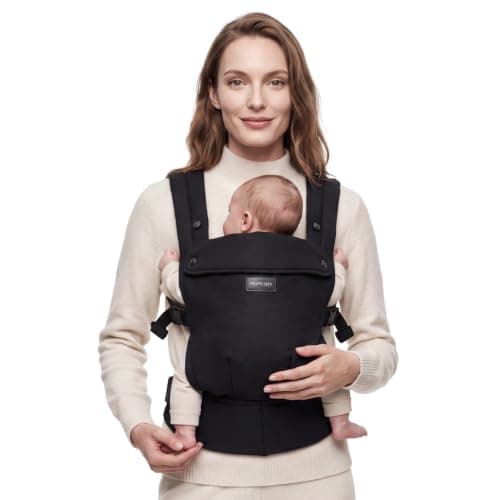
The verdict: the Baby Tula Free-to-Grow is the best toddler carrier for ordinary life — a published 7–45 lb range, an adjustable panel that widens and heightens as the child grows, and a back carry, which is the position that makes carrying a heavy toddler sustainable. It is for a parent who still needs to carry past the point most carriers give up. The budget pick is the Momcozy PureHug: it is the cheapest carrier here with the same published 45 lb ceiling, with a 3D EVA lumbar pad and X-straps to spread the load — but it is front-inward only, with no outward, hip or back carry, and Momcozy recommends it from three months. If you are carrying on trails rather than pavement, the framed Osprey Poco LT is the right tool, and our best hiking baby carriers page ranks that category properly.
Why most carriers are not toddler carriers
The number to look for is the published upper weight limit, and it is lower than parents expect. The Infantino Flip Advanced — the budget winner on our best baby carriers page and a genuinely good carrier — stops at 32 lb. The Boppy ComfyFit stops at 35 lb. Most stretchy wraps stop at 33 to 35 lb, and Boba says its classic wrap “works best to 20 lb.” An average two-year-old is around 28 lb, so a 32 lb carrier has months left in it, not years. Everything on this page publishes a limit of about 40 lb or more.
The second number is the carry position. A front carry puts the whole load on your shoulders and lower back; a back carry transfers it to your hips, which is why framed packs and back-capable soft carriers are the only comfortable way to carry 30-plus pounds for an hour. If a carrier is front-only, its weight limit is a structural rating, not a comfort promise — and that is the honest limitation of the budget pick here.
The picks, and who each one is for
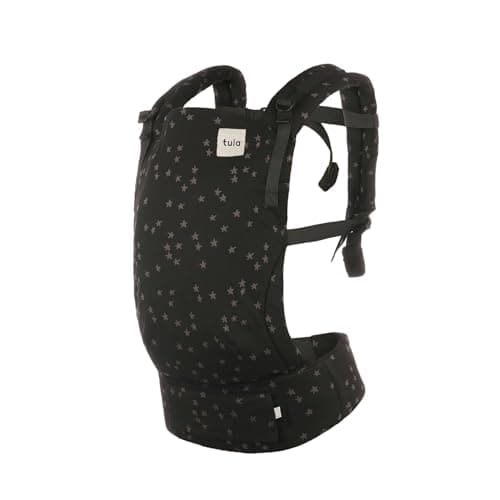
1. Baby Tula Free-to-Grow — the one to buy
Who it is for: a parent who wants one carrier from newborn to preschool. Published 7–45 lb with a panel that adjusts in both width and height, soft cotton, and front-inward plus back carry. The back carry is what earns it the top spot: at 30 lb and up, it is the difference between twenty minutes and two hours. See it against the mesh benchmark in Ergobaby vs Baby Tula, and against the budget option in Baby Tula vs Infantino Flip.
2. Momcozy PureHug — the budget pick
Who it is for: someone who needs toddler headroom for the least money and will mostly carry front, in short stretches — a nap rescue at a wedding, a tired three-year-old at the end of a zoo trip. Published 7–45 lb, lightweight 100% cotton, a 3D EVA lumbar pad and X-straps across the back. The limitation is stated by Momcozy, not invented by us: front inward only, no outward, hip or back carry, and recommended from three months. For an hour of walking with a 35 lb child, the Tula is the better instrument. Compare it in Momcozy vs Boppy ComfyFit.
3. Konny Baby Carrier Flex AirMesh — for the bag you already carry
Who it is for: airports, theme parks and days when the carrier spends most of its time packed. Konny publishes 4–20 kg — roughly 9 to 44 lb — in a 3D open mesh of 87% polyester and 13% spandex that folds into its own pouch at about 7 ounces. Nothing else on this page disappears into a diaper bag like that. It is sized rather than fully adjustable (sold as XS–XL or M–4XL), so two adults of very different builds cannot share one.
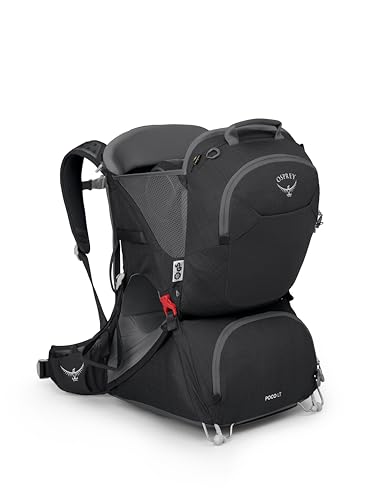
4. Osprey Poco LT — the framed pack for all-day carrying
Who it is for: a parent carrying a toddler for hours, on or off trail. Osprey publishes a 48.5 lb maximum total load including child, carrier and gear, about 5.1 lb of carrier weight, 25 litres of storage, six inches of torso adjustment, an included stowable sunshade and a seven-year guarantee on the Poco line. Retailers quote a 16 lb child floor, and Osprey requires the child to sit up unassisted. A framed pack is overkill for errands and exactly right for a long day.
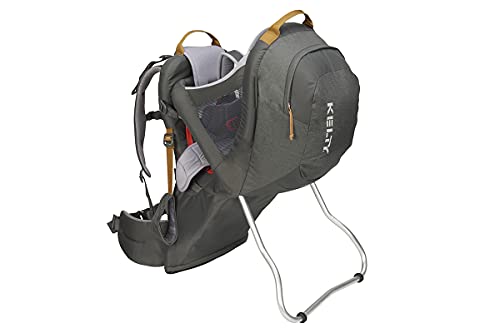
5. Kelty Journey PerfectFIT — the framed pack two adults can share
Who it is for: two carrying adults of different heights. Kelty publishes a 15.5 to 21 inch torso fit range adjustable on the fly, a 48.5 lb / 22 kg maximum total load, a 16 lb minimum and 40 lb maximum child weight, a five-point child harness, 26 litres and 6 lb 6 oz of carrier. One thing to budget for: the base PerfectFIT does not include a sunshade — Kelty includes one on the Signature and Elite versions.
What we left off, and why
Two framed packs we rank highly elsewhere are not on this page. The Deuter Kid Comfort Active is a strong narrow-profile carrier, but CPSC recall 25-256 of 8 May 2025 covers part of the Kid Comfort line over kickstand hinges that can crack, and a page aimed at everyday carrying is the wrong place to make a reader learn a production-code check. The affected codes end 0123, 1223 or 0423; current production is not covered, and the detail is on our hiking carriers page. The Ergobaby Omni Breeze is absent for a simpler reason: its Amazon listing has been coming back unavailable, and we will not lead a buying page with a carrier you cannot buy.
Nothing here is a hip seat, because the registry does not carry one, and we do not invent a product to fill a slot. If you are still choosing between carrier types rather than models, start with how to choose a baby carrier or wrap vs structured carrier. And when the toddler years are over, a carrier is usually the dirtiest thing in the house — how to clean a baby carrier covers doing it without wrecking the webbing.
Quick picks at a glance
#
Product
Best for
Score
Price
1
Baby Tula Free-to-Grow
A structured carrier that adjusts in width and height to grow with the baby, with front and back carry — a comfy, cotton alternative to the mesh crowd.
A light cotton structured carrier with a wide ergonomic seat, X-straps and a lumbar pad — an easy, affordable daily driver, but a front-inward carry only.
Budget pick: the cheapest carrier here rated to 45 lb
A wrap you pull on like a t-shirt and then adjust — the snug, wrapped feel without 5 yards of fabric on a parking-lot floor, in an open mesh built for hot weather.
Best to throw in a bag for a theme park or an airport
A 15.5-to-21-inch torso range and a tool-free adjustment you can do on the trail — the carrier for a household where two people of different heights both carry.
A structured carrier that adjusts in width and height to grow with the baby, with front and back carry — a comfy, cotton alternative to the mesh crowd.
A light cotton structured carrier with a wide ergonomic seat, X-straps and a lumbar pad — an easy, affordable daily driver, but a front-inward carry only.
Positions
Front inward only — no outward, hip or back carry
Weight range
7–45 lb; Momcozy recommends it from 3 months
Fabric
100% cotton, lightweight
Support
3D EVA lumbar pad + X-straps across the back
What we like
Light and easy to put on single-handed
Wide ergonomic seat and a lumbar pad at a budget price
Three sizing positions, machine washable
Worth noting
Front-inward carry only — no facing-out, hip or back carry
Momcozy recommends it from 3 months, so it is not a from-birth carrier
A wrap you pull on like a t-shirt and then adjust — the snug, wrapped feel without 5 yards of fabric on a parking-lot floor, in an open mesh built for hot weather.
Weight range
Roughly 9–44 lb (Konny publishes 4–20 kg)
Fabric
87% polyester / 13% spandex, 3D open mesh
Fit
Adjustable; sold as XS–XL or M–4XL
Packed
About 7 oz, folds into its own pouch
What we like
Nothing to tie — it slips on and adjusts with a strap
Open mesh is the coolest-wearing option here for a summer baby
Highest published weight ceiling of the wraps we looked at
Konny states it is IHDI-acknowledged hip-healthy
Worth noting
Still sold in two size bands, so you have to pick the right one
Synthetic fabric, not the cotton or modal feel some parents want
A 15.5-to-21-inch torso range and a tool-free adjustment you can do on the trail — the carrier for a household where two people of different heights both carry.
Maximum total load
48.5 lb / 22 kg including child, gear and pack
Child weight
16 lb minimum, 40 lb maximum
Torso fit
15.5 in to 21 in
Carrier weight
6 lb 6 oz
Volume
26 L
Harness
5-point child harness
Sunshade
NOT included on the base PerfectFIT — Signature and Elite versions include one
What we like
The widest published torso range here, and the adjustment is tool-free — a real swap takes under a minute at a trailhead
26 L is the largest cargo volume on this page
Published child weight range is explicit at both ends (16 lb floor, 40 lb ceiling) rather than only a combined total
Five-point child harness rather than the three-point found on some competitors
Usually the cheapest framed carrier of this capacity that is actually in stock
Worth noting
No sunshade on the base PerfectFIT. Add one and the real price moves up toward the Osprey that includes it — this is the single most common buying mistake in the category
6 lb 6 oz puts it in the heavier half of the group
Kelty's own spec publishing is inconsistent; one community database lists 50 lb and 17 L against retailers' 48.5 lb and 26 L, so verify your unit's label
Availability is thin — our live check found a dozen units in the colorway we link, which is why the search fallback matters here
No chin pad, so a sleeping child's head is less supported than in the Deuter
How it scored
Carry comfort8.6
Child comfort8.0
Sun & weather protection5.4
Storage9.6
Value8.4
Frequently asked questions
What weight limit do I need for a toddler carrier?+
Look for a published limit of at least 40 lb. An average two-year-old is around 28 lb, so the common 32 lb and 35 lb carrier limits leave months rather than years. Every pick on this page publishes about 40 lb or more.
Front carry or back carry for a toddler?+
Back carry, once the child can sit up unassisted and the carrier supports it. A front carry at 30-plus pounds loads your shoulders and lumbar spine; a back carry moves the weight onto your hips. It is the single biggest comfort difference at toddler weight, and it is why a front-only carrier's weight rating is a structural number rather than a comfort promise.
Do I need a framed hiking pack to carry a toddler?+
Only if you are carrying for hours or on uneven ground. For errands, airports and theme parks a soft carrier rated to 45 lb is lighter, cheaper and far easier to stow. If you are heading for trails, our best hiking baby carriers page ranks that category on its own terms.
At what age can a child go in a framed carrier?+
When they can sit up unassisted without support — that is the manufacturers' own requirement, not an age. Both framed packs here publish a 16 lb minimum child weight alongside it.