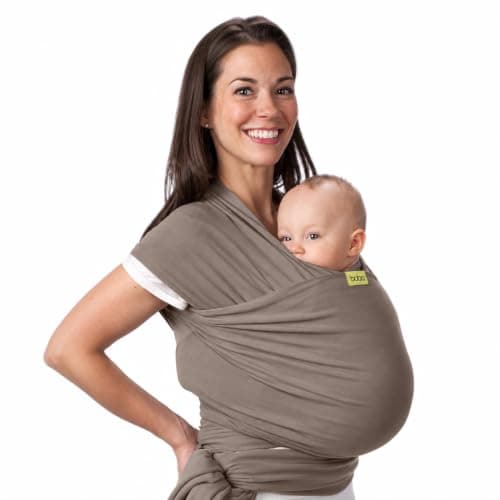
A newborn needs a carrier that holds them high, tight and upright with a clear airway. That rules out most of the category — and it is why a stretchy wrap usually beats a buckle in the first weeks.
Disclosure:Swaddle & Stroll is reader-supported. When you buy through links on this page we may earn an affiliate commission, at no extra cost to you. It never changes our picks. How this works.
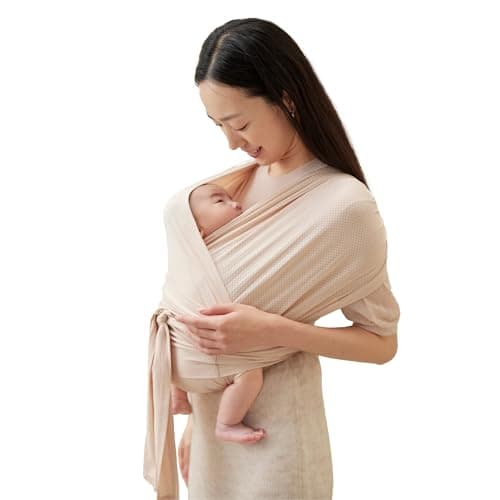
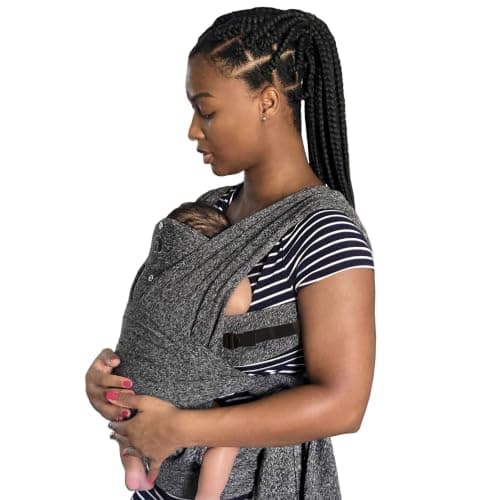
For the newborn weeks specifically, a stretchy wrap beats a buckle carrier, and the Boba Wrap is the one to start with: it works from 7 pounds with no insert to buy, it molds to a very small baby in a way no structured panel can, and it costs a fraction of a premium carrier. If you would rather buy once and keep it for years, the Ergobaby Omni Breeze is the pick — also newborn-ready from 7 pounds without an insert, and still useful at 45 pounds. Those are the two answers; everything below explains who should choose differently.
The reason newborns are a separate question is fit. A newborn has no head control and a soft, short airway, so the carrier has to hold them high on your chest, snug against you, and upright with the chin off the chest. A stretchy wrap does that naturally because it is a continuous piece of fabric that takes the baby's shape. A structured carrier has to be designedto do it, which is why a lot of carriers either start at 12 pounds or sell you a separate newborn insert — and an insert is one more thing to fit correctly at 3 a.m.
What makes a carrier genuinely newborn-ready
A published minimum of 7 to 8 pounds, with no insert.This is the cleanest filter in the category. If the manufacturer states the carrier works from 7 or 8 pounds on its own, the panel or fabric has been designed for a newborn's proportions. If it needs an insert, you are buying two products and fitting both.
A seated, hip-healthy position.The baby's legs should sit in a spread-squat with the knees higher than the bottom, not dangling from the crotch. The International Hip Dysplasia Institute acknowledges carriers that achieve this; four of our six picks publish that acknowledgement.
Fabric you can live in. A newborn is worn for hours a day, often indoors. Cotton French terry is warm and reassuring in winter and punishing in August; modal and open mesh are the summer answers. This is a bigger factor in whether a carrier gets used than any feature on the box.
A learning curve you will actually climb.A tied wrap takes about a week of feeling clumsy. If you know you will not practice, buy a slip-on wrap or a hybrid instead — the safest carrier is the one you put on correctly without thinking.
The six picks, side by side
Carrier
Type
Published weight range
Fabric
Positions
Boba Wrap (Classic)
Tied stretchy wrap
7–35 lb (Boba: best to 20 lb)
French terry cotton / spandex
Front
Ergobaby Omni Breeze
Structured, no insert
7–45 lb
Full-body mesh
Front in, front out, hip, back
Konny Flex AirMesh
Slip-on wrap, nothing to tie
About 9–44 lb (Konny: 4–20 kg)
3D open mesh (polyester/spandex)
Front
Boppy ComfyFit
Wrap/structured hybrid
8–35 lb
Soft stretch blend
Front in, front out
Solly Baby Wrap
Tied stretchy wrap
8–25 lb
TENCEL modal, OEKO-TEX 100
Front
Baby Tula Free-to-Grow
Structured, adjustable panel
7–45 lb
Soft cotton
Front in, back
Every carrier sold in the US has to meet the federal sling-carrier and soft-carrier requirements; the ranges above are each manufacturer's own published figures.
Why each one is here
1. Boba Wrap — the first-weeks default
Who it is for: a parent in the fourth trimester who wants the cheapest thing that genuinely works. Five and a half yards of stretchy French terry, newborn-ready from 7 pounds with no insert, IHDI-certified hip healthy, machine washable and dryer friendly. Because it stretches, you pre-tie once and pop the baby in and out. Honest cons: Boba's own guidance is that it works best to about 20 pounds, it is the warmest fabric here, and the tie takes a week to learn.
2. Ergobaby Omni Breeze — if you are only buying one
Who it is for: a parent who would rather spend once. Newborn-ready from 7 pounds without an insert, all four carry positions, full-body mesh that keeps you both cool, and real lumbar support in the waistband — which is what makes an hour-long walk bearable once the baby is heavy. It costs a premium and there are more buckles to learn than on a wrap.
3. Konny Flex AirMesh — nothing to tie, nothing to learn
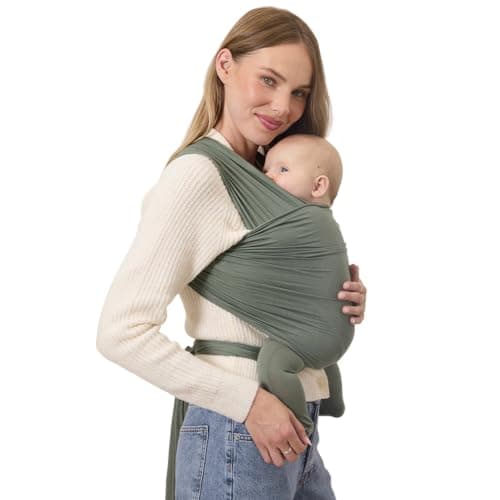
Who it is for: a parent who knows they will not practice wrapping. It slips on like a t-shirt and adjusts with a strap, the open mesh is the coolest-wearing fabric here, and Konny states it is IHDI-acknowledged. The published range starts around 9 pounds rather than 7, so a small newborn may need a week or two first; it is still sold in two size bands, and it cannot go in the dryer.
4. Boppy ComfyFit — the gentlest way in
Who it is for: someone who wants a wrap's closeness with a buckle's simplicity. Soft, light, inexpensive and genuinely beginner-friendly. From 8 pounds, with a 35-pound ceiling and no back or hip carry, so it is a first-year carrier rather than a forever one.
5. Solly Baby Wrap — for a newborn in a hot month
Who it is for: a summer baby, or anyone who finds cotton wraps stifling indoors. TENCEL modal that wears like a soft t-shirt, OEKO-TEX certified, and it packs down far smaller than a cotton wrap. The 25-pound ceiling is the lowest here and it costs roughly triple the budget wraps, so it is deliberately a fourth-trimester purchase.
6. Baby Tula Free-to-Grow — the structured carrier that adjusts down
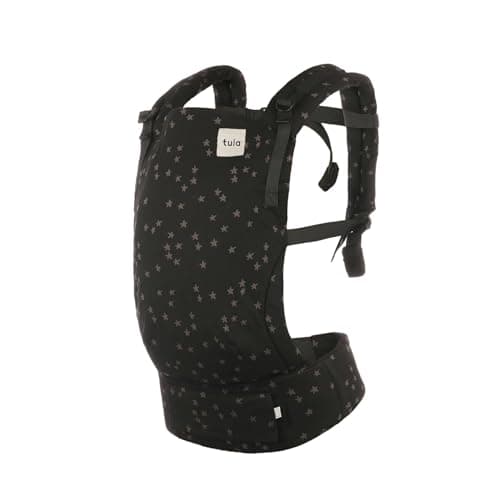
Who it is for: a parent who wants a structured carrier from day one but finds the mesh ones unappealing. The panel adjusts in both width and height, so it narrows properly for a newborn and widens later, and it is newborn-ready from 7 pounds with no insert. Cotton runs warmer than mesh and there are only two carry positions.
What we left off, and why
The KeaBabies wrapis our value pick in the wrap category, but KeaBabies recommends it from one month rather than from birth and does not publish a fiber composition or an IHDI acknowledgement — for a newborn page, that is the wrong side of the line. The Baby K'tan and Moby Classicboth start at 8 pounds and are fine newborn carriers; they sit just outside this list because the K'tan is sized to one wearer and cannot be shared, and the Moby is sixteen feet of cotton to manage. The Momcozy and Infantino Flip are our budget structured picks and work from 7 and 8 pounds respectively, but neither offers the newborn fit of the Ergobaby or the Tula.
Our best baby wraps roundup ranks the wrap category on its own terms, best baby carriers covers the whole category from newborn to toddler, and the T.I.C.K.S. rule goes through the airway checks in detail. When the wrap starts to sag, our Ergobaby vs Baby Tula comparison is the next decision.
Quick picks at a glance
#
Product
Best for
Score
Price
1
Boba Wrap (Classic)
The default stretchy wrap: one long piece of French terry that molds to a newborn better than any buckle carrier, for about the price of a nice takeout dinner.
All four carry positions, a breathable mesh that keeps you both cool, and lumbar support that makes long walks bearable — usable from newborn to toddler without an insert.
A wrap you pull on like a t-shirt and then adjust — the snug, wrapped feel without 5 yards of fabric on a parking-lot floor, in an open mesh built for hot weather.
The thinnest, coolest-feeling wrap of the group — TENCEL modal that wears like a soft t-shirt rather than a sweatshirt, at a price that only makes sense for the fourth-trimester months.
A structured carrier that adjusts in width and height to grow with the baby, with front and back carry — a comfy, cotton alternative to the mesh crowd.
The default stretchy wrap: one long piece of French terry that molds to a newborn better than any buckle carrier, for about the price of a nice takeout dinner.
Weight range
7–35 lb (Boba: works best to 20 lb)
Fabric
95% French terry cotton / 5% spandex
Length
About 5.5 yards, one size
Hips
Certified Hip Healthy by the IHDI
What we like
Newborn-ready from 7 lb with no insert to buy
Real stretch, so you pre-tie once and pop the baby in and out
Machine washable and dryer friendly
Worth noting
Boba's own guidance is that it works best to 20 lb — it sags under a big baby
French terry cotton is the warmest fabric here
Tying it takes practice; expect a week of feeling clumsy
All four carry positions, a breathable mesh that keeps you both cool, and lumbar support that makes long walks bearable — usable from newborn to toddler without an insert.
A wrap you pull on like a t-shirt and then adjust — the snug, wrapped feel without 5 yards of fabric on a parking-lot floor, in an open mesh built for hot weather.
Weight range
Roughly 9–44 lb (Konny publishes 4–20 kg)
Fabric
87% polyester / 13% spandex, 3D open mesh
Fit
Adjustable; sold as XS–XL or M–4XL
Packed
About 7 oz, folds into its own pouch
What we like
Nothing to tie — it slips on and adjusts with a strap
Open mesh is the coolest-wearing option here for a summer baby
Highest published weight ceiling of the wraps we looked at
Konny states it is IHDI-acknowledged hip-healthy
Worth noting
Still sold in two size bands, so you have to pick the right one
Synthetic fabric, not the cotton or modal feel some parents want
The thinnest, coolest-feeling wrap of the group — TENCEL modal that wears like a soft t-shirt rather than a sweatshirt, at a price that only makes sense for the fourth-trimester months.
Weight range
8–25 lb
Fabric
100% TENCEL modal, OEKO-TEX Standard 100
Length
About 5.5 yards; fits wearers XXS–XXL+
Hips
Certified Hip Healthy by the IHDI
What we like
Lightest, most breathable fabric here — the pick for a summer newborn
OEKO-TEX certified modal, sewn in Los Angeles
Packs down far smaller than a cotton wrap
Worth noting
25 lb ceiling is the lowest here — many babies pass it around a year
Roughly triple the price of the budget wraps
The thin fabric gives less structure once the baby gets heavy
A structured carrier that adjusts in width and height to grow with the baby, with front and back carry — a comfy, cotton alternative to the mesh crowd.
Positions
Front inward, back
Weight range
7–45 lb (adjustable panel)
Fabric
Soft cotton
Fit
Adjustable panel width & height
What we like
Grows with the baby via an adjustable panel
Newborn-ready without an insert
Soft, structured cotton
Worth noting
Cotton runs warmer than mesh
Only two carry positions
How it scored
Comfort & support9.0
Versatility8.6
Ease of use8.6
Value8.4
Frequently asked questions
Can you use a baby carrier with a newborn?+
Yes, from birth, as long as the carrier publishes a minimum weight of about 7 to 8 pounds and holds the baby high, tight and upright with the chin off the chest. A newborn has no head control and a short airway, so the T.I.C.K.S. checks — tight, in view, close enough to kiss, keep the chin off the chest, supported back — apply every time you put it on.
Do I need a newborn insert?+
Not with any of the carriers on this page — all six are rated from 7 to 9 pounds on their own. An insert is an extra product to buy and an extra thing to fit correctly, so we treat 'newborn-ready with no insert' as the entry requirement for this list.
Is a wrap or a structured carrier better for a newborn?+
A stretchy wrap usually fits a newborn better, because a continuous piece of fabric takes a very small baby's shape in a way a structured panel cannot. A structured carrier designed for newborns — the Ergobaby Omni Breeze or the Baby Tula Free-to-Grow — is the better buy if you want one carrier for years and do not want to learn a tie.
How long can a newborn stay in a carrier?+
There is no single published limit, but the practical rule is that you check the airway continuously and take the baby out for feeds, changes and sleep in a flat, firm place. A carrier is not a sleep surface: if your newborn falls asleep on you, the AAP's safe-sleep guidance is to move them to a firm, flat surface on their back as soon as you reasonably can.
Are baby carriers hip-healthy?+
The carrier has to hold the legs in a spread-squat with the knees above the bottom. The International Hip Dysplasia Institute acknowledges carriers that achieve this; the Boba Wrap, Solly Baby Wrap and Baby K'tan publish IHDI certification, and Konny states it is IHDI-acknowledged. A narrow-base carrier that lets the legs dangle is the thing to avoid.