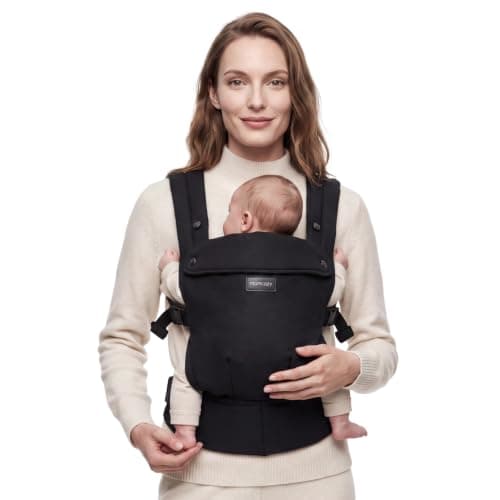
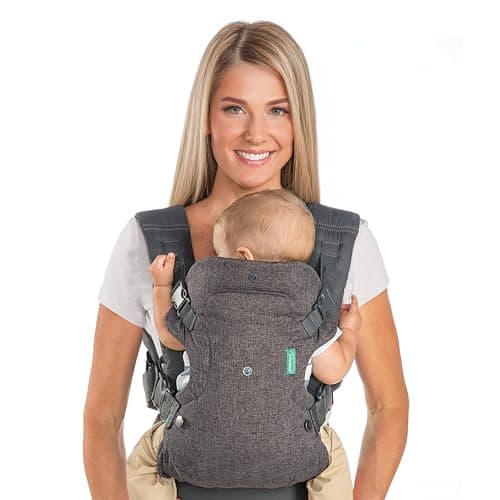
Quick verdict: choose the Momcozy Ergonomic Carrier if you want one carrier that lasts longer and stays comfortable on long wears, because it carries up to 45 lb and has a wide, padded waistband that keeps the load off your shoulders well into the toddler years; choose the Infantino Flip Advanced 4-in-1 if you want the lowest-cost way to try babywearing without committing much money, because it offers four positions and a convertible ergonomic seat at a rock-bottom price, and its panel wipes clean. Both are affordable, beginner-friendly structured carriers that do front-inward, front-outward, and back carries, so the real split is how long each one lasts and how comfortable it stays once the miles and the pounds add up.
We have not put either carrier through a hands-on wear test—we rank from each maker's published specifications, the product manuals, widely documented facts, and our methodology, so treat this as a features-and-fit comparison rather than a long-term durability review. If you want to see the whole category first, our best baby carriers roundup ranks every style; this page is the head-to-head for the two budget carriers new parents most often compare when they want to start babywearing without spending premium money on a first carrier.
Two honest budget carriers, one clear split
These two carriers sit in the same corner of the market—structured, affordable, and easy for a first-timer to buckle on without a steep learning curve—so the overlap is genuine. Both use a supportive panel and a padded waist belt, both are the kind of carrier you can put on solo, and both cover the everyday carries most parents actually use. The difference that matters is longevity and comfort under load. The Momcozy is built to carry more weight for longer, while the Infantino Flip is built to be the cheapest possible entry point into babywearing. Neither is trying to be a premium carrier, and both are honest about that; the question is simply which trade-off fits how much and how far you plan to wear your baby.
How long each carrier lasts, and how comfortable it stays
The clearest practical difference is the weight range. The Momcozy carries from 7 to 45 lb, and pairs that higher ceiling with a wide, padded waistband and a lightweight, breathable fabric—so it stays comfortable into the toddler years and holds up better on long wears, where a wide belt that spreads the load across your hips is what keeps your shoulders and back from doing all the work. The Infantino Flip carries from 8 to 32 lb, which is a lower ceiling, and it has less padding for very long sessions, so it is happiest on shorter outings and during the earlier months. Put plainly: if you expect to wear your baby often and for a while—long walks, errands, carrying a heavier toddler—the Momcozy's higher limit and padded waistband are what you will feel and appreciate. If you mainly want to try babywearing, or you need a carry for short stretches around the house and on quick errands, the Flip does that job for less money and you may never bump into its 32 lb ceiling before your child would rather walk anyway. One honest note on the Momcozy: it does not offer a hip-carry position, so if a dedicated hip carry is on your must-have list, neither of these budget carriers is built for it.
Positions and the face-out question
Both carriers cover the core positions: front-inward (baby facing you), front-outward (baby facing the world), and a back carry, with the Infantino Flip adding a narrow-or-wide seat adjustment so the panel can be set for a smaller or larger baby. The front-outward, world-facing position is the one to use thoughtfully. Only face your baby out once they have strong, steady head and neck control, and keep those sessions short—facing out is more stimulating and gives your baby no place to tuck their head to rest, so it is best in small doses when they are alert and interested, not for a long nap-prone stretch. When your baby is tired or you are settling in for a longer wear, turn them back to face you, where they can nestle in and doze against your chest. For the smallest babies, follow each carrier's manual for how to set the seat and support them properly.
Hip-healthy seating and the newborn months
Both carriers describe an ergonomic seat, and the reason that matters is hip health. The International Hip Dysplasia Institute recommends a carrier that supports the baby's thighs and lets the legs fall into a natural spread-squat, or "M", position—knees higher than the bottom, hips open—rather than leaving the legs to dangle straight down from the crotch. A good ergonomic seat like the ones on these carriers supports that position; the institute is clear that this shape is hip-healthy rather than medically necessary, but it is an easy and sensible thing to get right. For the newborn stage, the priorities are airway and support: keep a small baby carried high on your chest and upright, close enough to kiss, with their face visible and turned to the side, and their chin off their chest so their airway stays open and clear. Never let a young baby curl chin to chest or have their face pressed into the fabric. Follow the manual for seating the smallest babies, and our babywearing safety: the T.I.C.K.S. rule guide walks through the five quick positioning checks to run every time you put a carrier on.
Fabric, cleaning, and everyday value
Day to day, the materials tell a small but real story. The Momcozy uses a lightweight, breathable fabric that helps on warm days and during longer wears, though its finish is a step below what you get from premium brands—an honest trade for the price. The Infantino Flip is made of cotton with a wonder-cover bib that is easy to wipe clean, which is a genuinely nice touch for the drooly, spit-up-prone months when a quick wipe beats a full wash. Both sit firmly in the affordable bracket—we do not quote figures here because live prices show on the cards above and change over time—and both give you a lot of usable carrier for the money. The Momcozy is the better value if you will wear your baby often and want it to stay comfortable and last into the toddler years; the Flip is the better value if you want the lowest-cost, four-position starter to find out whether babywearing is for you before spending more.
Getting the fit right on your own body
A carrier that fits your baby well also has to fit you, and both of these are adjustable to do that. Set the waistband so it sits comfortably on your hips or high waist and buckles snugly—this is what carries most of the weight, and it is why the Momcozy's wider padded belt pays off on longer wears. Snug the shoulder straps so your baby is held close and high against you rather than sagging low, which is easier on your back and keeps a small baby's airway in view. If two caregivers of different sizes will share the carrier, check that it adjusts comfortably for both before you rely on it for a long day out. It is also worth registering your carrier with the maker and keeping an eye on recall notices, the same as any piece of baby gear, so you are told if anything changes. Re-check the fit as your baby grows, since the seat width and strap length that felt right for a newborn will need loosening as they fill out—a quick adjustment keeps either carrier comfortable and secure through the stages it is rated for.
There is no wrong answer here—both are honest, beginner-friendly budget carriers that do the core carries well. Reach for the Momcozy if you want one carrier to last longer and stay comfortable on long wears with its higher weight limit and padded waistband; reach for the Infantino Flip if you want the cheapest four-position way to try babywearing with a wipe-clean panel. If you are still deciding what style of carrier suits you, our how to choose a baby carrier guide compares structured carriers against wraps and slings so you can match the type to your life first.