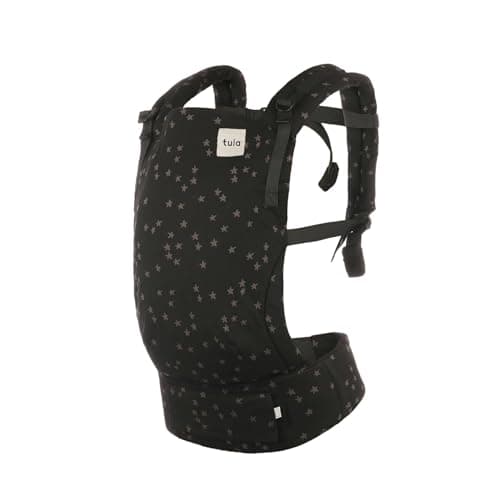
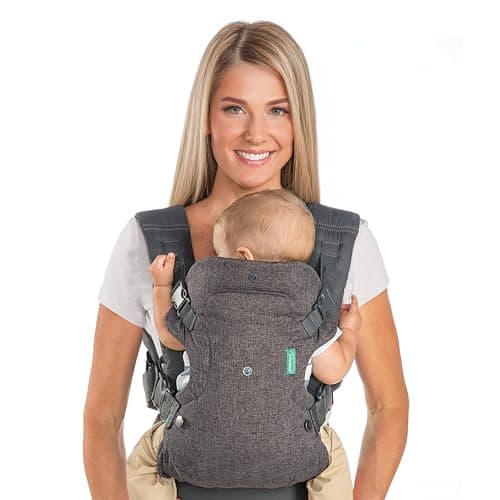
Quick verdict: pick the Baby Tula Free-to-Grow if you want a premium carrier that adjusts to fit your baby from newborn to toddler and stays comfortable on long wears; pick the Infantino Flip Advanced if you want an inexpensive way to try babywearing that still offers four positions, including face-out. Both hold a baby in an ergonomic seat; the gap is comfort, range, and price.
We haven't worn both for a year, and we won't pretend to — this leans on published specs and our methodology, the rubric behind our best baby carriers roundup. On both, the newborn basics are the same: keep the baby high and upright, close enough to kiss, face visible and chin off the chest.
Fit and weight range
The Free-to-Grow's whole idea is in the name: a body panel that adjusts in width and height to fit a baby from about 7 to 45 pounds with no separate infant insert, cinching small for a newborn and opening up for a toddler. The Flip covers roughly 8 to 32 pounds with a convertible narrow/wide seat, so it fits the infant and early stages but tops out sooner. If you want one carrier to grow with your baby well into toddlerhood, the Tula's longer range is a real advantage; the Flip is squarely an early-stage carrier.
Carry positions
Interestingly, the budget Flip offers more positions on paper: narrow and wide seat settings, face-in, face-out, and back carry. The Free-to-Grow does front-inward and back, but is notdesigned for a forward-facing-out carry (Tula steers parents who want that toward its Explore model). So if a face-out option matters to you, the Flip has it and the Free-to-Grow doesn't. Keep facing-out sessions brief and skip them for newborns — it's only appropriate once a baby has strong, steady head and neck control.
Comfort and materials
This is where the premium price shows. The Free-to-Grow uses a soft, substantial cotton and a padded, adjustable waistband that carries the load comfortably on longer wears, and it shares well between caregivers of different sizes. The Flip is comfortable for shorter outings but has less padding, so it's less suited to long, all-day wearing, and its materials are simpler. For daily, extended babywearing, the Tula is the more comfortable tool; for occasional, shorter wears, the Flip does the job for far less.
Ergonomic seat and value
Both support the thighs knee-to-knee for a hip-healthy "M" shape, so neither leaves a baby dangling — on hip health they're equally sound. The decision is really spend-or-save: the Baby Tula Free-to-Grow is the premium, grow-with-baby, long-wear pick; the Infantino Flip Advancedis the affordable, more-positions, try-it-without-committing pick. Check the live prices on the cards below, and if you're weighing the Tula against the other premium favorite, see our Ergobaby vs Baby Tula comparison.