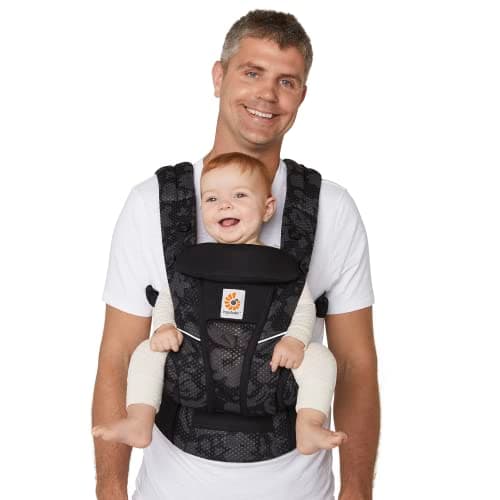
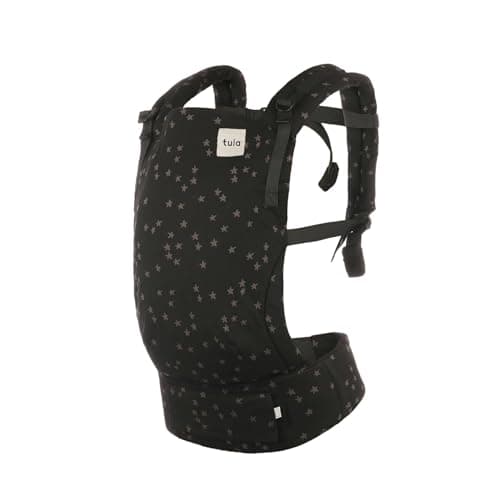
Quick verdict: pick the Ergobaby Omni Breeze if you want the coolest, most versatile carrier — all four carry positions and full-body mesh — and pick the Baby Tula Free-to-Growif you prefer a softer, cozier fabric against your baby and don't need to face them outward. Both are structured, newborn-ready carriers that hold a baby in a hip-healthy seat; the real differences come down to breathability, positions, and feel.
These two land on nearly every shortlist for good reason. Each carries a newborn from about 7 pounds up to roughly 45 pounds with no separate infant insert, so a single carrier can last from the early weeks into the toddler years. We haven't logged identical miles in both, and we won't pretend to — this comparison leans on the published specs and our methodology, the same rubric behind our best baby carriers roundup, where the Omni Breeze and the Free-to-Grow both earned a spot.
Carry positions
This is the clearest split. The Omni Breeze does all four positions — front-inward, front-outward (facing the world), on your hip, and on your back — so once your baby has steady head and neck control, you can turn them around to take in the room. The Free-to-Grow carries front-inward and on your back, but it is notdesigned for a forward-facing-out carry; Tula steers parents who want that toward its Explore model instead. Whether that matters is personal. Some babies enjoy facing out in short bursts; many settle better facing in, and common guidance is to keep any facing-out sessions brief and skip them entirely for newborns. If a facing-out option feels essential, the Omni Breeze wins outright. If it doesn't, the Free-to-Grow gives up very little.
Fabric and breathability
The Omni Breeze is built around full-body SoftFlex mesh — the whole panel breathes, not just a lining — and Ergobaby positions it as its coolest, most airflow-friendly carrier. On a summer walk or during a sweaty contact nap, that airflow is the feature owners mention most. The standard Free-to-Grow uses a soft, substantial cotton that many parents find cozier and more blanket-like against a newborn, and Tula also sells a mesh-panel version if you want more airflow with that softer feel. So it's a genuine trade rather than a winner and a loser: the Omni Breeze runs cooler, the classic Free-to-Grow feels warmer and softer. Warm-climate parents tend to lean mesh; cooler climates and cozy-first shoppers often prefer the cotton.
Newborn readiness and weight range
Both cover roughly 7 to 45 pounds with no infant insert, which is a real convenience — an insert is one more thing to buy, position correctly, and eventually misplace. Each gets there a little differently. The Omni Breeze uses an adjustable bucket seat that narrows for a newborn and widens as your baby grows. The Free-to-Grow adjusts through a body panel that changes in both width and height, cinching in tight for a small newborn and opening up for a toddler. In practice both give you a supported newborn from day one; with either, the safe-positioning basics are the same — baby high and upright, close enough to kiss, face visible, and chin off the chest so the airway stays clear.
Ergonomic, hip-healthy seating
Here the two agree, and it's the most important thing either carrier does. Both are wide-base carriers that support your baby's thighs from knee to knee so the legs fall into a spread-squat "M" shape — knees higher than the bottom — rather than dangling from the crotch. The International Hip Dysplasia Institute recognizes this seated, hip-and-knee-bent position as the healthy one for developing hips, and both makers design their seats around it. As your baby grows, each seat widens to keep supporting the full thigh, so the M-shape holds from newborn through toddler. On hip health, there is no meaningful loser between these two.
Fit for the caregiver
Comfort comes from the carrier fitting you, not only the baby. The Omni Breeze has a padded, structured waistband with enhanced lumbar support that shifts the load onto your hips and off your lower back — a real plus for longer wears and for taller or broader caregivers. The Free-to-Grow also has a padded, adjustable waistband, and its body panel cinches down small, which many petite wearers find easier to fit snugly. If two caregivers of very different sizes will share one carrier, both handle that well; just fit the waistband to whoever is wearing it rather than splitting the difference. Neither is fussy once it's set up, though the Omni Breeze has a few more adjustment points to learn at first.
Ease of use and value
Day to day, both are straightforward: waistband on, baby in, shoulder straps buckled. The Free-to-Grow is arguably a touch simpler out of the box because it does fewer things; the Omni Breeze asks you to learn its extra position and adjustment points, but rewards you with more versatility. On value, both sit in the premium tier and tend to price similarly, so cost is rarely the deciding factor — check the live prices on each product card below, since sales move them around. Spend the decision instead on what you'll actually use: mesh and facing-out, or soft cotton and a simpler feature set.
Still weighing whether to wear or push on a given day? Our how to choose a stroller guide and the best strollers list pair naturally with a carrier for a complete kit. The live prices and full specs for both carriers are in the cards below.