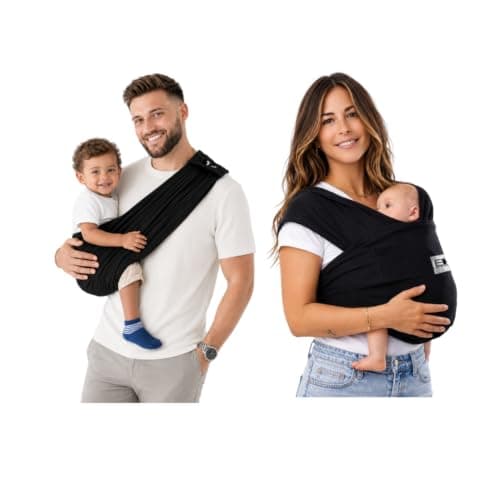
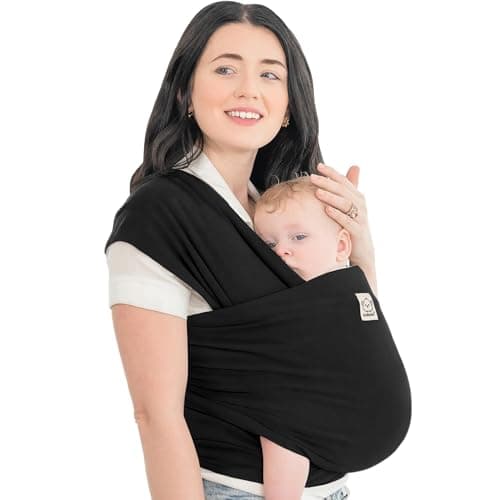
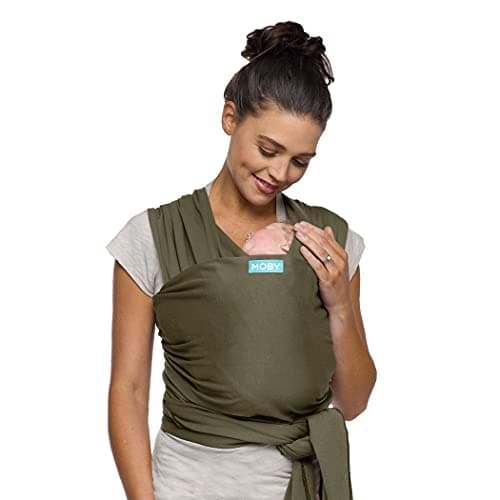
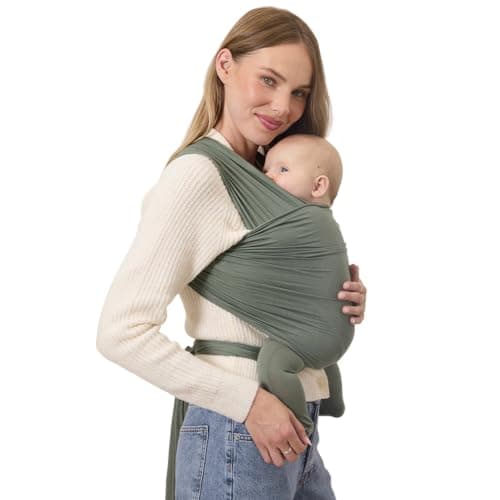
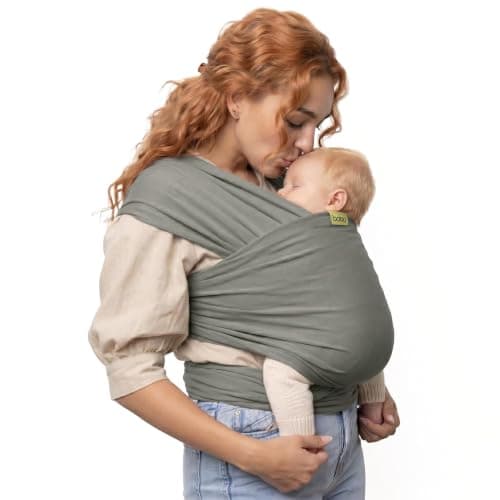
A wrap is the least gadget-like piece of baby gear you will ever own: a long strip of stretchy fabric, no buckles, no frame, nothing to break. You tie it around yourself once, slide the baby in, and get your hands back. For the first few months that simplicity is the whole point. A newborn who fights a structured carrier will often settle into a wrap immediately, because a wrap does not ask a floppy body to sit in a fixed panel — it molds around whatever shape the baby currently is, holds them high and upright against your chest, and spreads their weight across your whole back instead of two shoulder straps.
The catch is the learning curve, and nobody should pretend otherwise. The first few times you tie a wrap you will feel like you are wrestling a bedsheet in a parking lot, and you will need a mirror and a video. Most parents get it inside a week; some never make peace with it, which is why two of the six picks below need no tying at all. The other honest limit is time. A stretchy wrap is a fourth-trimester tool. Every one of these has a published weight ceiling, and the practical ceiling — the weight where the stretch starts sagging and your lower back starts complaining — usually arrives well before the printed number does. Plan on a wrap for the newborn months and a structured carrier after, not a wrap forever.
The one safety fact worth knowing first
Wraps and slings are federally regulated in the United States. Any sling carrier manufactured after January 30, 2018 has to comply with 16 CFR Part 1228, the CPSC safety standard for sling carriers, which incorporates ASTM F2907-22 and sets requirements for structural integrity, occupant retention, restraint systems, and the warning labels that must stay permanently attached to the fabric. That is not a marketing badge; it is the law, and it is the best single reason to buy a wrap from a brand that stands behind it rather than the cheapest listing on a marketplace. The CPSC has recalled non-compliant sling carriers twice in recent years — an unbranded sling sold through a Walmart.com marketplace seller in June 2024, for suffocation and fall hazards, and a Temu-sold sling in February 2025 for failing the structural-integrity and occupant-retention requirements. Both were generic, unbranded products. None of the six wraps below, and none of their brands, appears in the CPSC recall database as of September 2026.
The other half of wrap safety is how you tie it, not what you buy. The airway comes first: the baby rides high enough that you can kiss the top of their head, their chin is off their chest with a two-finger gap beneath it, and their face stays visible — never turned into your body or covered by fabric. Our TICKS rule guide walks through the full checklist, and it is worth five minutes before the first wear. A wrap tied too loose is the hazard here, not one tied snugly.
How we ranked them
We have not lab-tested any of these wraps, and our methodology pagesays so plainly. What follows comes from each manufacturer's own published specifications, the federal standard above, the CPSC recall database, and live retail prices. Four things carried the weight.
- Newborn fit and hip position. The reason to use a wrap at all is the close, high, upright hold a newborn wants. We looked at the published minimum weight — most of these start at 7 or 8 pounds, one starts at a month old — and at whether the brand publishes an International Hip Dysplasia Institute hip-healthy acknowledgement for the seat it creates. Four of the six do. That acknowledgement means the carrier supports the thighs from knee to knee, so the legs sit in a spread-squat shape with the knees above the bottom rather than dangling straight down.
- Fabric, and how hot it gets. This is the most underrated factor in a wrap and the one parents complain about most. You are wearing several layers of cloth plus a small radiator, and the gap between French terry cotton and an open mesh is the gap between a comfortable July walk and a miserable one. We rank fabric by what the manufacturer publishes, not by how it photographs.
- Published weight range, and honest longevity.Ceilings here run from 25 pounds to about 44. We weight the published number, but we also say where a brand's own guidance is more conservative than its printed limit — Boba, for instance, tells you outright that its wrap works best up to 20 pounds even though it is rated to 35.
- How hard it is to actually use.A wrap that lives in a drawer because you dread tying it is worth nothing. We treat "no tying required" as a real feature and rank two slip-on wraps highly for it, while flagging the tradeoff that comes with them — both are sold in sizes or size bands, a decision you have to get right before the box arrives.
Stretchy wrap, or one you pull on?
This is the first fork in the road, and it matters more than the brand name. A stretchy wrap — the Boba, the Moby, the Solly, the KeaBabies — is a single length of fabric you tie yourself. It gives the most custom fit, adapts to any wearer, and can be shared by two parents of completely different builds, because you simply tie it tighter or looser. That flexibility is why it is still the default recommendation. The price is the learning curve and the fabric management.
A pre-wrapped or slip-on wrap— the Baby K'tan and the Konny — trades that flexibility for speed. There is nothing to tie: you step into a pre-formed loop or pull on a stretchy panel, place the baby, and go. In practice that is the difference between babywearing regularly and babywearing occasionally, because you will actually bother for a ten-minute errand. The tradeoff is sizing. The Baby K'tan is sold in wearer sizes XS through XL and does not adjust, so a couple with different builds needs two. The Konny Flex adjusts but still comes in two size bands. If you are buying a wrap as a gift, buy a stretchy one — sizing a slip-on for someone else is a coin flip.
How to choose in one minute
- You want the standard answer.The Boba Wrap is what most parents mean when they say "baby wrap" — French terry cotton, hip-healthy certified, usable from 7 pounds, and cheap enough that a false start costs you very little.
- You know you will never tie anything. The Konny Flex AirMesh pulls on, adjusts with a strap, has the highest published ceiling here, and its open mesh is the coolest fabric of the six. Check which size band you need before ordering.
- You want no tying but prefer cotton.The Baby K'tan Original slips on as a double loop, covers five carry positions, and washes and dries like a t-shirt — provided you order the right wearer size.
- You are not sure wrapping is for you. The KeaBabies wrap is the lowest-risk way to find out: a full-length, one-size stretchy wrap for a fraction of the price of the premium options.
- You want to learn to wrap properly. The Moby Classic is 16 feet of cotton — more fabric to manage, but also more support under a heavier baby and enough length for front and hip carries.
- You have a summer newborn, or you run hot.The Solly Baby Wrap's TENCEL modal is by some distance the lightest, most breathable fabric here. Its 25-pound ceiling and its price mean you are buying it specifically for the first months.
What a wrap costs, and what the money buys
Wraps span a wide range for what is, physically, a piece of cloth. At the bottom you are paying for length and stretch and nothing else. In the middle you are paying for a brand with real instructional support, a published hip-healthy acknowledgement, and consistent fabric quality. At the top you are paying for the fiber itself — TENCEL modal instead of cotton, or an engineered mesh — and, in Solly's case, US manufacturing. That is a real difference you feel on a hot day, but it is not a safety difference: a compliant budget wrap tied correctly holds a baby as safely as a compliant premium one. Spend the money on breathable fabric if you live somewhere hot or you plan to wear the baby daily; put it toward a structured carrier if you do not. If you are watching the total gear budget, our baby gear on a budget guide applies the same logic across the rest of the list. Every pick below shows a live price pulled from Amazon and stamped with the date it was checked — we never print a number we cannot currently verify.
When a wrap is the wrong buy
There are households where a wrap is simply not the answer, and it is cheaper to know that before the box arrives. If the person who will do most of the carrying already knows they will not practice a tie, buy a slip-on wrap or skip to a buckle carrier — an unused wrap helps nobody. If you want a back carry, no stretchy wrap here supports one; that is structured-carrier territory and it is the main reason families graduate. If you are planning long hikes, or carrying a toddler rather than an infant, the padded hip belt on a structured carrier does work that no amount of fabric can. And if you have twins, a single stretchy wrap is not a two-baby solution — a double stroller plus one carrier is the realistic setup. A wrap is superb at one specific job: holding one small baby very close for the months when that is what both of you want.
What to check the day it arrives
Wash it before the first wear, because new fabric is stiffer than washed fabric and stretch wraps break in noticeably. Then find the warning label. Every compliant sling carrier has permanently attached warnings and instructional literature — that is an explicit requirement of the federal standard, and a wrap that arrives with no labels and no instructions is a wrap to send back rather than puzzle out. Read the manufacturer's own tying instructions rather than the first video you find, since the safe tie differs between a 5.5-yard stretchy wrap and a 16-foot one. Practice the tie once with a doll or a rolled towel, standing over a bed, before you do it with the baby. And search the CPSC recall database for the brand — it takes ten seconds, we do it before every update to this page, and it is the only way to catch a problem that surfaced after the review was written.
Two practical cautions before you buy
First, a wrap is not a car seat and never becomes one. Never wear a baby in a moving vehicle, and take the baby out before you cook, carry anything hot, or do anything you would not do while holding them in your arms. When you travel, the wrap is for the terminal and the walk; the infant car seat is for the car. Second, check the fit every single time, and again once you have been walking, because stretchy fabric relaxes as it warms up. A wrap that felt snug in the hallway can be noticeably looser twenty minutes into a walk, and a loose wrap lets a baby slump into the curled chin-to-chest position that is the actual hazard. Retighten rather than tolerate it. If you are still weighing a wrap against a buckle carrier, our how to choose a baby carrier guide walks the decision from the start. The quick-picks table below shows a live price for each wrap and links to its full write-up.