Update, August 2026: the Storkcraft half of this matchup has changed. Storkcraft has discontinued the Tuscany— it now shows as unavailable on Amazon in every finish, and we can find no live listing for it. We have left this page up because the question it answers is still a live one, but we won't send you to a dead listing. The budget Storkcraft we now put opposite the Benton is the Storkcraft Hillcrest 4-in-1, which is the same idea at the same kind of price: the same four-stage conversion path, a four-position mattress base rather than the Tuscany's three, and GREENGUARD Gold certification the Tuscany never carried. Both cards below are current, in-stock products.
Quick verdict: choose the Graco Benton 4-in-1 if you want a built-in changing table that saves floor space in a small nursery, and you do not mind paying more for it; choose the Storkcraft Hillcrest 4-in-1if the tightest possible budget is your deciding factor, because it gives you the same core four-in-one conversion, the same GREENGUARD Gold certification, and one more mattress height, at a noticeably lower price. Both are 4-in-1 convertible cribs that convert from a crib to a toddler bed, a daybed, and eventually a full-size bed, and—this is the part that matters most—every crib sold in the United States must meet the same federal crib safety standards, so both are safe when they are assembled correctly and used with a firm, flat mattress and a bare crib.
We have not stress-tested or lab-tested either crib in a workshop—we rank from each maker's published specifications, the assembly and use manuals, widely documented product facts, and our methodology, so treat this as a features-and-value comparison rather than a durability teardown. If you want to see the whole category first, our best cribs roundup ranks the full field; this page is the head-to-head for the two budget convertibles parents most often compare when they want a crib that grows with the child without breaking the nursery budget.
Every crib here meets the same safety floor
Before any feature comparison, the reassuring baseline: every full-size crib sold in the United States must meet the same federal crib safety standards set and enforced by the Consumer Product Safety Commission, and both the Benton and the Hillcrest do. That means neither is "safer" as a piece of furniture in the way one car seat might be argued over another—what keeps a baby safe in either crib is correct assembly and safe use. Follow the printed instructions to the letter, tighten every bolt, check the hardware periodically as it can loosen over months of use, and make sure the mattress fits snugly with no gaps at the sides where a baby could become trapped. Do not add a mattress thicker than the manual allows, and set the mattress to the height that matches your baby's stage, lowering it as they learn to sit and pull up so they cannot climb or tumble out.
The built-in changer is the Benton's headline
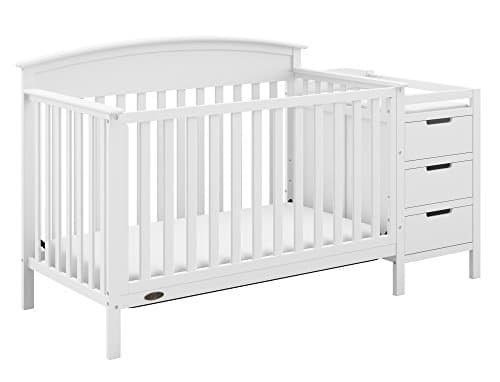
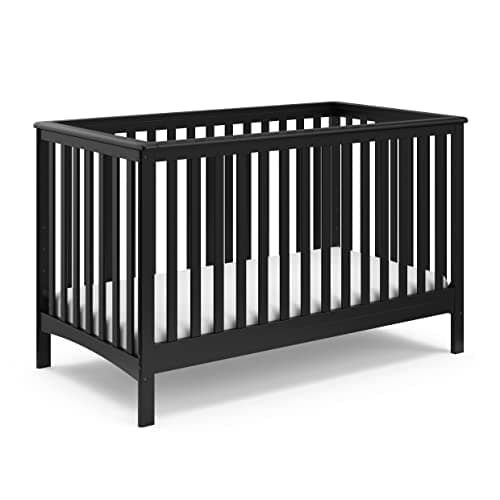
The clearest difference between these two cribs is what the Benton adds. It comes with an attached changing table and a water-resistant changing pad, which is a genuine space-saver in a small nursery—instead of buying and finding room for a separate changing station, the changing surface is built into the crib's footprint. That convenience has one honest cost: the attached changer adds width, so the Benton takes up more wall space than a plain crib and you will want to measure the nursery before assuming it fits where you planned. The Storkcraft Hillcrest is the simpler shape—a plain slatted crib with no attached changer, about 54.7 inches wide and 30.7 deep—which keeps its footprint smaller and its price lower, but means a changing station is a separate purchase and a separate patch of floor. If square footage is tight and you like the idea of one integrated piece, the Benton's changer is the reason to choose it; if you already have a dresser or changing table you love, the Hillcrest lets you skip paying for one you do not need.
GREENGUARD Gold: what it does and does not mean
Both of these cribs are GREENGUARD Gold certified, which is one place the Hillcrest is a straight upgrade on the Tuscany it replaces here—the Tuscany's published facts never listed that certification. GREENGUARD Gold is an independent certification that a product has been tested and meets limits for chemical emissions, which is reassuring for an item that will sit in the room where your baby sleeps for a year or more. It is worth being precise about what that does and does not tell you: it speaks to low emissions, not to strength, durability, or crash-style safety, and a crib without it is not unsafe—every crib on the market meets the same federal crib safety standards either way. Here it simply is not a tiebreaker, because both of these carry it.
Conversion path and long-term value
Both cribs are true four-in-one designs that follow the same path—crib, then toddler bed, then daybed, then full-size bed—and both let the deck start high for easy newborn lifts and drop as your baby grows. The Hillcrest gives you four mattress positions to the Benton's three, which is a small but real edge. They also share the same honest catch: the conversion hardware is sold separately. The Benton's full-bed conversion kit is a separate purchase, and the Hillcrest's toddler guardrail and full-size kit are too, so the "grows to a full bed" promise on either crib comes with a later add-on cost you should plan for rather than be surprised by. One detail worth knowing on the Hillcrest: its full-bed conversion uses the headboard only, so there is no matching footboard at that stage. On materials, the Hillcrest is solid wood with engineered-wood slats, which is a normal way to hit its low price; the trade-off is a slightly less premium feel than an all-hardwood crib. Both sit firmly in the budget bracket—we do not quote figures here because live prices show on the cards above and shift over time—and both give you a lot of usable, long-lived furniture for the money, with the Hillcrest the cheaper entry and the Benton the one that bundles in the changer.
Safe sleep applies to both, equally
Whichever crib you choose, the safe-sleep rules are identical and they matter far more than the badge on the frame. The American Academy of Pediatrics and the Consumer Product Safety Commission agree on the essentials: put your baby to sleep on their back, on a firm, flat mattress, with a fitted sheet and nothing else in the crib. That means no bumpers, no pillows, no blankets, no stuffed animals, and no positioners or soft bedding of any kind—a bare crib is the safe crib. Make sure the mattress fits snugly against all four sides with no gaps, keep the mattress at the lowest safe height once your baby can pull to stand, and never use a crib with missing or damaged hardware. Our safe sleep guidelines walk through each of these in plain language; for any question about your specific baby, ask your pediatrician.
Assembly, hardware, and the years after the crib
Both cribs arrive flat-packed and are assembled at home, and getting the assembly right is the single biggest thing in your control. Work through the manual in order, tighten every bolt fully, and keep the leftover hardware and instructions—you will want them for each later conversion. Because both cribs are used for years and move through several configurations, re-check the hardware every few months and any time you convert a stage, since bolts can work loose with a baby pulling and bouncing against the rails. Modern cribs sold in the United States are fixed-side by design—the old drop-side style is no longer permitted—so neither of these has a moving side rail that could fail, which is a quiet safety win built into both. As your baby starts to sit and then pull to stand, drop the mattress to its lowest setting on either crib so they cannot climb or topple over the rail. And once you convert to a toddler or daybed, that is usually the moment to anchor nearby dressers and shelves to the wall, because a newly mobile toddler with a low bed can reach furniture they could not before. Anchoring is a cheap, five-minute job that prevents a serious tip-over, and it applies no matter which of these cribs you choose.
There is no wrong answer between these two—both are honest, standard-meeting budget cribs that convert through the same four stages and both carry GREENGUARD Gold. Reach for the Graco Benton if you want the built-in changer to save nursery space; reach for the Storkcraft Hillcrest if the lowest price is what will actually decide it, you want the extra mattress height, and you already have a changing station. If you are still weighing what to look for before you commit, our how to choose a crib guide covers the features that genuinely matter and the ones that are just marketing.