A swing is a four-to-six-month product whatever you pay for it. That single fact is the best argument for staying under $200, and here is what the band actually gets you.
Disclosure:Swaddle & Stroll is reader-supported. When you buy through links on this page we may earn an affiliate commission, at no extra cost to you. It never changes our picks. How this works.
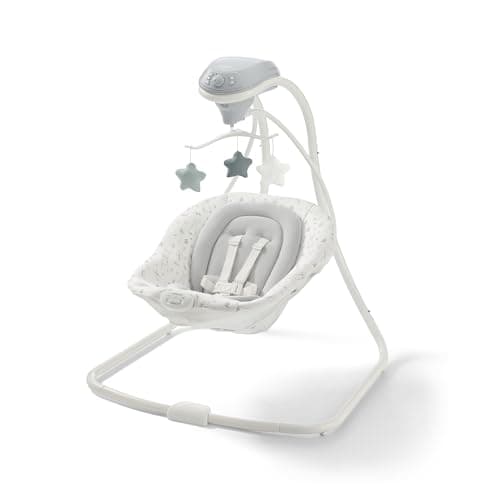
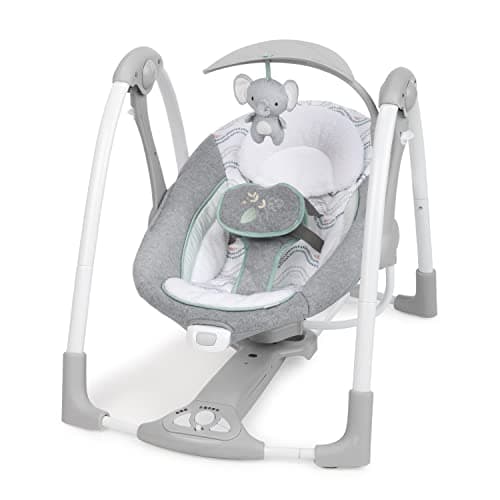
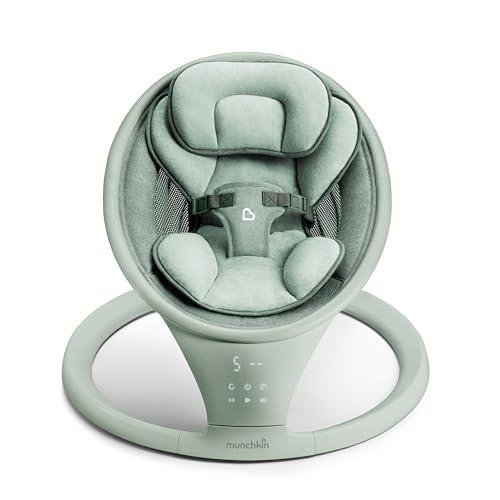
The verdict: under $200, buy the Munchkin Electric Baby Swing with Vibration. Five sway speeds, three vibration modes, twelve sounds and Bluetooth streaming from your phone give you the most levers to pull at 3 a.m., and soothing a specific baby is entirely a game of levers. The Graco Simple Sway is the pick for a small room and the only one here that runs on mains power or batteries, which matters if the only free socket is across the room. The budget pick is the Ingenuity ConvertMe Swing-2-Seat — the cheapest swing on this page, and the one that keeps earning its space after the swinging stops, because it converts into a stationary seat. Read the next section before you consider spending more.
Where the $200 line sits today. 3 of the 3 picks with a live price were under $200 when we last checked, as of November 21, 2026. Prices move daily, so check the number on each card — it is pulled live from Amazon and carries its own date.
Why the $200 line costs you nothing in usable months
Here is the finding that should decide your budget. Every swing sold in the United States ends at roughly the same point in a baby’s life, because the limit is not a weight the maker chose — it is the developmental moment the standard forces: when a baby can sit up unassisted or push out of the seat, the swing is finished. In practice that means somewhere between four and six months for most babies, whether the swing cost $90 or $300.
So the premium swings above this band — and they are good products — are not buying you more time. They are buying you different motion within the same few months: the Mamaroo’s five bounce-and-sway paths, the DuetSoothe’s removable rocker. Whether that is worth roughly double is a judgment about one specific baby you may not have met yet, which is exactly why “under $200” is such a defensible way to shop this category. If your baby turns out to need the exotic motion, you will know within two weeks, and you will have spent less finding out. Our best baby swings page covers the seats above the line, and Mamaroo alternatives covers the cheaper routes to multi-motion specifically.
The three decisions that actually matter inside the band
Motion type. Swings move one of two ways: side-to-side sway, or head-to-toe swing. Some babies settle to one and ignore the other, and nobody can tell you which in advance. The Graco Simple Sway and the Munchkin are both side-to-side; the Ingenuity ConvertMe is a classic swing. If one does nothing, that is not a faulty product, it is the wrong axis for your baby — which is another argument for buying at the bottom of the band first.
Power source. This sounds trivial until you are living it. The Munchkin is plug-in only, with the adapter included. The Graco Simple Sway and the Ingenuity ConvertMe both run on mains or batteries. A battery swing can go wherever the baby is; a plug-in swing lives wherever the socket is, and a swing in the wrong room is a swing you do not use.
Footprint, and what happens after. Swings are enormous for what they do and they occupy prime floor space in the room you live in. Graco publishes the Simple Sway as a deliberately compact, space-saving frame, which is the single reason to pick it over the Munchkin in an apartment. The Ingenuity’s answer is different and arguably better: when the swinging stage ends, the seat converts to a stationary seat, so the thing does not become an object you are storing. Nothing else in this band has an afterlife.
What the extra money inside the band buys
Between the cheapest and the most expensive pick here the gap is almost entirely soothing inputs and control. The Munchkin publishes five sway speeds, three vibration modes (low, medium and a wave pattern), twelve sounds plus classical songs, an on-swing touch panel with a timer and volume, and Bluetooth so you can stream whatever actually works on your phone instead of the twelve sounds the maker chose. The Graco gives you multiple speeds with built-in songs and sounds. The Ingenuity gives you multiple speeds, melodies and vibration.
What none of them gives you, and what we will not pretend any swing gives you, is a guarantee. We have not tested these on a baby of our own and we do not claim a lab; the figures above are published specs from the makers and the retailer listings, our scores are editorial judgments weighted as described on how we pick, and every price is read live from Amazon and dated on the card. Check the CPSC recall list before buying any swing secondhand — this is a category with a serious recall history, including a 2022 recall of more than two million units of one popular model over dangling restraint straps.
Quick picks at a glance
#
Product
Best for
Score
Price
1
Munchkin Electric Baby Swing with Vibration
A light, low-profile plug-in swing that layers three vibration modes over a five-speed side-to-side sway — the most ways to try to settle a baby in a frame this small.
Best overall under $200: the most ways to soothe one particular baby
A light, low-profile plug-in swing that layers three vibration modes over a five-speed side-to-side sway — the most ways to try to settle a baby in a frame this small.
Motion
Side-to-side sway, 5 speeds
Vibration
3 modes — low, medium, wave
Sound
12 sounds and classical songs; Bluetooth streams music from your phone
A compact swing that unclips into a stationary infant seat, so it earns its floor space twice — a strong value pick that runs on batteries.
Modes
Swing converts to a stationary seat
Speeds
Multiple swing speeds, melodies, and vibration
Footprint
Compact for small rooms
Power
Battery
What we like
Turns into a seat once your baby outgrows the swinging
Small footprint that fits a tight apartment
Low price for the feature set
Worth noting
Battery-only means ongoing battery costs
Single swing direction
How it scored
Soothing motion8.0
Newborn readiness8.2
Ease of use8.6
Value9.4
Frequently asked questions
How long will a baby use a swing?+
Usually four to six months. The limit is not a number the maker picked but a developmental moment: a swing must stop being used once a baby can sit up unassisted or push themselves out of the seat, and that is roughly when most babies reach it. The Munchkin Electric Swing publishes 5 to 20 lb or until the baby can sit up or climb out, and the other swings here publish the same style of limit. This is why a more expensive swing does not buy more months.
Is it safe for a baby to sleep in a swing?+
No. Both the American Academy of Pediatrics and the CPSC advise that a baby who falls asleep in a swing, bouncer or carrier be moved to a firm, flat, empty sleep surface - a crib, bassinet or play yard - as soon as it is practical. The concern is positional airway obstruction in an inclined padded seat, and it does not change with price or brand. Use the harness every time and never leave a sleeping baby in a swing unsupervised.
What is the difference between a side-to-side sway and a head-to-toe swing?+
Just the axis of motion. Side-to-side sway moves the baby laterally, like a gentle rock; a head-to-toe swing moves them forwards and backwards, like a traditional porch swing. Some babies settle to one and ignore the other entirely, and there is no way to know which in advance. The Graco Simple Sway and the Munchkin are side-to-side; the Ingenuity ConvertMe is a conventional swing.
Do I need a plug-in swing or a battery one?+
It depends on your room more than your baby. A battery swing goes wherever you are, which usually means it gets used more; a plug-in swing has to live near a socket and never needs batteries changing at a bad moment. The Munchkin here is mains-only with the adapter included, while the Graco Simple Sway and Ingenuity ConvertMe both run on mains or batteries.
Is a baby swing or a bouncer the better buy?+
A swing provides motion without you, which is what an overtired parent needs at 3 a.m.; a bouncer is lighter, much cheaper, far smaller and responds to the baby's own movement, which some babies prefer. If floor space or budget is tight, a bouncer is the more defensible first purchase. Our best baby bouncers page covers that side of the choice.