Glider vs Rocker vs Recliner: Choosing a Nursery Chair
The three chairs move differently, take different amounts of floor space, and carry different risks once a baby is crawling. Here is how to pick between them.
Disclosure:Swaddle & Stroll is reader-supported. When you buy through links on this page we may earn an affiliate commission, at no extra cost to you. It never changes our picks. How this works.
For most nurseries a glider is the right answer: it moves on a fixed front-to-back arc, so it does not walk across the floor or need a rug to work, and its mechanism is enclosed rather than sitting on exposed curved runners. Choose a recliner-glider instead if you expect to feed for long stretches at night and want to lean back. Choose a rockeronly if you specifically want that motion and have thought about where a crawling baby's fingers go.
Almost all of the nursery chairs sold today are gliders or recliner-gliders, which makes this sound like a non-decision — but “nursery rocking chair” is still what most people search for, and the three words get used interchangeably in listings. They are not the same chair.
The three motions, plainly
A glider sits on a fixed arm or linkage mechanism inside the base. The seat travels smoothly forward and back on a shallow arc while the base stays put. Because the base does not move, a glider works on carpet or bare floor equally, does not creep across the room over an evening, and keeps its moving parts enclosed. Most gliders also swivel, which turns out to be the feature you use most — it is how you get out of the chair with a sleeping baby without standing up straight first.
A rockersits on curved runners, and the whole chair tips back and forth. It is the traditional motion and some people simply prefer it. The costs: it needs the right floor, it can shift position over time, and the gap under the runners is a pinch point for a crawling baby's fingers and an adult's toes.
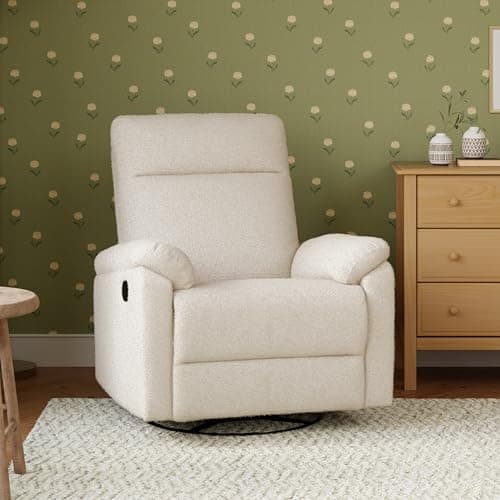
A reclineris a feature rather than a third category — almost everything sold as a nursery recliner is a glider that also reclines, manually or with a motor. Manual recline means a lever or a push-back; power recline means a button and a nearby outlet, and it is the only version you can operate without jostling a baby who has just fallen asleep.
Which one fits your room
Chair
Motion
Floor it needs
Pinch points
Best for
Glider
Seat travels on a fixed arc; base stays put
Any; does not creep
Mechanism usually enclosed
Most nurseries, including small ones
Rocker
Whole chair tips on curved runners
Prefers a rug or even floor; can shift
Gap under the runners
Anyone who specifically wants that motion
Recliner-glider
Glide plus manual or power recline, usually swivel
Any, plus clearance behind for the recline
Recline mechanism; keep little hands clear
Long night feeds; cluster-feeding weeks
The questions that actually decide it
Will you recline? Be honest. A recline is the single biggest price jump in the category and the most-regretted omission among people who skipped it. If you are feeding a newborn eight times a day, you will want to lean back. If this is a second baby and you already know you feed sitting up, a plain glider with an ottoman is the better buy.
How much floor is left?A recliner needs clearance behind it, and a full-size upholstered glider has a wide footprint. In a small nursery a slim-profile glider is the pick, and an ottoman — which you will use every single feed — needs space in front.
Does it swivel? Underrated. Getting out of a chair with a sleeping baby is easier if you can turn toward the crib first.
Can you clean it?Everything in this chair's life gets spilled on. Water- and stain-resistant weaves wipe; boucle and plush fabrics need gentle care and show marks. A removable, washable cushion cover is worth more than an extra inch of padding.
Does it need to leave the nursery eventually? A chair that reads like living-room furniture has a second life after the nursery years; a very nursery-looking one does not.
Do you need the ottoman?
More than you expect. An ottoman changes the angle of your lap, which is what stops a twenty-minute feed turning into a shoulder ache, and it is the difference between a glider you sit in and a glider you stay in. Some gliders include a matching one; most recliners replace it with a built-in footrest, which is neater but means the recline and the footrest move together.
Two practical notes. A gliding ottoman that matches the chair's motion is more comfortable than a static one but takes the same floor space either way — measure about 18 inches in front of the chair. And if the room genuinely cannot take one, a small nursing stool does most of the job for a fraction of the footprint, which is the compromise we would make in a tight nursery rather than skipping the footrest entirely.
Three chairs, one per answer
The picks below map onto the three cases: power recline for the long-night-feeds case, manual recline for the same job at a lower price, and a plain glider with an ottoman for the budget and the small room. The full ranking, including the slim-profile option for tight nurseries, is in best nursery gliders, and Storkcraft Hoop vs Delta Emerson puts the two value gliders head to head. For the whole room on a budget, see best budget nursery furniture.
Quick picks at a glance
#
Product
Best for
Score
Price
1
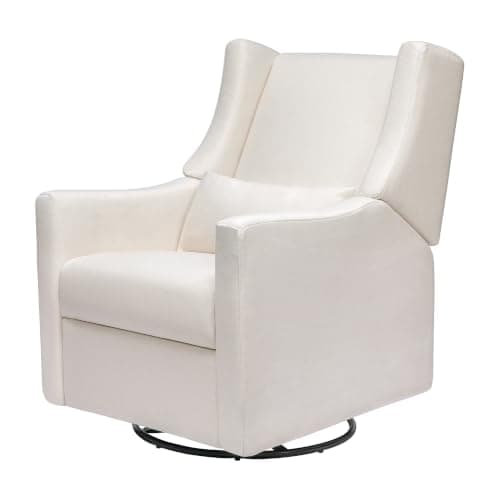
Babyletto Kiwi Electronic Recliner Glider
A power recline you control with a fingertip, USB charging ports in the arm, and a 270° swivel — the splurge glider, GREENGUARD Gold certified and stain-resistant.
A power recline you control with a fingertip, USB charging ports in the arm, and a 270° swivel — the splurge glider, GREENGUARD Gold certified and stain-resistant.
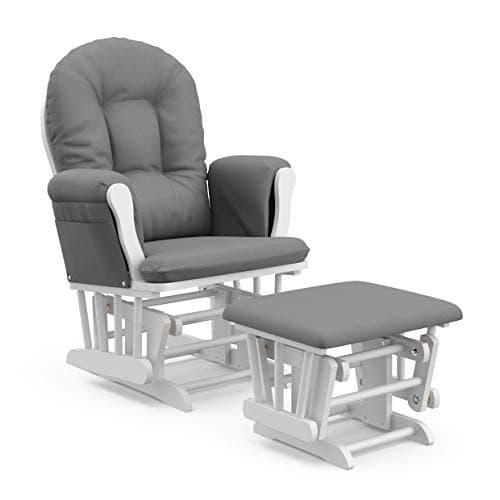
A smooth-gliding wood-frame chair with a matching ottoman, GREENGUARD Gold certified, at a price that leaves room in the nursery budget.
Includes
Glider + matching ottoman
Frame
Solid-wood, enclosed hoop arms
Certification
GREENGUARD Gold
Motion
Smooth front-to-back glide
What we like
Ottoman included at the price
GREENGUARD Gold certified
Quiet, smooth glide
Worth noting
Does not recline
Firmer cushions than plush recliners
How it scored
Comfort8.4
Build quality8.6
Glide smoothness8.8
Value9.4
Frequently asked questions
What is the difference between a glider and a rocker?+
A glider's seat travels forward and back on a fixed internal mechanism while the base stays still; a rocker tips the whole chair on curved runners. The practical differences: a glider works on any floor and does not creep across the room, and its moving parts are usually enclosed, where a rocker leaves a pinch gap under the runners that a crawling baby can reach.
Do I need a glider that reclines?+
If you are feeding a newborn through the night, most people say yes — it is the most-regretted omission in this category. If you know you feed sitting upright, or this is a second baby, a plain glider with an ottoman costs considerably less and glides just as smoothly.
Is it safe to fall asleep in a nursery chair with the baby?+
No. The AAP identifies falling asleep with an infant on a sofa, armchair or recliner as one of the highest-risk sleep situations, because a baby can wedge against a cushion or arm or slump chin-to-chest. Put the baby down in the crib or bassinet before you are at risk of dozing, however comfortable the chair is.
Is a nursery glider worth it, or will any armchair do?+
An armchair you already own and like is a legitimate answer, and skipping the glider is one of the easier savings in a nursery budget. What a glider adds is a motion that soothes a baby, a swivel that gets you out of the chair without standing straight up, and an ottoman that makes long feeds bearable.
What is the best nursery chair for a small room?+
A slim-profile swivel glider. It keeps the glide and the swivel — the two features you use most — in a narrower footprint, and unlike a recliner it needs no clearance behind. Leave room in front for an ottoman, because that is where your legs go for every feed.