Before you spend anything: in the US, your health plan is generally required to cover a pump. This page is for the second pump, the backup, and the plan that will not play along.
Disclosure:Swaddle & Stroll is reader-supported. When you buy through links on this page we may earn an affiliate commission, at no extra cost to you. It never changes our picks. How this works.
The verdict: under $100, the Medela Pump in Style Pro is the one to buy — 16 suction levels in each of two phases, an automatic switch from stimulation to expression at 60 seconds, two flange sizes in the box, and the practical advantage nothing else here has: Medela parts are stocked in ordinary pharmacies, so a cracked membrane at 10 p.m. is an errand rather than a crisis. The Lansinoh Signature Pro is the alternative double electric and the only pump here that runs on batteries. The Medela Harmony Manual is the one almost every pumping parent should own regardless, because it works in a power cut, on a plane and in a car. And the budget pick is the Haakaa Gen 2 — a single piece of silicone that costs the least of anything on this page and catches milk you are otherwise losing into a muslin.
Where the $100 line sits today. 4 of the 4 picks with a live price were under $100 when we last checked, as of November 21, 2026. Prices move daily, so check the number on each card — it is pulled live from Amazon and carries its own date.
What $100 buys, and what it does not
The honest framing of this band: under $100 you can have good suction control, or portability, but not a hospital-grade motor and not a wearable. The pumps that lead our main best breast pumps page sit above this line for two specific reasons — a closed system with a published maximum vacuum and separate cycle control on one, and in-bra cordless cups on the other. Neither of those exists under $100 today.
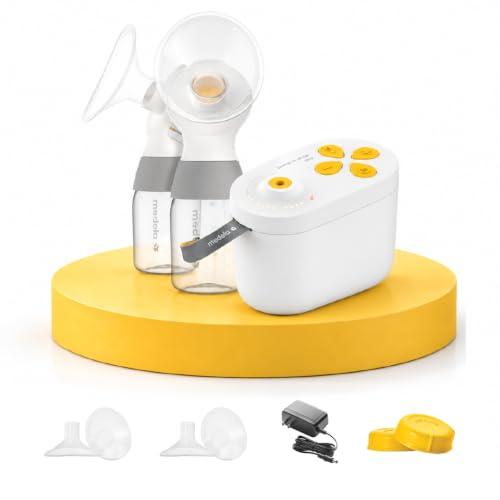
What you do get is substantial. The Medela Pump in Style Pro gives you 16 levels in stimulation and 16 in expression with an automatic switch at 60 seconds, which is genuinely fine-grained control, in a 1.23 lb unit, with two 21 mm and two 24 mm PersonalFit Plus flanges included and a one-year warranty. It is mains-only, with no battery — which is this pump’s single real limitation and the reason to look at the Lansinoh if you pump away from a socket.
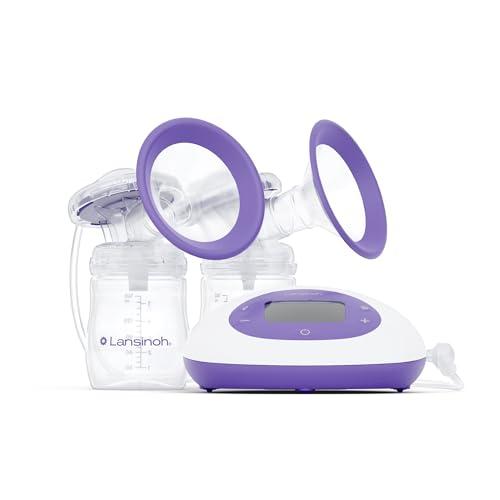
The Lansinoh Signature Pro trades precision for flexibility: 8 suction levels and 3 pumping styles rather than 32 settings, a backlit LCD, a closed system that Lansinoh says prevents milk backing up into the tubing, and it runs on six AA batteries (not included) as well as mains. The catch is in the box: it ships with two 25 mm ComfortFit flanges only, and 21, 28, 30.5 and 36 mm are sold separately — which matters more than the suction numbers, as the next section explains.
The variable that decides comfort is flange size, not suction
If one thing on this page saves you money and pain, let it be this. A pump that hurts is usually a pump with the wrong flange. The flange is the funnel that sits against the breast, and it is sized in millimeters to the nipple, not to the breast. Too large and it pulls in surrounding tissue; too small and it rubs. Either way output drops and the parent concludes the pump is bad.
So read the included-sizes line as a price. The Medela Pump in Style Pro includes four flanges in two sizes (21 mm and 24 mm), which covers a good proportion of people out of the box. The Lansinoh includes two, in one size (25 mm), with four other sizes available separately, so budget for a flange purchase and treat the sticker as a starting price. The Medela Harmony ships with one 24 mm PersonalFit Flex shield, a 150 mL bottle with lid and a bottle stand. A lactation consultant can size you in minutes and it is the highest-value five minutes in this whole category.
Why a manual and a silicone collector are on a “best pump” page
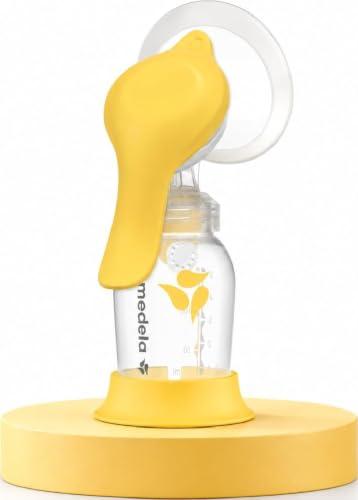
Because they do jobs an electric cannot, and at this price you can own more than one. The Medela Harmony Manual weighs 105 g, needs no power at all, and uses the same two-phase pattern through the handle. It is the pump that works in a power cut, in a car, on a plane, in a locked office — and the one to keep in a bag as insurance against a forgotten adapter. It is slow and it is one-sided; neither matters for the role.
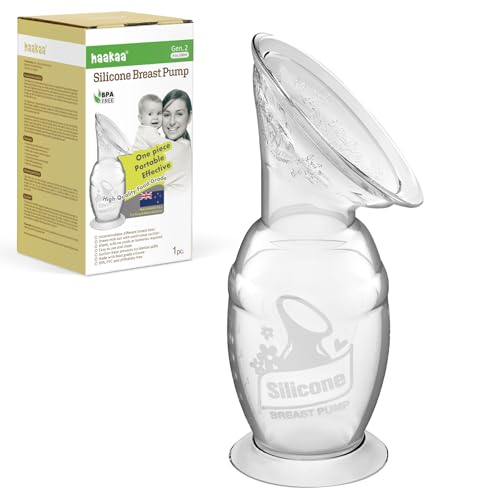
The Haakaa Gen 2 is not really a pump at all and we are not going to pretend it is — it is a one-piece, seamless food-grade silicone collector with a flat suction base, and it works by suction rather than cycling. Its honest limitation is control: you cannot regulate it, so it scores poorly on suction and control in our weighting and brilliantly on everything else. What it does superbly is catch the let-down on the side your baby is not feeding from, which most parents lose into a breast pad. Haakaa says to boil it for two to three minutes or steam sterilize, warns against bleach-based tablets, and notes UV can shorten its life.
Our weighting for all of this is published on how we pick: suction and control, comfort, portability, cleaning, then value. We have not clinically compared output and we do not claim to; every figure above comes from the maker’s own published specification or a named retailer listing, and every price is read live from Amazon and dated on the card. If you are still deciding what kind of pump you need rather than which one, start with how to choose a breast pump.
Quick picks at a glance
#
Product
Best for
Score
Price
1
Medela Pump in Style Pro
Just over a pound, sixteen levels in each phase, and the one parts ecosystem you can replace from a supermarket shelf at 9 p.m.
Best overall under $100: the most control, and parts in every pharmacy
The cheapest honest double electric here, and the only one that will run on AA batteries when there is no outlet — with a suction ceiling that is the reason it costs what it does.
Best cheap double electric, if the Medela is out of band
A 105-gram hand pump with the same two-phase rhythm as Medela's electrics — the thing you want in the hospital bag, the car, and the drawer for the day the motor dies.
Best manual, and the one to own as a backup even if you have an electric
One piece of food-grade silicone that sticks to the other side while you feed and collects the milk you were already leaking — the cheapest useful thing in the category, and not really a pump.
Budget pick: it catches the let-down you are currently losing into a towel
The cheapest honest double electric here, and the only one that will run on AA batteries when there is no outlet — with a suction ceiling that is the reason it costs what it does.
Lansinoh publishes none; the SignaturePro manual gives 80–220 mmHg
System
Closed system, prevents milk backup into tubing (Lansinoh)
Power
AC adapter included; runs on 6 AA batteries (not included)
Flanges included
Two 25 mm ComfortFit; 21, 28, 30.5 and 36 mm sold separately
Display
Backlit LCD
Materials
Expression set made without BPA or BPS, dishwasher safe
What we like
Runs on six AA batteries, which no other plug-in pump here will do — that covers a power cut, a car, and a building site of a workplace
Lansinoh calls it a closed system in plain words on its own product page, which is more than Medela does for the Pump in Style Pro
Backlit LCD is genuinely easier to use in the dark than Spectra's indicator lights
Lowest price of any double electric on this page
Expression-set parts are dishwasher safe and widely stocked
Worth noting
The suction ceiling is the real catch: the manual's 220 mmHg is roughly 50 mmHg below the Spectra and further below what retailers quote for the Medela. For some people that is the difference between emptying and not
Only 8 levels, and vacuum and cycle speed are not independently adjustable
One flange size in the box, and 25 mm is an unusual size to start from — most people will be buying a second set
Lansinoh publishes no mmHg range and no warranty term on the product page; both numbers here come from the manual or are simply absent
AA batteries are an escape hatch, not a plan — six alkalines do not last long at a useful suction level
A 105-gram hand pump with the same two-phase rhythm as Medela's electrics — the thing you want in the hospital bag, the car, and the drawer for the day the motor dies.
Type
Manual, single
Technology
2-Phase Expression via the handle (Medela)
Weight
105 g (Medela)
Flange included
One 24 mm PersonalFit Flex breast shield
In the box
150 mL bottle with lid, plus a bottle stand
Power
None required
Warranty
Not published by Medela on the product page
What we like
105 grams and no power requirement, which makes it the only pump here that is genuinely always available
The handle has two positions that mimic the fast-then-slow pattern a baby actually uses, rather than one flat squeeze
Costs about a fifth of the cheapest electric, so having one as a backup is not a real decision
Uses standard Medela PersonalFit shields, so if you already own a Medela electric your flange sizing carries over
Nothing to charge, nothing to break, nothing to update
Worth noting
It is one breast at a time and it is your hand doing the work — this is not the pump for a regular pumping schedule, and anyone who has tried it for a week will tell you so
Hand fatigue is real and arrives faster than you expect
One 24 mm shield in the box and no smaller size, which is the wrong starting size for a lot of people
Medela publishes no warranty term for it that we could find
The bottle is 150 mL, which a good single-side session can fill
4Best for catching the let-down you are currently losing
Haakaa Gen 2 Silicone Pump
7.6★★★◐★
One piece of food-grade silicone that sticks to the other side while you feed and collects the milk you were already leaking — the cheapest useful thing in the category, and not really a pump.
Type
One-piece silicone suction collector
Capacity
100 mL / 4 oz (also sold in 150 mL)
Material
100% food-grade silicone, no joints or seams
Base
Flat suction-cup base so it does not tip
Free of
BPA, PVC and phthalates (Haakaa)
Cleaning
Boil 2–3 minutes or steam sterilize; Haakaa warns against bleach-based tablets and says UV can shorten its life
Power
None required
What we like
A single piece of silicone: nothing to dismantle, nowhere for milk to hide, 20 seconds to wash
Collects the let-down from the side your baby is not on, which is milk most people simply lose into a pad
The Gen 2 suction base is the fix for the Gen 1's one real flaw — it does not tip over when you knock it
Costs less than a week of nursing pads
No batteries, no motor, no parts to replace, nothing to go wrong
Worth noting
This is a collector, not a pump. It cannot build or protect a supply, it cannot empty a breast on demand, and it is not a substitute for anything else on this page
Suction is whatever you set when you squeeze and attach it — there is no control and no consistency session to session
Silicone picks up smells over time and the bottle-brush bristles will eventually scuff it
No lid in some listings; check whether yours includes the silicone cap if you plan to put it straight in the fridge
Haakaa advises against bleach-based sterilizing tablets and says UV sterilizers may shorten its lifespan, which rules out two common cleaning routines
How it scored
Suction & control4.0
Comfort8.0
Portability9.6
Ease of cleaning10.0
Value9.8
Frequently asked questions
Can I get a breast pump through insurance instead of buying one?+
In the United States, usually yes. HealthCare.gov states that most Marketplace plans must provide breastfeeding equipment and counseling, and that your health insurance plan must cover the cost of a breast pump - either a rental unit or a new one you keep. That applies to Marketplace plans and all other plans except grandfathered ones. Which model, and whether it is rented or kept, is set by the plan, so call them before buying anything.
Is a breast pump under $100 any good?+
The good ones are genuinely good at the core job. The Medela Pump in Style Pro offers 16 suction levels in each of two phases with an automatic switch at 60 seconds, and includes four flanges in two sizes. What you cannot get under $100 is a hospital-grade motor with a published maximum vacuum and separate cycle control, or a cordless in-bra wearable. Both of those sit above this band.
Why does my breast pump hurt?+
Most often because the flange is the wrong size. The flange is the funnel that sits against the breast and it is sized in millimeters to the nipple, not the breast - too large pulls in surrounding tissue, too small rubs. Output drops either way and parents conclude the pump is at fault. Check which sizes came in your box, and ask a lactation consultant to size you. Pain that persists after a correct flange fit is a reason to call a health professional, not to buy a different pump.
Is it safe to buy a used breast pump?+
Not for a single-user electric pump. Breast pumps are medical devices regulated by the FDA, and single-user pumps are not designed to be shared between people; the FDA advises against using a secondhand one. Multi-user rental pumps supplied through a hospital or insurer are a different category and are designed for it. A manual pump or silicone collector is still a personal item - buy those new too.
Do I need a manual pump if I have an electric one?+
It is one of the cheapest useful things in this category. A manual pump needs no power, so it works in a power cut, in a car, on a plane and anywhere you have forgotten the adapter. The Medela Harmony weighs 105 g. It is slow and single-sided, and neither matters for the job it is doing, which is being the pump that never fails to be available.