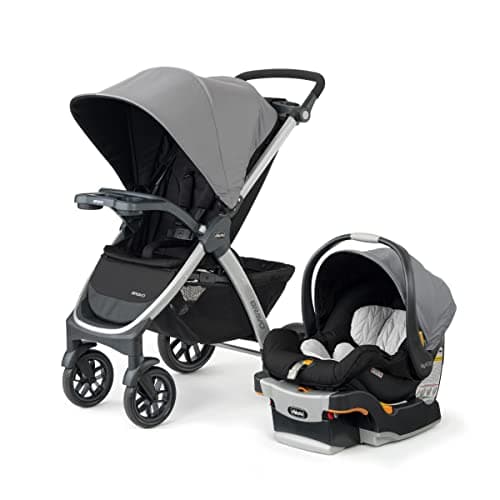
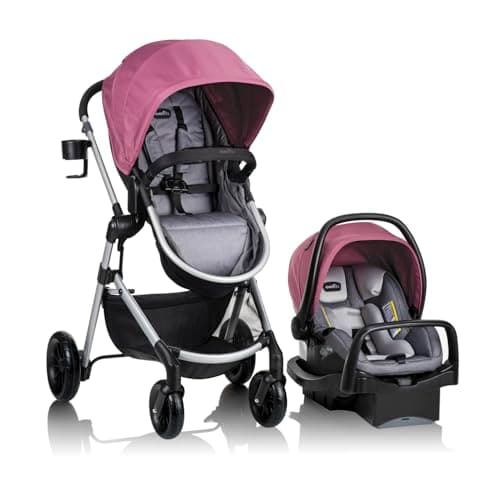
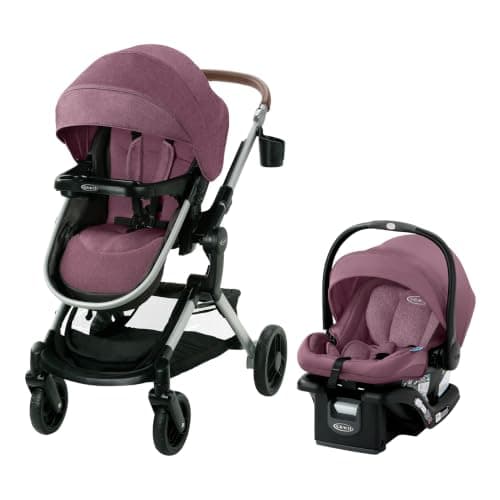
The two halves expire at completely different times. The infant seat is done in nine to fifteen months; the stroller has three or four years left in it.
Disclosure:Swaddle & Stroll is reader-supported. When you buy through links on this page we may earn an affiliate commission, at no extra cost to you. It never changes our picks. How this works.
A travel system does not have one lifespan; it has two. The infant car seat is the short half — most babies outgrow a 30-pound seat somewhere between nine and fifteen months, and they outgrow it on heightbefore weight more often than parents expect. The stroller is the long half: the frames in our catalog are rated to about 50 pounds, which is roughly a four-year-old. So the honest answer to “how long can I use this?” is about a year for the clip-in seat and three to four years for the stroller you clip it into. The seat that lasts longest here is the SnugRide DLX in the Graco Modes Nest Travel System, rear-facing to 35 pounds.
There is also a hard stop nobody mentions at the point of sale: car seats expire. Our car seat expiration guide explains where to find the date, and it is the figure that decides whether this system can be used for a second baby at all.
What to look at before you buy: the three numbers that set the lifespan
1. The infant seat's rear-facing weight range. Thirty pounds versus thirty-five pounds does not sound like much and is worth several months. The Chicco KeyFit 30 in the Bravo Trio tops out at 30 pounds; the SnugRide DLX and the Evenflo LiteMax both reach 35.
2. The infant seat's height limit — the one that usually ends it. An infant seat is outgrown when the child's head is within an inch of the top of the shell, or at the height limit printed on the label, whichever comes first. Tall babies hit that long before the weight number, which is why a nine-month-old can be done with a seat rated to 35 pounds. Measure, do not assume.
3. The stroller's child weight limit. Fifty pounds on the Graco Modes Nest and the Evenflo Pivot. That is the number that governs the second three years, and in practice most children stop wanting to sit in a stroller before they reach it.
What happens at each stage
Birth to about 6 months.The infant seat clicks into its base in the car and onto the stroller frame, and this is the stage the whole product exists for — moving a sleeping baby from car to sidewalk without unbuckling. If the system has a bassinet or carriage mode, as the Modes Nest and the Pivot do, you also get a flat mode for walks, which some parents use more than the carrier mode.
About 6 to 12 months.The baby is getting heavy to lift in the carrier — an infant seat plus a 20-pound baby is a real load — and most families start using the stroller seat instead, leaving the car seat in the car. The carrier stage usually ends because of your arms, not because of the limits.
9 to 15 months: the infant seat is done.Height first, usually. At this point you move to a convertible or all-in-one seat in the car, which is a separate purchase — and the single biggest cost most travel-system buyers do not plan for. Our convertible car seats roundup and when to switch to a convertible car seat cover that handover, and infant vs convertible car seat covers whether you should have skipped the infant seat in the first place.
1 to about 4 years. The stroller keeps going on its own to roughly 50 pounds. This is why a travel system is better value than it looks on the receipt: you paid for a stroller and got a car seat with it, and the stroller is the part still in service three years later.
The lifespan table
Every figure below is published by the manufacturer and recorded on that product's page in our catalog. Ages are the typical range at which US growth charts put a child at that weight or height — they are an illustration, not a limit. The limits on your own seat's label are the ones that govern.
System
Infant seat
Stroller limit
Extra mode
Graco Modes Nest Travel System
SnugRide DLX, rear-facing 4–35 lb
Up to 50 lb
Bassinet mode + reversible seat
Chicco Bravo Trio
KeyFit 30, rear-facing 4–30 lb
Not published as a single figure
Carrier, infant and toddler modes
Evenflo Pivot Modular
LiteMax, rear-facing 4–35 lb
Up to 50 lb
Carriage / bassinet mode
Which to buy if lifespan is what you care about
Graco Modes Nest Travel System spans the most months: a 35-pound infant seat, a bassinet mode that saves buying a separate bassinet for walks, a reversible toddler seat, and a 50-pound stroller limit. It is bulky and heavier than a lightweight system, which is the price of that span.
Chicco Bravo Triohas the shortest infant stage here at 30 pounds, and we still rate it highest on safety-standard compliance and install ease, because the KeyFit 30 is consistently among the easiest infant seats to install correctly — and a correctly installed 30-pound seat protects a child better than a badly installed 35-pound one.
Evenflo Pivot Modular gets you the 35-pound seat and a carriage mode at the lowest price of the three, with less premium fabric and a larger folded size. Our best travel systems roundup ranks the whole field, and Chicco Bravo vs Graco Modes Nest takes the top two head to head.
A last practical point on the handover. The month the infant seat is outgrown is the month you need a convertible seat ready, not the month you start shopping. Put the convertible on the registry alongside the travel system if you can — it is the purchase that catches families out, and it arrives on a deadline set by a growth chart rather than by you.
Quick picks at a glance
#
Product
Best for
Score
Price
1
Graco Modes Nest Travel System
The Modes Nest frame plus a SnugRide DLX infant seat: a bassinet mode, a reversible seat, and a carrier stage — the system that spans the most months.
Longest total span: bassinet mode plus a 35 lb seat
Pairs the quick-fold Bravo stroller with the KeyFit 30 — one of the easiest infant seats to install correctly — making it our safest-to-use pick for new parents.
Pairs the quick-fold Bravo stroller with the KeyFit 30 — one of the easiest infant seats to install correctly — making it our safest-to-use pick for new parents.
LiteMax is one of the lighter infant seats to carry
Strong value
Worth noting
Fabric feels less premium
Larger folded size
How it scored
Safety & install ease8.4
Everyday usability8.2
Newborn readiness8.8
Value9.0
Frequently asked questions
How long does the infant car seat in a travel system last?+
Usually nine to fifteen months. The weight limits are 30 lb on the Chicco KeyFit 30 and 35 lb on the Graco SnugRide DLX and Evenflo LiteMax, but most babies are outgrown on height first - an infant seat is finished when the child's head is within an inch of the top of the shell or at the printed height limit, whichever comes first. Measure rather than waiting for the weight number.
How long does the stroller part last?+
The frames in our catalog are rated to about 50 lb, which is roughly a four-year-old, so the stroller outlives the infant seat by three years or more. That is the real value in a travel system: you bought a stroller and the car seat came with it. In practice most children stop wanting to ride before they reach the weight limit.
Can I use a travel system for a second baby?+
It depends on the car seat's expiry date, not the stroller. Every seat has a date of manufacture on the shell and a published useful life, commonly six to ten years. A seat bought new for a first baby usually has life left for a second two or three years later; by year six or beyond it often does not. Check the date, check the recall list, and check the seat has never been in a crash.
What do I buy when the infant seat is outgrown?+
A convertible or all-in-one car seat, installed rear-facing. That is a separate purchase and the one travel-system buyers most often fail to budget for, and it arrives on a deadline set by your baby's growth rather than by you. Keep using the stroller - it has years left - and read our convertible car seats roundup before the month you need one.